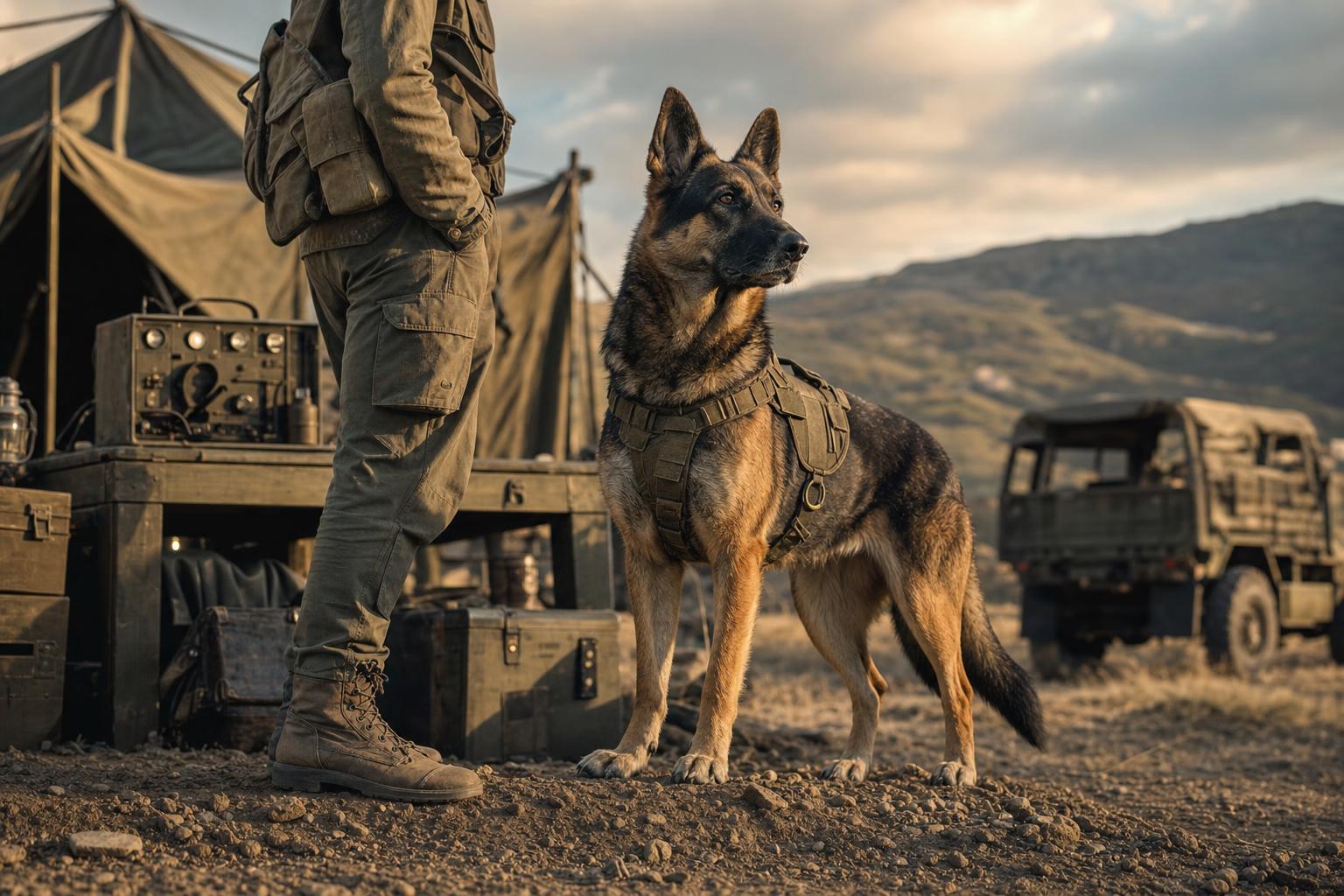
Dogs have served armies in different roles across different periods. Guarding, carrying messages, searching, and other tasks required particular forms of training and management. Specific records offer a firmer account than treating every wartime dog as the same kind of worker.
Long before modern breeding programs and formal handler schools, people recognized that certain dogs had the nerve, size, and instinct to serve in conflict. Some were used to guard camps and supply lines. Others ran messages, tracked enemies, or helped hold prisoners. In every era, the exact job changed with the weapons and tactics of the time, but the core qualities stayed much the same. A military dog needed courage, steadiness, trainability, and a willingness to work in noise, confusion, and fear.
Ancient Origins of Military Dogs
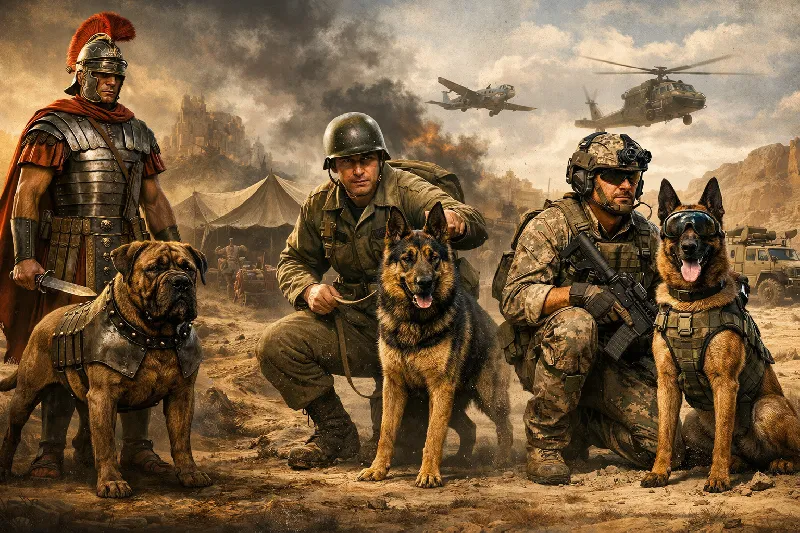
The earliest records of war dogs stretch deep into the ancient world. Civilizations such as the Egyptians, Greeks, Persians, and Romans all used dogs in military roles. These were not house pets wandering through campfires. They were purposeful animals, often large, powerful dogs selected to intimidate, protect, and fight when called on. Ancient handlers sometimes outfitted them with spiked collars or protective gear, using them to disrupt enemy formations or guard strategic positions.
The Romans in particular understood organization, and where armies go, useful dogs are never far behind. A dog that could alert troops at night, chase a fleeing man, or stand firm around stores and livestock was worth feeding. In rough country, where visibility was poor and surprises came fast, a dog’s senses offered an edge. Any hunter who has watched a dog catch scent on shifting wind knows exactly why those early armies valued them. Men see what is in front of them. Dogs often know what is coming before it arrives.
More Than Attack Animals
People tend to imagine ancient war dogs as nothing but brute force, but that sells them short. Even early on, dogs served practical support roles. They watched camps, warned of night raids, and likely helped track wounded or fleeing enemies. Those are not glamorous jobs, but wars are not won on spectacle alone. They are won by awareness, discipline, and endurance, all qualities suited to a well-handled dog.
War Dogs in the Middle Ages and Early Modern Era
As warfare changed, so did the use of dogs. During the Middle Ages, dogs continued to serve as guards, patrol companions, and symbols of status among military leaders. Castles, encampments, and baggage trains all needed protection. A sharp dog posted near supply stores or tethered at the edge of camp could do what many sleepy sentries could not. He could stay aware through darkness, weather, and fatigue.
Later, in campaigns tied to exploration and conquest, dogs were also used in harsher ways, especially by invading forces seeking to intimidate local populations. That part of the history is uncomfortable, but it belongs in the record. Working dogs have always reflected the hands that trained and commanded them. Their loyalty is extraordinary, but it is human judgment that decides whether that loyalty is used with honor or cruelty.
Even so, by this period one truth had become plain across cultures: dogs belonged where men faced uncertainty. On marches, around horses, through mud, and among strangers, the right dog steadied the line and extended human capability. That is as true in a military camp as it is in a duck blind before daylight.
War Dogs in World War I
By the time World War I dragged Europe into trench warfare, military dogs had moved into more specialized service. The battlefield had become industrial, noisy, and brutally chaotic. Artillery, wire, gas, mud, and shattered ground created a world where ordinary communication often failed. Dogs stepped into that gap.
They carried messages across dangerous ground when runners could not get through. They located wounded soldiers lying in shell holes or tangled terrain. Some hauled small supplies. Others worked as sentries, giving warning when enemy troops moved in darkness. In a war where a few seconds of warning could save lives, a dog’s nose and ears were priceless.
Accounts from the period often describe dogs threading their way through bombardment with a determination that still reads as astonishing today. But anyone who has hunted behind a seasoned working dog knows that focus is real. Once a dog understands the job and trusts the handler, there is a depth to that commitment that can seem almost beyond reason.
The Rise of Specialized Training
World War I also pushed military organizations to think more seriously about selecting and training dogs for distinct roles. Not every brave dog makes a good messenger. Not every sharp watchdog can stay composed around gunfire and confusion. That wartime pressure laid groundwork for more formal military dog programs in the decades that followed.
War Dogs in World War II
World War II marked a major turning point in the history of war dogs. Nations developed broader training efforts, and dogs took on a wider range of battlefield tasks. The United States, Germany, the Soviet Union, Britain, and others all used dogs in meaningful numbers. They served as sentries, scouts, messengers, mine detectors, patrol dogs, and search dogs.
For American readers, one of the best-known stories is the creation of organized military dog programs after the attack on Pearl Harbor. Civilian dog owners donated animals, and trainers worked to prepare them for service. Breeds such as German Shepherds, Doberman Pinschers, Belgian Sheepdogs, and Giant Schnauzers were favored for intelligence, athleticism, and nerve. The Doberman, in particular, became closely associated with the U.S. Marine Corps in the Pacific.
Those island campaigns were a hard proving ground. Thick jungle swallowed sound and sight. Heat and tension wore men thin. In that kind of country, a dog that could detect hidden movement before an ambush opened up was worth more than his weight in gold. Handlers trusted their dogs because those dogs repeatedly saved patrols from walking blind into danger.
One of the most famous examples came from Guam, where Marine war dogs played a vital role in patrol and detection work. Stories from the Pacific show the bond between handler and dog at its strongest. Under fire, there is no room for pretense. Trust has to be earned, and many war dogs earned it completely.
The Cold War to Vietnam
After World War II, military dog programs did not disappear. Instead, they matured. During the Korean War and especially in Vietnam, dogs became essential in patrol, tunnel detection, scouting, and base security. Vietnam, with its dense vegetation and hidden threats, again highlighted what dogs do better than people. They found what could not be seen.
Scout dogs in Vietnam walked point with handlers and often detected enemy presence, booby traps, or recent movement before the rest of the patrol sensed a thing. Men who served with them spoke of them not as equipment, but as fellow soldiers. That is exactly the right way to understand a real working dog. He is trained, yes. He is directed, certainly. But he is also a partner whose judgment can preserve lives.
The tragedy is that many of those dogs were not brought home after service, a painful chapter in military dog history. Over time, that policy changed, and modern military culture has come to recognize both the tactical value and the emotional bond these dogs carry with the people who work them.
Modern Military Working Dogs
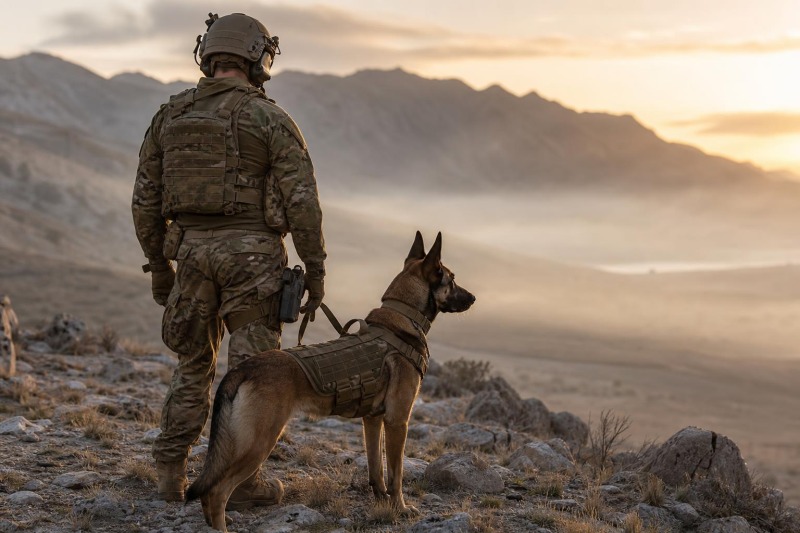
Today’s military working dogs operate in roles that would still be familiar to ancient handlers, even if the equipment looks very different. They patrol bases, detect explosives and narcotics, track suspects, and accompany special operations units into highly dangerous environments. Technology has advanced in every direction, yet the dog remains relevant because scent detection, courage, and adaptability are not easy things to duplicate.
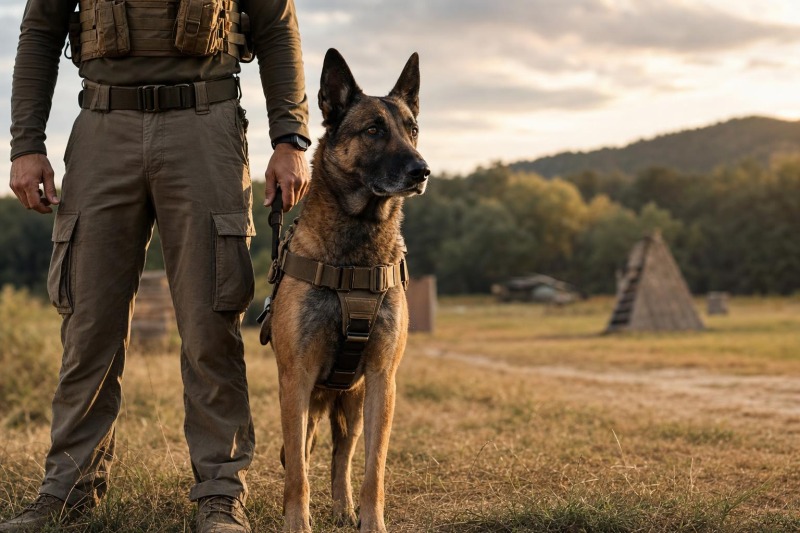
The modern Belgian Malinois has become a well-known military and law enforcement dog, prized for speed, intensity, and work drive. German Shepherds remain respected as well. These dogs parachute, ride in helicopters, work urban terrain, and enter buildings with handlers under real threat. For all the modern gear wrapped around them, their value still comes down to timeless working traits: clear-headedness, nerve, athleticism, and the willingness to engage the job completely.
Why War Dogs Still Matter
There is a lesson here for any dog owner interested in working breeds. Dogs thrive when instinct meets purpose. The traits that made military dogs effective across history are the same traits that make working dogs so compelling today. They want a task. They want partnership. They want structure. When bred and trained well, they bring heart to work that no machine can imitate.
War dogs through history were never just mascots in uniform. They were sentries in darkness, scouts in bad country, messengers across open fire, and companions in the loneliest parts of war. Their story is not merely military history. It is a working dog story, and a deeply human one at that. Men went to war and found, again and again, that one of their most dependable allies walked on four feet.
For those of us who have watched a dog lock onto a scent trail, hold steady under pressure, or stay near when conditions turn rough, none of this feels surprising. It feels familiar. Different field, different stakes, same truth. A good dog has always been one of the finest partners a person could ask for.