A famous tracking dog’s reputation can outlive the records of its work. Documented searches, contemporary reports, and accounts of the handler help explain the achievement. Those details also show why a story should be treated cautiously when the evidence is thin.
Throughout history, tracking dogs have done more than recover game. They have found lost children, followed escaped prisoners across punishing ground, carried messages through battle, and helped shape the public idea of what a working dog ought to be. For dog owners interested in working dogs, these stories matter because they show that good tracking has always rested on the same foundation: nose, nerve, stamina, and a handler wise enough not to get in the dog’s way.
The old roots of scent work
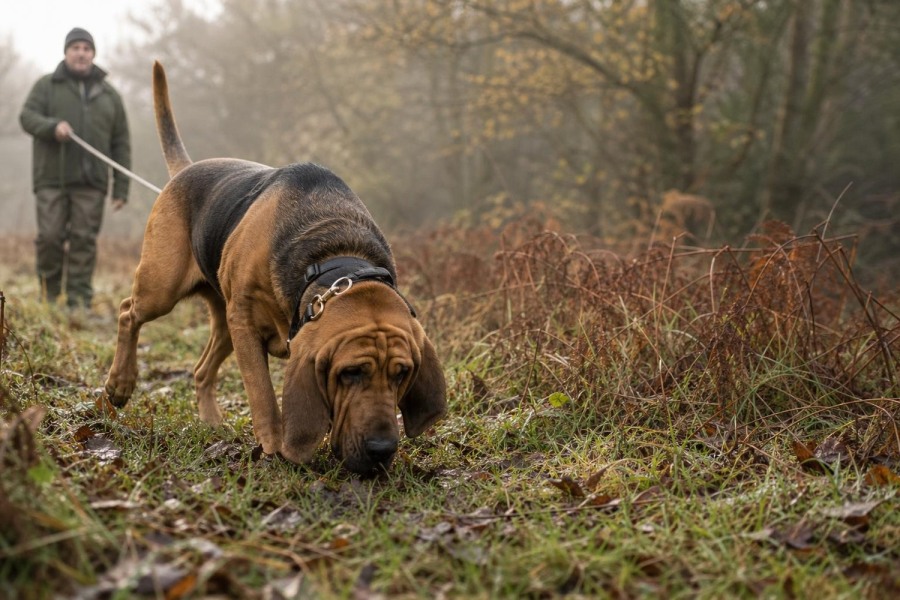
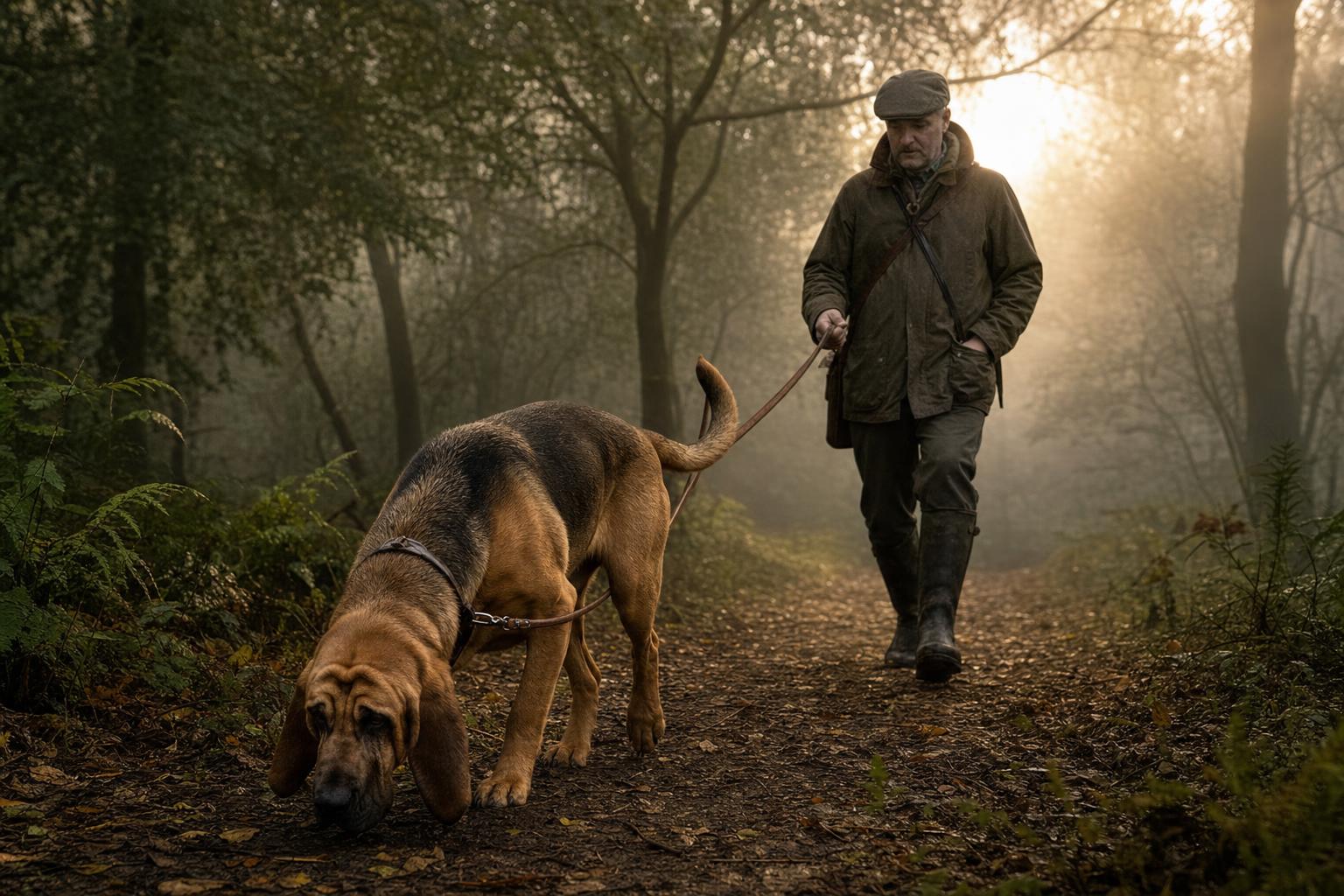
Long before modern police departments and organized search teams, people relied on dogs to follow scent across wild country. Medieval Europe had packs of hounds bred to sort out old trails over rough terrain, and by the time organized hunting traditions matured in France, Germany, and Britain, breeders had already learned that certain dogs carried a gift for patient, methodical scent work. The Bloodhound stands tallest in this part of the story, and for good reason. Even today, when folks speak of a tracking dog, they often picture those long ears, loose skin, and slow but determined gait.
The Bloodhound’s reputation was not built in a season. It came from centuries of work in difficult conditions, often on old human scent where a dog had to puzzle through contamination, weather changes, and miles of shifting ground. In practical terms, that kind of work is not flashy. It is careful, deliberate, and unforgiving. A dog either has the nose and discipline for it or it does not.
A breed that became a symbol of tracking
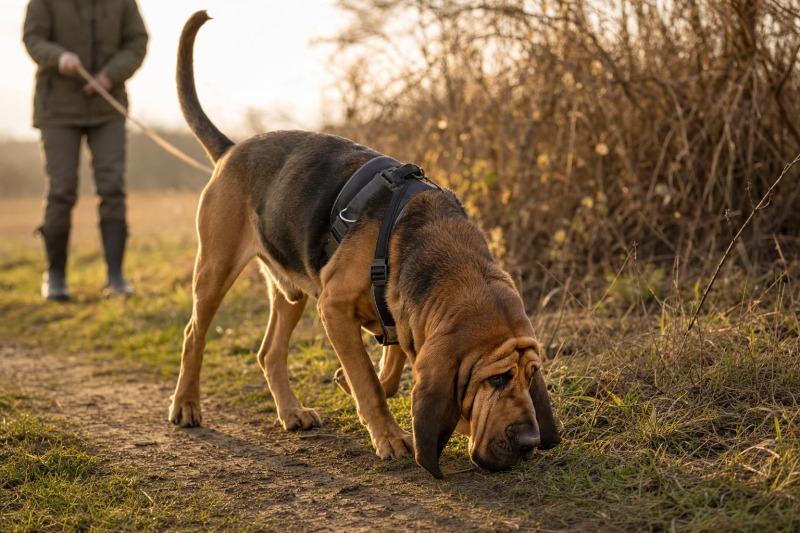
If there is one name that dominates any conversation about famous tracking dogs in history, it is the Bloodhound. While individual Bloodhounds earned praise in courts, hunting fields, and law enforcement work, the breed itself became legendary because of its nearly unmatched scenting ability. Handlers across Europe and later in America used Bloodhounds to trail missing persons and criminal suspects over extraordinary distances.
Part of the Bloodhound’s fame comes from public trust in the dog’s nose. In some places, Bloodhound evidence even shaped legal cases, though any experienced dog man will tell you that no dog should be treated like a magic machine. Still, that trust did not appear out of thin air. It came from repeated success in real-world tracking, where handlers saw dogs sort through crossed tracks, changing wind, damp bottoms, hard roads, and old scent that should have been gone by all appearances.
For many working dog owners, the Bloodhound remains the standard by which tracking grit is judged. The lesson from history is plain: style matters less than consistency. A famous tracking dog may not look fast, but it gets there.
Nick Carter and the rise of celebrity police dogs
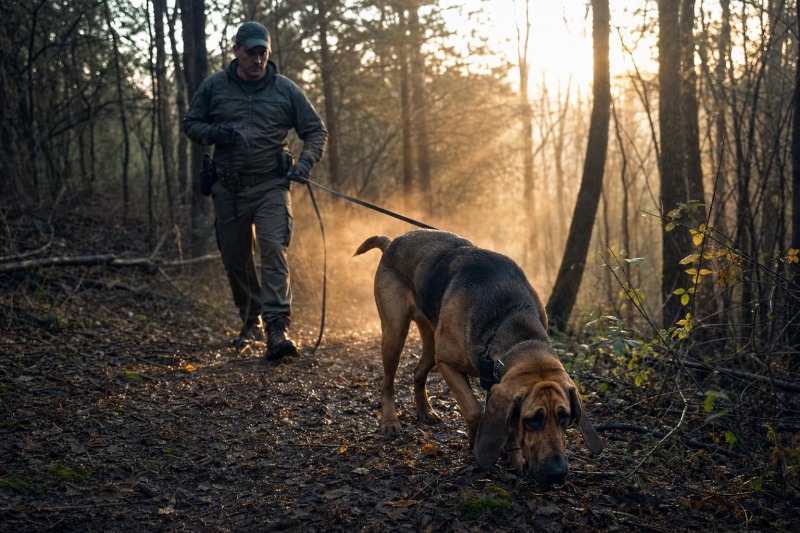
One of the best-known tracking dogs of the early modern era was Nick Carter, a Bloodhound handled by Captain G. V. Mullikin in the United States in the late nineteenth and early twentieth centuries. Nick Carter became nationally famous for trailing fugitives and helping law officers in difficult manhunts. Newspapers loved him, and the public treated him almost like a folk hero.
Now, old newspaper accounts can grow legs longer than a hound’s, so a wise reader takes some of the grandest claims with a little caution. But even allowing for exaggeration, Nick Carter’s reputation speaks to a real truth: trained tracking dogs had become indispensable tools in law enforcement. When men disappeared into timber, crossed creeks, or took to backroads at night, a capable dog could turn confusion into direction.
What made dogs like Nick Carter special was not only nose power. It was steadiness. A police tracking dog has to ignore noise, strangers, horses, crowds, and the handler’s own nerves. That sort of composure does not happen by accident. It is bred for, trained carefully, and tested under pressure. The fame came later.
Captain, Dox, and the hard school of war
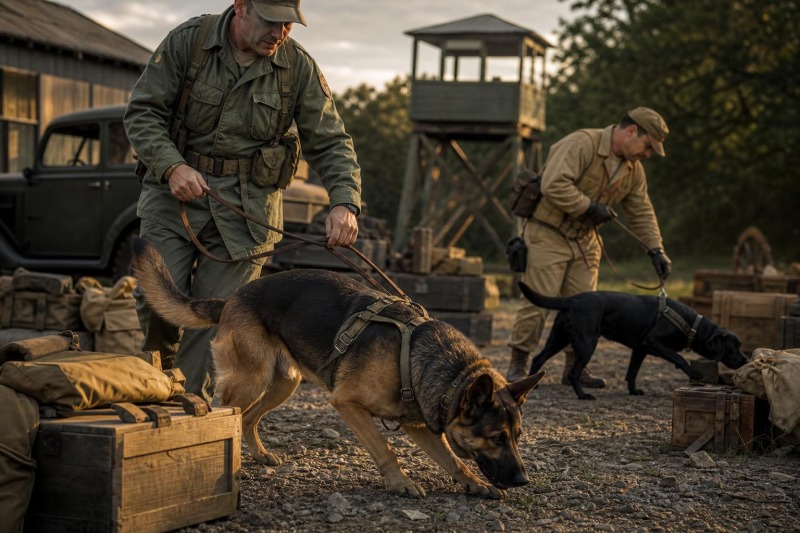
Tracking dogs made their mark in war as well, though military records do not always preserve their stories with the same care given to officers and units. During the world wars, dogs were used for sentry duty, message carrying, casualty location, and tracking. Some became known by name, though many more worked without recognition beyond the men who depended on them.
Dogs such as Captain and Dox are remembered among early war dog accounts for their service in dangerous conditions where scent work could mean the difference between life and death. A battlefield is about the worst classroom a tracking dog could ever enter. Scent is scattered by explosives, trampled by troops, washed by rain, and polluted by smoke, blood, fuel, and fear. Yet good dogs still found wounded soldiers, carried messages, and helped handlers navigate chaos.
That kind of historical service deserves respect from anyone who keeps working dogs today. We ask a lot of our dogs in training, but war dogs were asked for courage no kennel title can fully describe. They worked because they trusted their handlers and because generations of breeding had stamped reliability deep into them.
Barry and the rescue dog tradition
Though often remembered more as a rescue dog than a tracking dog, Barry of the Great St. Bernard Hospice belongs in this conversation because he helped shape the public image of the heroic working dog. Living in the early 1800s, Barry became famous for locating travelers lost in the snow of the Swiss Alps. His work was less about following a tidy trail and more about locating human scent in deadly mountain conditions, but the principle was close kin to tracking: trust the dog’s nose when human senses fail.
Stories around Barry grew larger over time, as such stories do, yet his legacy mattered. He showed generations of dog owners that practical scent work is not just a sport or a hunting skill. It is service. A dog that can find a person no one else can reach becomes something more than a companion. It becomes a lifeline.
Trail hounds, boar dogs, and hunters’ unsung legends
Not every famous tracking dog made newspapers or military reports. Plenty of them became legends around campfires, in hunting lodges, and along muddy tailgates after dark. Across Europe and North America, stag hounds, scenthounds, cur dogs, and bay dogs gained reputations among hunters for recovering wounded game when all visible sign disappeared. Many of the finest tracking dogs in history are nameless outside the circles that knew them, but their work shaped breeding decisions for generations.
A man may brag at breakfast, but by evening the woods have sorted truth from talk. Dogs that repeatedly found wounded deer, hogs, bear, or cat under poor scenting conditions became local legends because they earned that standing the honest way. Those dogs carried traits we still prize today: patience on the line, intelligence at a loss, enough grit to push through briars and water, and the sense not to overrun every turn.
When modern dog owners study famous tracking dogs in history, they ought to remember these hunting dogs too. Some of the best noses ever bred never had their names printed anywhere. Their influence lived on through pups that inherited the same cool head and same relentless desire to finish a trail.
Why these historic tracking dogs still matter
The world has changed. We have GPS collars, thermal imaging, vehicles, radios, and organized training clubs. Yet the fundamentals behind a great tracking dog have barely shifted at all. Dogs still succeed because they are bred with purpose, handled with patience, and allowed to work honestly. History simply gives us examples big enough to see clearly.
The famous tracking dogs in history remind us that a working dog is not built overnight. It takes careful selection, miles on the ground, and enough humility from the handler to let the dog teach him a few things. That lesson applies whether you are raising a Bloodhound for mantrailing, a versatile hunting dog for blood tracking, or a family companion with enough drive to try scent work for sport.
There is another lesson in these old stories too. The best tracking dogs were remembered because they served a purpose beyond themselves. They found the missing. They helped catch the guilty. They recovered game cleanly and spared waste. They made men safer in war and storms and rough country. In that sense, their fame was never really about fame. It was about usefulness proven under hard conditions.
The legacy of the true trail dog
A true trail dog leaves a mark long after the track is finished. That has always been the case, whether the dog was a celebrated Bloodhound like Nick Carter, a mountain rescue icon like Barry, or one of the many unnamed hounds that made their reputation one honest line at a time. Their stories endure because they speak to something working dog people understand in their bones. A good dog does not need applause. It needs a task worth doing and a handler who respects the craft.
For dog owners interested in working dogs, these historic trackers offer more than nostalgia. They offer a measuring stick. In every age, famous tracking dogs earned their place through discipline, drive, and reliability where it counted most. If you have ever watched a dog lower its head, sort out the line, and move with that quiet certainty only a real scent dog carries, then you already understand why history remembers them.