Working-dog professions change as employers, search tasks, technology, and expectations change. The continuing need is for capable teams whose work can be assessed. Care, training, and informed handling remain practical foundations across those roles.
The future of K9 working professions is not some far-off idea built only on gadgets and glossy promises. It is already taking shape in kennels, training fields, police departments, search teams, hospitals, farms, and conservation projects. As the world changes, working dogs are being asked to do more specialized work, often with higher standards, tighter public scrutiny, and better science behind the training. For dog owners interested in working dogs, this is one of the most exciting times in memory. The jobs are broadening, the knowledge is improving, and the bond between handler and dog remains the center of it all.
The old strengths still matter most
Before talking about the future, it helps to remember what has never changed. A true working dog is built on instinct, nerve, health, trainability, and desire. Whether that dog is locating narcotics, finding a missing child, assisting a veteran, tracking game, or protecting livestock, the essentials are remarkably similar. A dog that can think under pressure, recover quickly, take direction, and work through distraction will always have a place.
People sometimes get distracted by the newest training tool or the latest social media trend and forget that solid genetics and honest development still win in the long run. The future of K9 working professions will absolutely include advanced tools, but no tool will replace sound breeding, early socialization, and the long, patient work of putting a dog in real situations until the lessons hold under stress.
Technology will support the dog, not replace it
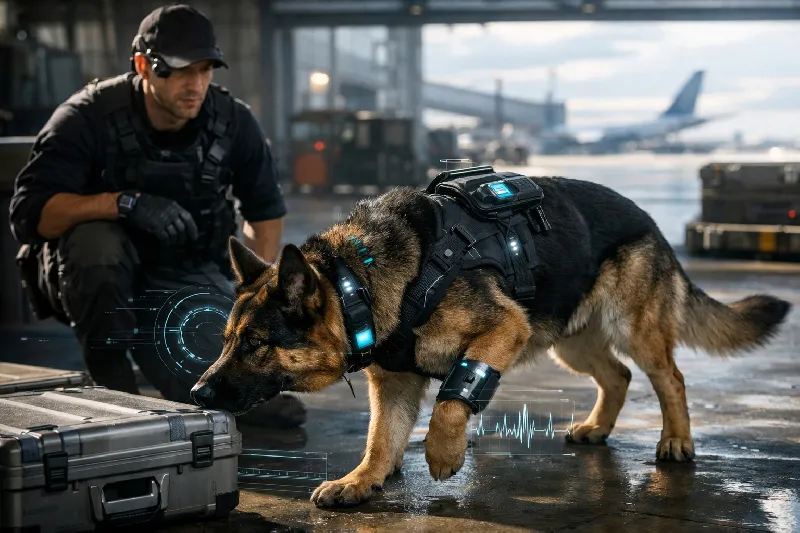
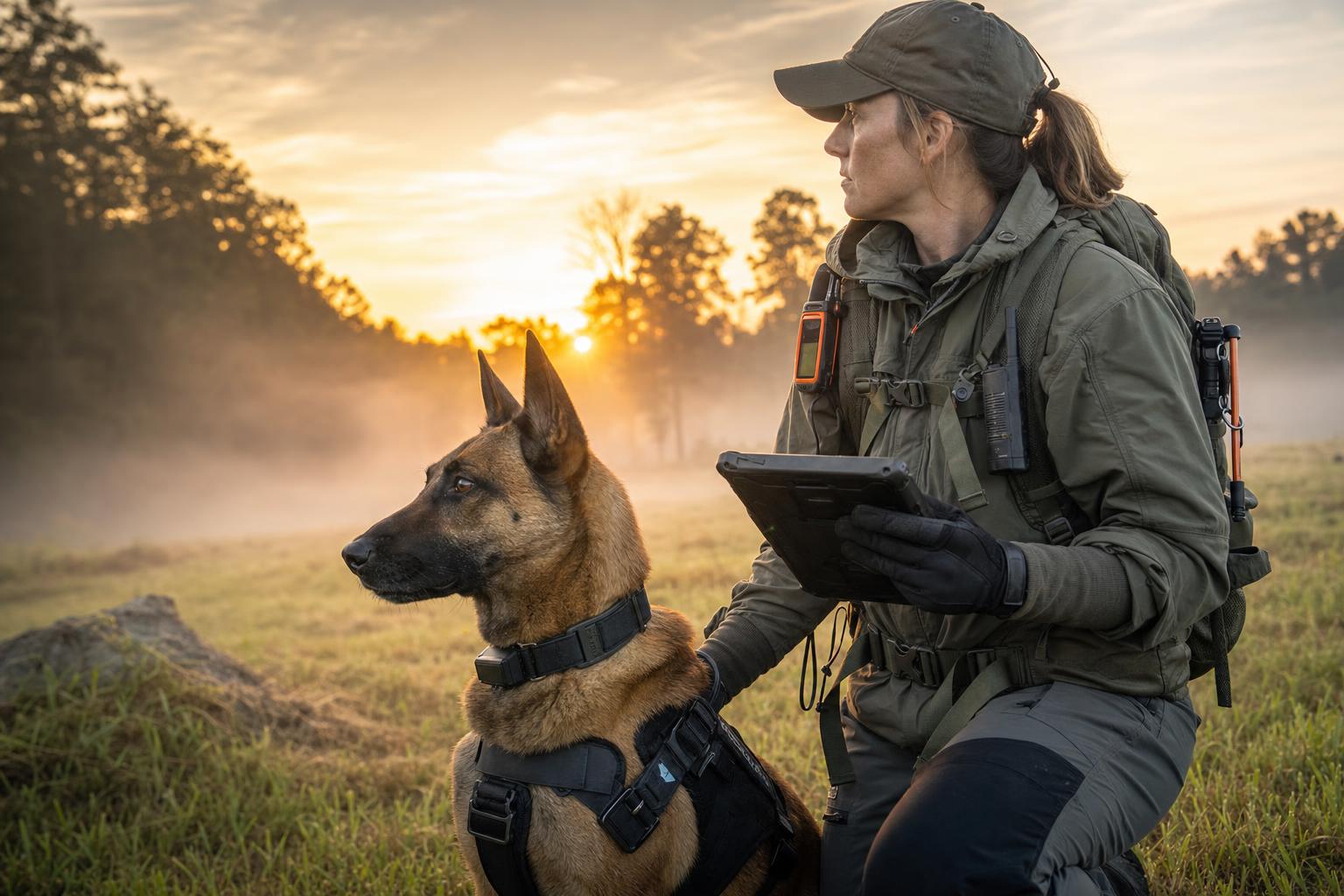
There is no question that technology is changing how handlers train and deploy dogs. GPS tracking collars, biometric monitors, body cameras, drone support, digital scent mapping, and improved communication systems are already becoming part of the working landscape. For handlers in large search areas, rough country, or urban response scenes, these tools can increase safety and improve coordination. They give teams better awareness of where the dog is, how the dog is moving, and what conditions may affect performance.
Still, anyone who has followed a dog through thick brush, over broken ground, or into a shifting wind knows there are limits to what a machine can interpret. A drone may cover ground, but it does not sort scent the way a trained nose can. A sensor may report stress, but it does not replace the judgment of a handler who knows the dog’s breathing, posture, and mindset. In the future, the strongest teams will be the ones that blend fieldcraft with technology instead of leaning too hard on either one.
Smarter data, better welfare
One of the most promising changes is how data can improve dog welfare. Trainers and agencies are paying closer attention to heat load, recovery times, orthopedic health, nutrition, and workload management. That matters. A working dog is an athlete, and the old attitude of simply grinding through every condition is giving way to a more professional approach. Better conditioning plans, injury prevention, and retirement planning will likely become standard expectations in serious K9 programs. That is good for the dog and good for the profession.
Detection work is expanding into new territory
Most people think first of narcotics, explosives, and tracking, and those roles remain essential. But dogs are now being trained for invasive species detection, conservation work, agricultural inspections, wildlife scat surveys, medical alert tasks, and even the identification of electronic storage devices. That range is only going to grow.
The reason is simple enough: a good dog’s nose is still one of the most efficient biological detection systems on earth. In places where time, access, and precision matter, dogs can do work that would otherwise take a crew of people much longer. In conservation, for example, dogs are helping locate rare species, identify disease threats, and support habitat management. On the medical side, research continues into scent-based detection that may assist with health monitoring and early alerts. These are not flashy ideas without backbone. They are practical applications rooted in what dogs already do naturally.
Service and support roles will become more specialized
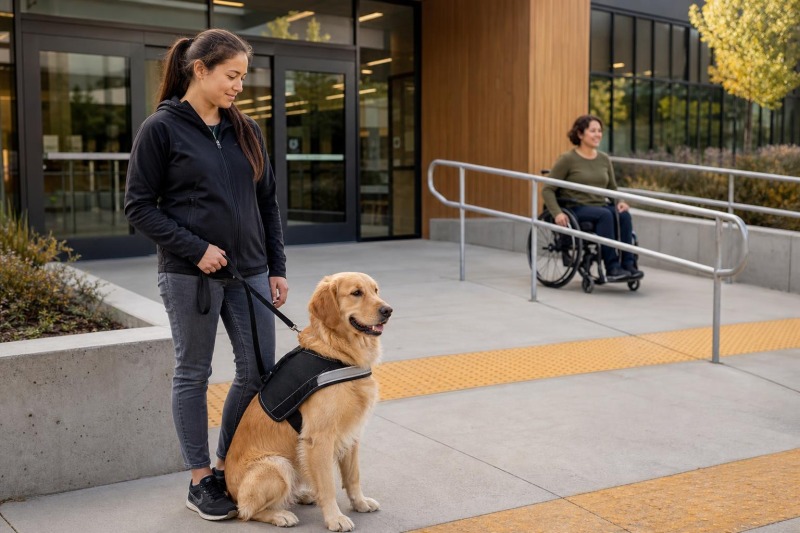
Service dogs and support dogs are also moving toward greater specialization. In years past, many people spoke about service dogs in broad terms, but the future points toward more carefully matched training for specific conditions and environments. That includes mobility support, psychiatric assistance, autism support, seizure response, diabetic alert, and trauma-informed placements. The best programs are becoming more selective, more evidence-based, and more accountable.
That increased specialization should help both dogs and owners. Not every dog is suited for every task, and forcing the wrong dog into the wrong job helps no one. The future will likely bring stronger standards around temperament testing, task reliability, public access behavior, and handler education. For dog owners interested in working dogs, this is an important lesson that reaches beyond service work: a dog thrives when its natural strengths align with its job.
Police and military K9 roles are evolving under closer scrutiny
Police and military dogs will remain central to working dog culture, but these professions are changing. Public expectations are higher than they once were, and agencies are under increasing pressure to document training methods, prove reliability, and demonstrate proper deployment standards. In truth, that pressure may strengthen the field over time. Strong programs have nothing to fear from accountability.
The future of K9 working professions in law enforcement will likely involve better scenario-based training, clearer certification processes, stronger legal oversight, and more transparent records of performance. Patrol, apprehension, detection, and tactical support work are demanding specialties that require dogs with unusual nerve and exceptional handling. As standards rise, the gap between serious K9 programs and weak ones will become more obvious.
For handlers, this means the craft must stay sharp. A hard dog with power is not enough. Control, discrimination, environmental stability, and recovery matter just as much. The future belongs to teams that can prove precision as well as intensity.
Breeding programs will face a turning point
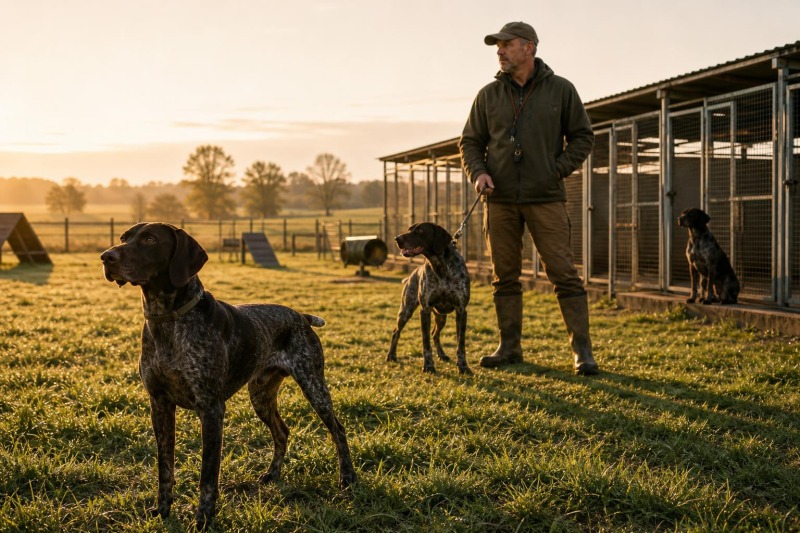
In the field, you can often see the future of a working line in the way a young dog carries itself before anyone says a word. Some dogs have that honest look, that forward mind, that readiness to solve a problem. But preserving those qualities is getting harder as demand rises and careless breeding follows the money. The next chapter in K9 working professions will depend heavily on whether breeders prioritize health, temperament, and working ability over appearance or trend.
There is reason for optimism. More programs are using health testing, performance records, and structured evaluations to make better breeding decisions. The best breeders understand that a pedigree on paper means little if the dogs cannot hold up physically or mentally in the real world. In the years ahead, successful breeding programs will likely become more transparent about outcomes, including working longevity, nerve stability, and suitability for specific roles.
The role of early development
Puppy raising and early exposure will continue to shape future success. Confidence in new environments, engagement with people, surface tolerance, noise recovery, prey development, and problem-solving all begin early. Good trainers have always known this, but more owners are now seeing how those first months influence the finished dog. The future is not just about selecting the right bloodline. It is about raising that potential correctly from the beginning.
Public education will matter more than ever
As working dogs become more visible in public life, education becomes part of the job. Many people admire working dogs without fully understanding the discipline behind them. They see the finished product and miss the long repetition, the maintenance training, the obedience under distraction, and the trust built over countless sessions. That gap in understanding can lead to unrealistic expectations from pet owners who want the look of a working dog without respecting the work itself.
Good trainers, handlers, and working dog websites have an opportunity here. They can help dog owners understand what drives these animals, what homes suit them, and what responsible ownership really looks like. That matters because the future health of K9 professions depends not only on agencies and trainers, but also on informed owners who appreciate the difference between a serious working dog and a fashionable label.
The human side will always decide the outcome
For all the talk about methods, genetics, and new equipment, the future still comes down to people. The finest dog in the world cannot overcome poor handling, weak timing, or inconsistent standards. On the other hand, a skilled handler can bring remarkable ability out of a good dog through patience, fairness, and repetition.
That is the part no trend can improve upon. The strongest K9 professions of the future will invest not only in dogs, but in the education and character of handlers themselves.
Looking ahead at the future of K9 working professions
The future of K9 working professions looks strong, but it will favor those who stay honest. Jobs will continue to diversify. Training will become more precise. Welfare standards will improve. Technology will sharpen deployment, and science will help us make better decisions about breeding, health, and development. Yet the foundation remains familiar to anyone who has spent real time behind a working dog: instinct, grit, judgment, and partnership.
For dog owners interested in working dogs, that future should be encouraging. There has never been more opportunity to learn about how these dogs think, how they are bred, and how they serve people in practical ways every day. Whether your interest starts in bird country, protection work, service training, detection, or search and rescue, the lesson is the same. Respect the dog for what it is. Build the basics well. Let purpose guide the training. If we do that, the next generation of working dogs will not just keep up with the times. They will help lead the way.