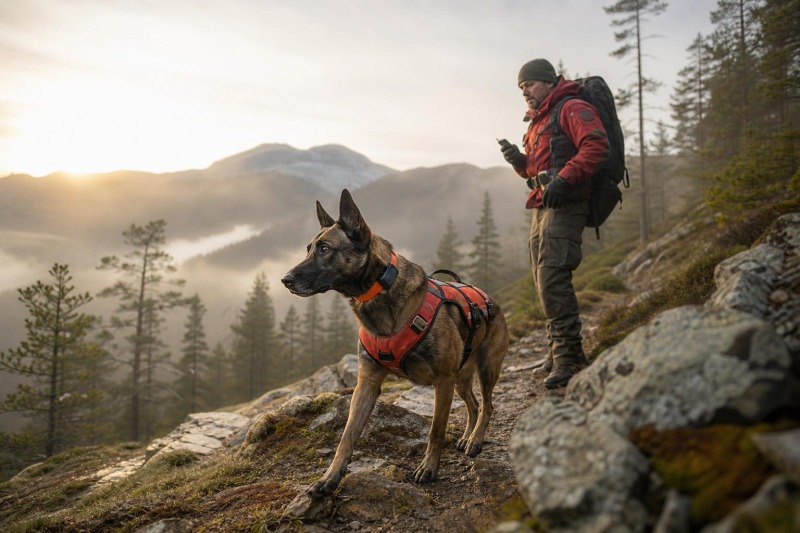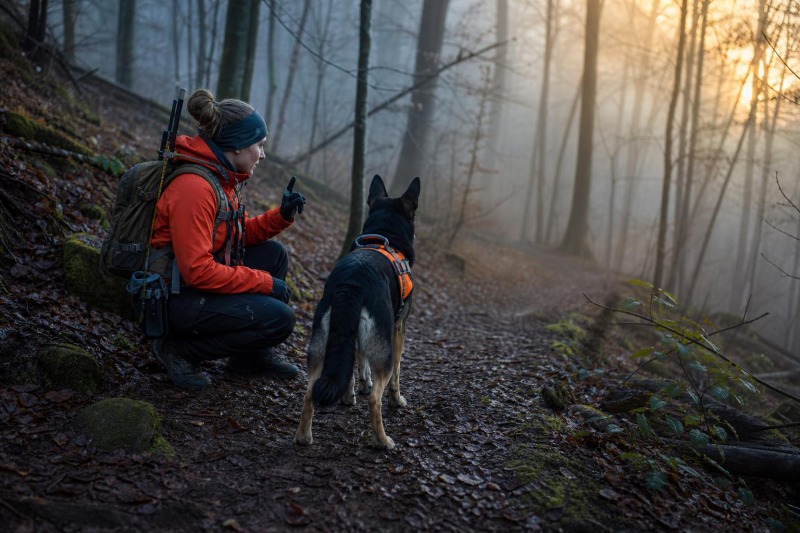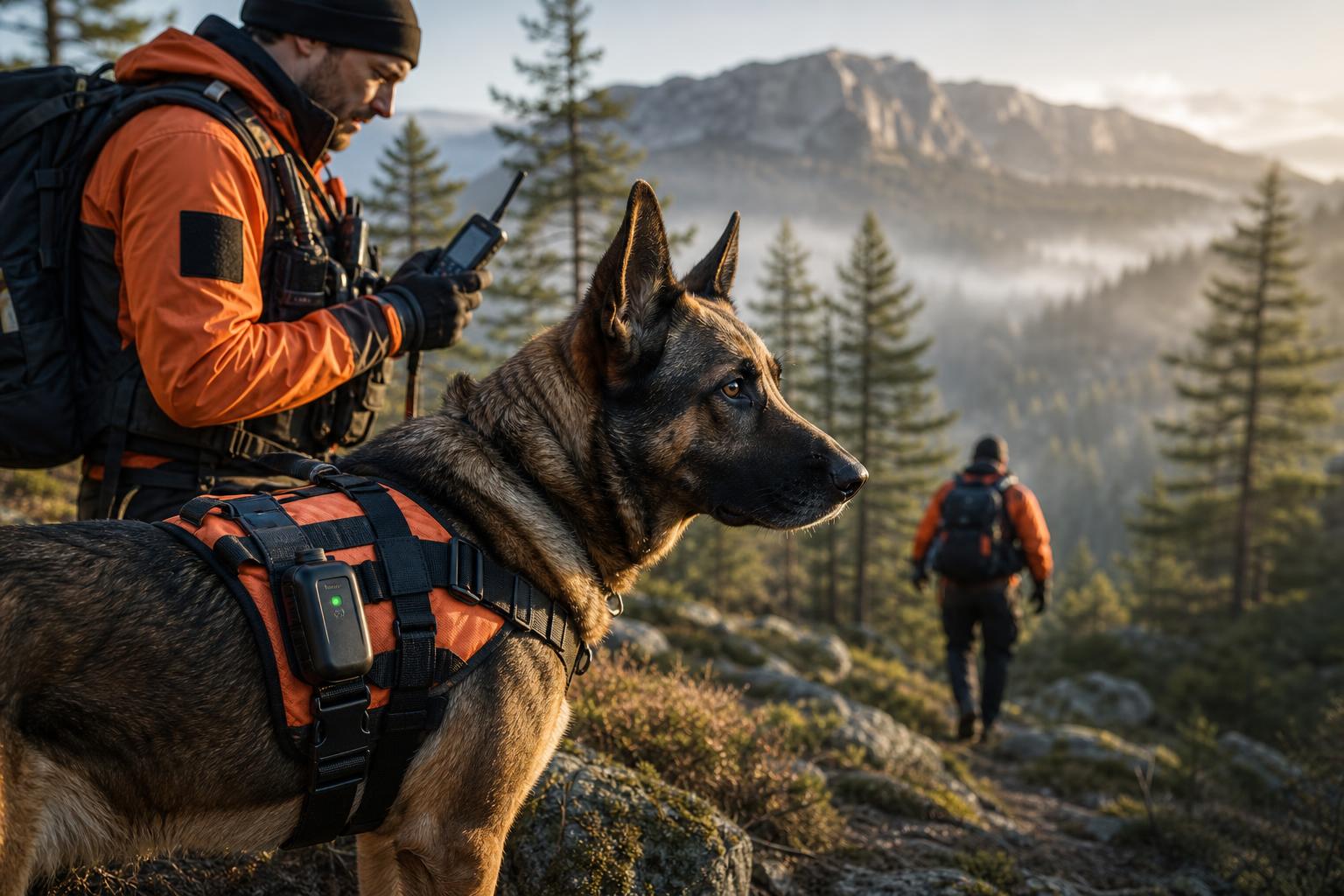
GPS, digital maps, and communications tools help search teams record coverage and share information. They are most useful when handlers understand their limits. Equipment checks and practiced navigation remain part of preparing a dog team for the field.
For dog owners interested in working dogs, search and rescue offers one of the clearest examples of where old-fashioned canine ability meets modern field technology. The dog’s nose remains the centerpiece. Nothing in a backpack, on a dashboard, or in the sky has replaced that. What technology has done is make good teams more efficient, safer, and better informed when time matters most.
How GPS Changed Search and Rescue Dog Work
Before widespread GPS use, handlers often relied on compass bearings, paper maps, radio check-ins, and memory to reconstruct a search pattern. Those methods still matter, and any experienced SAR handler will tell you they should never be abandoned. Batteries die. Screens break. Signal drops. But GPS has brought a level of precision to SAR operations that is hard to overstate.
A quality GPS tracking system allows handlers and incident command to see where a dog team has been, how thoroughly an area has been covered, and whether a team is drifting off assignment. In timber, broken hill country, swamp edges, or disaster zones with confusing sight lines, that information can keep a search from turning into wasted motion. If you have ever followed a hard-running dog through uneven country, you know how quickly distance can open up. GPS helps close that gap between what the dog is doing and what the handler understands in the moment.
For trailing and wilderness air-scent work, route history is especially valuable. A handler can review the dog’s movement afterward and match changes in behavior with terrain, wind, and likely scent drift. Over time, those tracks become training tools. You start seeing patterns. A dog loops here when scent pools in a draw. Another pushes ridgelines when the wind carries scent uphill. That kind of review helps sharpen judgment in a way memory alone often cannot.
Real-Time Tracking and Team Safety
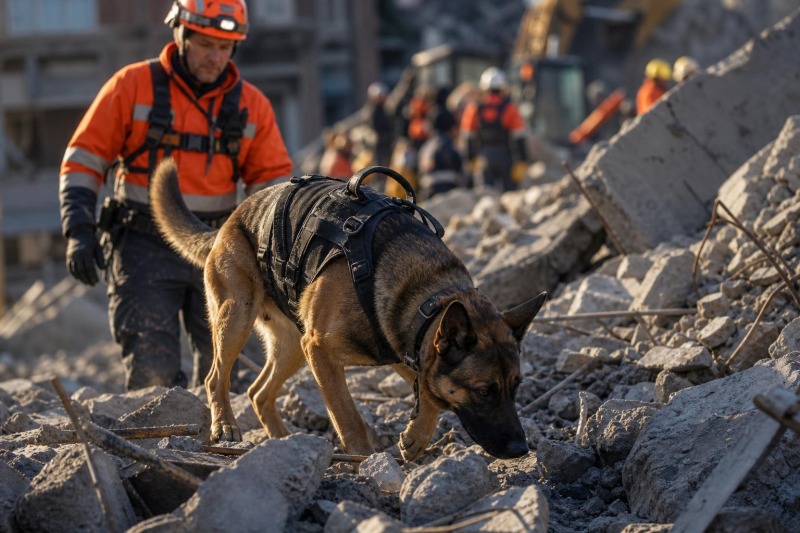
One of the strongest arguments for GPS in SAR operations has little to do with speed and everything to do with safety. Search environments are not always forgiving. Teams may work at night, in extreme weather, on steep ground, or in debris-strewn disaster areas. Knowing where each dog team is located helps command avoid overlap, prevent teams from crossing into hazards, and redirect resources when a promising lead develops.
For the handler, GPS can also reduce the temptation to over-handle a dog. That may sound backward, but it is true. A nervous handler who loses visual contact can start calling, whistling, or pushing too much. A handler who knows the dog’s general location and route can often give the dog room to work. Good dogs need that freedom. In many cases, the best work happens when the dog is trusted to solve the scent problem without constant interference.
Digital Mapping, Radios, and Mission Coordination
GPS is only part of the larger technology picture. In modern SAR work, digital mapping platforms and communication systems are just as important. Maps are no longer static pieces of paper folded on a truck hood. Today, search areas can be divided, updated, and shared quickly. Handlers can mark clues, hazards, tracks, scent articles, and last known points with a precision that improves the whole operation.
That matters because SAR is rarely just one dog and one handler walking into the woods. It is often a coordinated effort involving ground teams, law enforcement, emergency management, medical support, and sometimes aviation resources. Radios keep everyone tied together, and mapping software helps ensure those moving pieces are working from the same picture. A dog team may hit an area where the dog shows sudden interest near a creek crossing or abandoned structure. When that observation is relayed clearly and mapped accurately, the entire search can pivot faster and smarter.
As helpful as these tools are, they demand discipline. Technology can flood a team with information, and not all of it is equally useful. They do not let gadgets distract them from wind, terrain, footing, dog behavior, or the quiet little changes that often tell the true story.
Drones, Thermal Imaging, and the Expanding Toolbox
In recent years, drones and thermal imaging have added another layer to SAR operations. They are not dog replacements, and any honest operator will say so. Dense canopy, heat-soaked ground, weather, rubble, and simple line-of-sight limitations can all reduce their usefulness. But in the right conditions, they can save time and direct dog teams to the places where they are most needed.
Open country, flood zones, field edges, and large debris fields are situations where aerial support can provide real value. A drone team may identify access routes, detect possible heat signatures, or rule out broad sections of terrain. That can help dog handlers conserve canine energy for the highest-probability zones. Anyone who has conditioned a working dog knows stamina is a resource, not a guarantee. Smart deployment matters.
Thermal tools also remind us of a central truth in SAR: no single method solves every problem. Dogs work scent. Technology works data, heat, coordinates, and communication. The strongest operations bring those tools together without pretending one can fully stand in for the other.
Training with Technology Without Becoming Dependent on It
This is where good judgment separates polished teams from gear-heavy amateurs. Technology should be part of training, not the whole of it. GPS route review is useful. Video from training runs can reveal timing, handler mistakes, and dog behavior under pressure. Remote communication tools can help stage realistic scenarios. But dogs must still learn to work in difficult scent conditions, unfamiliar terrain, darkness, noise, and stress. Handlers still need map-and-compass skills, radio discipline, and the ability to make sound decisions when devices fail.
It is not. The mission is finding the subject. If a collar loses signal in a ravine, if weather interferes with aerial assets, or if a battery gives up halfway through a long deployment, the dog and handler still have to function. That old standard has not changed, and it never will.
What Dog Owners Should Understand About SAR Technology
For the average dog owner interested in working dogs, the lesson here is not that SAR requires a truckload of expensive electronics. The real lesson is that serious work rewards preparation and clarity. GPS and technology in SAR operations support planning, accountability, and safety. They also help organizations document searches, evaluate performance, and improve training over time.
But all that sits on top of a much older foundation. A SAR dog needs drive, nerve, physical soundness, and the right kind of mind. A handler needs patience, humility, and the willingness to keep learning. Technology can sharpen those strengths, but it cannot manufacture them. In the field, when weather turns ugly and the search has dragged on longer than anyone hoped, you still come back to the same essentials: trust the dog, know your country, and use your tools wisely.
That is the balance modern SAR keeps chasing, and when it is done right, it is a fine thing to watch. A dog ranges ahead with purpose, the handler studies both the dog and the terrain, command tracks the team’s progress, and every piece of the operation pulls in the same direction. It is not flashy when it works well. It is steady, disciplined, and deeply practical. That is usually the mark of good dog work, whether you are in a bird field, on a track, or searching for someone who needs to be found before the clock runs out.