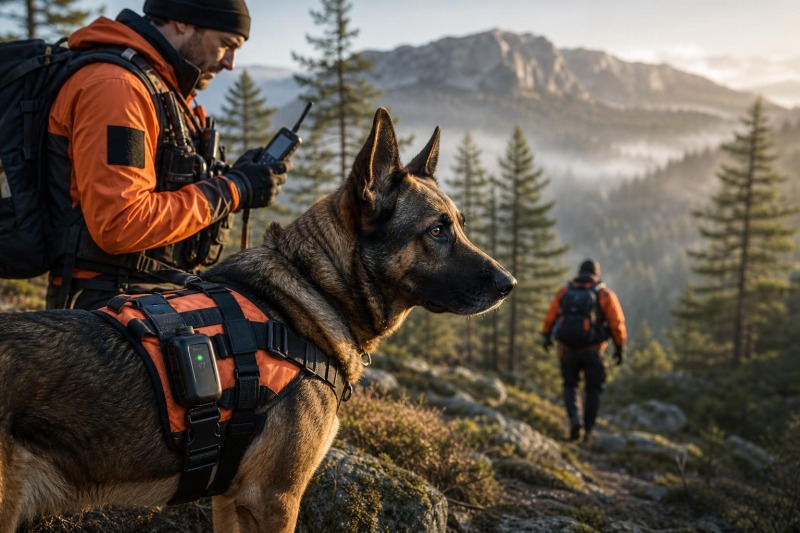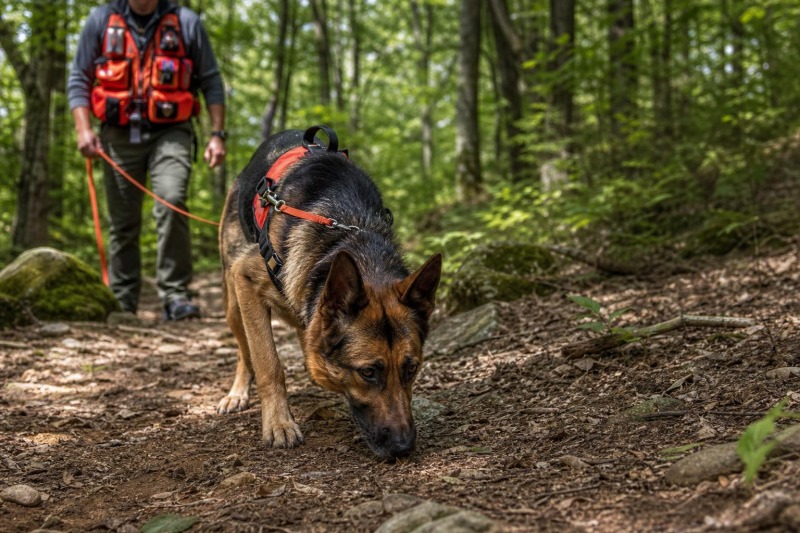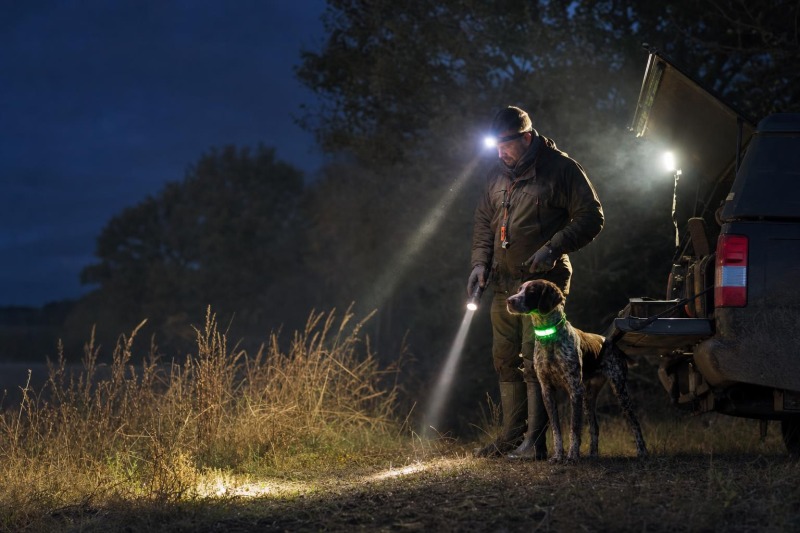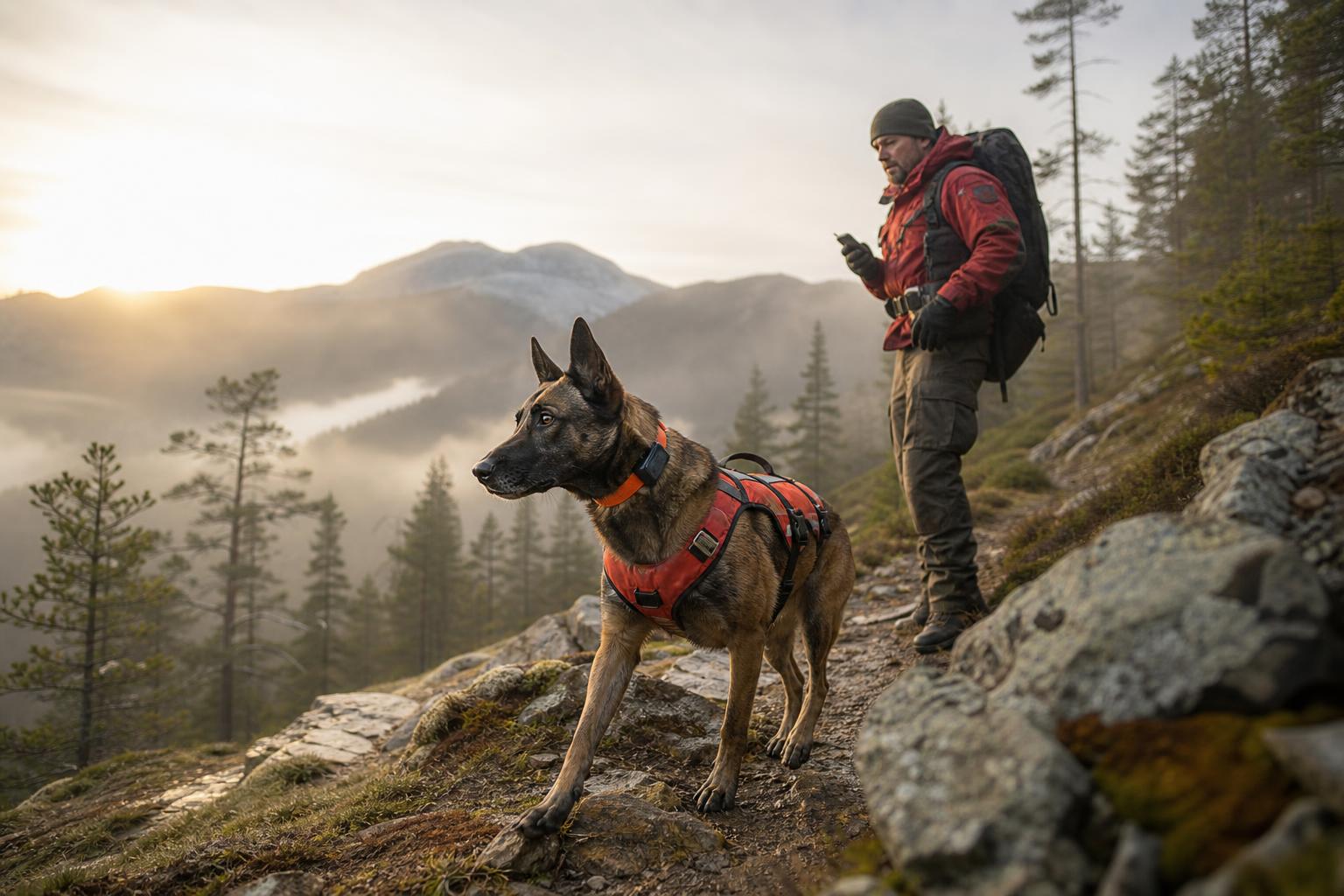
Tracking collars can help a search handler follow the dog’s location and record movement. Coverage, battery life, mapping, and communications need to suit the operating area. Practice with the system before relying on it during a search.
It has to hold up in mud, cold rain, deadfall, briars, steep country, and long days when nothing goes according to plan. GPS tracking collars for SAR dogs are no different. Plenty of units look impressive on a product page, but the field has a way of exposing weak batteries, clumsy interfaces, and collars that were clearly designed by folks who do not spend much time outside of a parking lot. When you are choosing a tracking collar for a search dog, you need to think beyond flashy features and focus on what keeps your dog visible, reachable, and working safely.
Why GPS Tracking Matters for Search and Rescue Dogs
Search and rescue dogs cover country fast. That is one of the things that makes them so valuable. Whether they are running area searches, trailing, or working wilderness missions, these dogs can push into places where a handler cannot immediately follow. In thick cover, broken hills, or nighttime operations, visual contact can vanish in seconds. A GPS tracking collar gives the handler real-time location data, travel direction, and often useful clues about speed, movement pattern, and whether the dog has gone stationary.
That information helps in ways that are easy to underestimate until you need it. If a dog starts casting wide on a flank, you can see it. If the dog is working toward a ravine, road, or water crossing, you can adjust quickly. If the dog shows a sudden stop in a place that makes sense with scent conditions, that can shape how the team responds. The best SAR dog GPS tracking collars do more than put a dot on a screen. They support better judgment in the middle of a fluid mission.
Reliable Range in Real Terrain
Manufacturers love to advertise big range numbers, but anyone with field time knows those claims are often measured under ideal conditions. Open country is one thing. Deep hardwood hollows, rock walls, dense pine, and urban interference are another. For SAR work, practical range matters more than brochure range. Look for a system with a strong reputation in mixed terrain and one that maintains signal stability when the dog drops over a ridge or works through heavy cover.
In real-world use, consistency beats theoretical distance every time. A collar that gives dependable communication over moderate range is more useful than one that promises huge coverage but turns spotty the moment the ground gets rough.
Fast, Clear Mapping and Dog Position Updates
In a serious search, stale location data can create bad assumptions. A good collar should provide updates quickly enough that your dog’s movement still reflects what is happening on the ground. The handheld or app interface should be easy to read under stress, in low light, and with gloved hands if necessary. Handlers do not need clutter. They need immediate, useful information.
Strong mapping support is equally important. Topographic detail, aerial imagery, track history, geofencing, and waypoint marking all add value when used well. Being able to review where the dog has already been can help identify coverage gaps, likely scent drift patterns, and terrain features worth rechecking.
Battery Life That Survives the Mission
Battery claims need the same skepticism as range claims. Search work can run long, especially when travel time, staging, and repeated deployments are involved. A collar may leave the truck fully charged and still end up challenged by cold weather, high update rates, and extended use. You want a unit with enough endurance to finish the mission, not just start it confidently.
It also helps to think about the entire system. A great collar is only as useful as the handheld or phone receiving the signal. Redundant charging options, vehicle charging, and power bank compatibility all matter more than most people realize until a screen starts dimming at the wrong time.
Durability Is Not Optional
SAR dogs are hard on equipment because they are expected to work hard. They crash through cover, hit water, roll in sand, climb over rubble, and squeeze through places that punish weak buckles and fragile housings. A collar used for search and rescue needs strong waterproofing, secure strap construction, and hardware that stays functional after repeated abuse.
This is where experienced handlers tend to get opinionated, and for good reason. Small failures become big problems in the field. A cracked antenna, unreliable charging port, or flimsy collar strap can take a good dog out of action or put that dog at unnecessary risk. The best GPS tracking collars for working dogs are built like working gear, not consumer electronics dressed up in bright colors.
Fit, Comfort, and Weight on the Dog
A tracking collar can have every advanced feature in the world and still be a poor choice if it interferes with the dog’s movement. Search dogs need to run freely, turn cleanly, jump obstacles, and work with confidence. A collar that shifts, rubs, or hangs awkwardly can create distraction or fatigue over a long deployment.
Fit matters more than some new handlers expect. The collar should ride securely without choking, bouncing, or snagging excessively in brush. Size should match the dog’s frame and coat. A heavy unit on a smaller dog is not just inconvenient. It can affect how that dog works, especially during long-area searches or repeated missions across difficult ground.
Training Features: Useful, but Secondary
Some GPS tracking collars include stimulation, tone, or vibration features. Depending on the team, those functions may or may not have a place. In the SAR world, tracking and communication should come first. The primary job of the collar is to tell you where the dog is and support field coordination. Any training feature should be reliable, humane, and appropriate to the dog and the organization’s standards.
Extra features are only valuable if they do not compromise the main job. If the added complexity shortens battery life, slows the interface, or introduces confusion in a tense moment, it may not be worth having.
How GPS Collars Improve Team Safety
One of the biggest advantages of SAR dog GPS tracking collars is not just dog safety, but team safety. A dog working ahead can reveal usable travel routes, dangerous terrain, or unexpected barriers. Knowing the dog’s exact line of travel helps handlers move smarter and keeps support personnel better informed. During low-visibility operations, especially in unfamiliar country, location tracking can prevent a search from creating a second emergency.
There is also the plain truth that good dogs are valuable in ways that go beyond money. They represent years of training, trust, and field partnership. When one gets out of pocket in bad country or near a hazard, a dependable collar changes the tone of the situation. Panic gives way to problem solving, and that alone can save precious time.
Match the Collar to the Environment
Not every team works the same terrain. A handler in open western country may prioritize long-range communication and broad mapping visibility. A team in heavy Appalachian timber may care more about signal retention through folds and cover. Urban SAR brings its own challenges, including interference, rubble, and tight movement zones. The right collar is the one that performs where your dog actually works, not where the advertisement was filmed.
Think in Systems, Not Single Products
Collars, handheld units, charging accessories, maps, software updates, and team compatibility all belong in the conversation. If multiple handlers in your organization use the same platform, that can simplify coordination and training. It also helps with troubleshooting when something acts up under pressure. The best setup is often the one that the whole team can operate confidently, not the one with the longest feature sheet.
A good search dog has enough on its mind without carrying weak gear into hard country. The collar you trust should be accurate, durable, comfortable, and simple enough to use when fatigue sets in and the weather turns sour. That is the standard. Anything less is just extra weight around the dog’s neck.
It does not beg for attention. It simply keeps doing its job while the dog does its own. That is what you want from a SAR dog GPS tracking collar. When the dog drops out of sight, the map stays honest, the signal holds, and the handler can keep thinking clearly. In search and rescue, that kind of reliability is not a luxury. It is part of the craft.