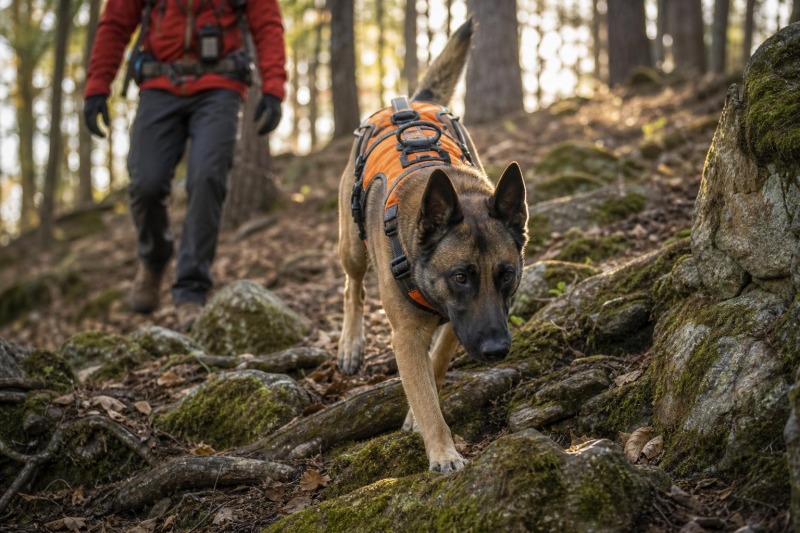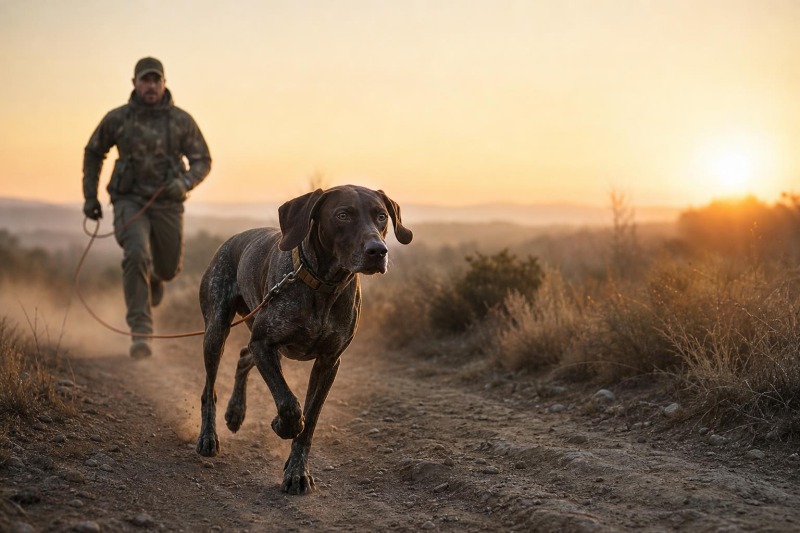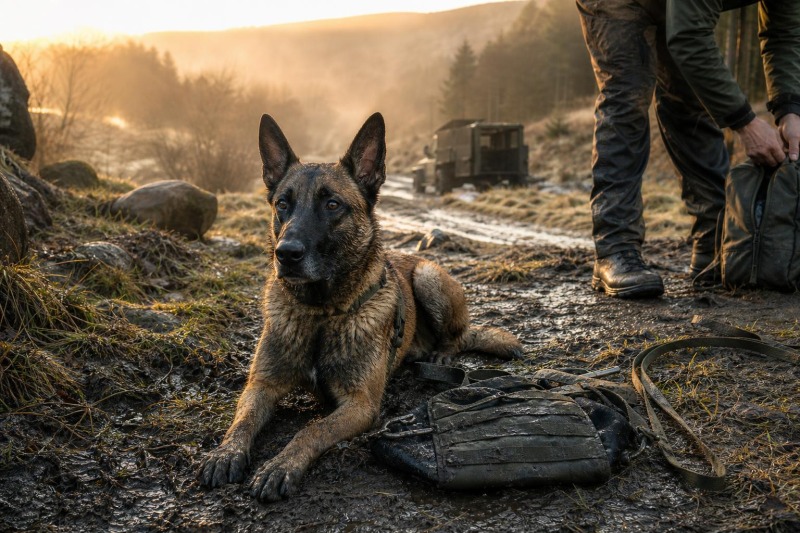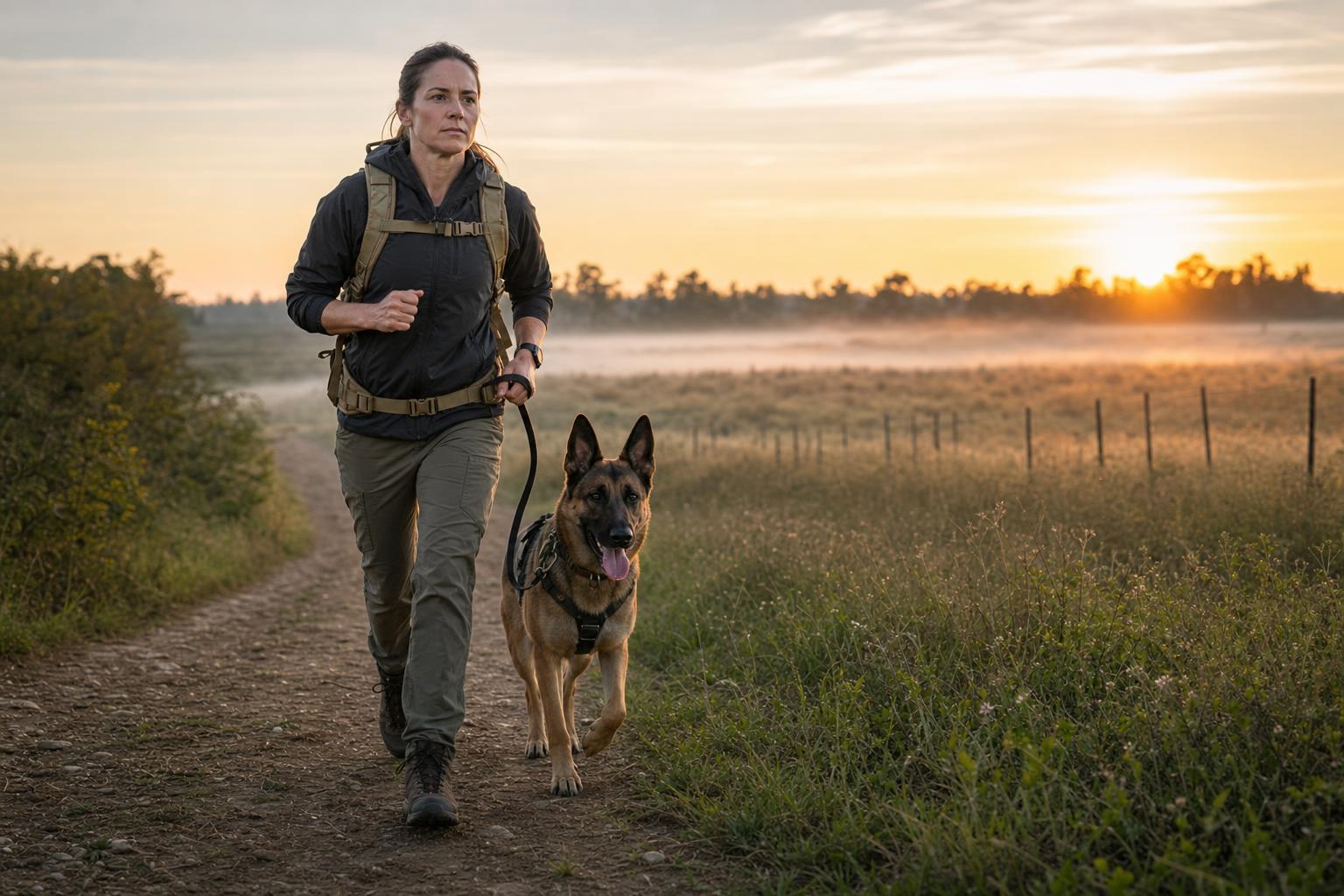
Folks spend a lot of time talking about dog conditioning, and rightly so. We talk about wind, muscle, hydration, foot care, heat tolerance, and recovery as if the dog is the only athlete in the partnership. But any hunter or trainer who has spent enough seasons behind a hard-going dog learns the same lesson sooner or later: if the handler is out of shape, the whole team pays for it. Handler fitness and conditioning are not vanity topics. They are practical, field-level necessities that affect safety, timing, judgment, and how well a working dog can do his job.
A fit handler moves better, thinks clearer, recovers faster, and keeps up with the dog without making poor decisions out of fatigue. That matters whether you are running retrievers, flushing dogs, pointing dogs, shed dogs, or a versatile dog expected to do a little of everything. A dog may have the heart, nose, and drive, but if the handler cannot maintain pace, manage terrain, or arrive in position when it counts, performance suffers.
Why Handler Fitness Matters More Than Most People Admit
A working dog reads the handler all day long. He notices pace changes, hesitation, sloppy timing, and whether you are steady or ragged. When a handler is tired, commands come late. Whistle timing gets muddy. Body language becomes inconsistent. Instead of leading the hunt, the handler starts reacting to it, and that is where small mistakes turn into real problems.
On rough ground, poor conditioning also becomes a safety issue. Uneven creek banks, deadfall, mud, sidehills, frozen ruts, and tall grass all punish weak ankles, tight hips, and tired backs. A handler who is breathing hard and stumbling is not in a good place to help a dog at a fence crossing, reach a downed bird quickly, or respond when a dog gets into trouble. In warm weather, fatigue and dehydration cloud judgment even faster. The dog depends on the handler to make smart calls before conditions get dangerous.
There is another truth that some folks do not like to say out loud. A fit handler simply gives a working dog more opportunity. More ground gets covered. More productive time gets logged. Training sessions stay crisp instead of cutting short because the handler is spent. Over the course of a season, that adds up to better dog development and better results.
Endurance Builds Better Decisions
Endurance is the backbone of handler fitness and conditioning. If you hunt big country or train with any regularity, you need enough gas in the tank to stay composed deep into a session. Endurance is not just about surviving a long walk. It is about keeping your mind sharp and your movements controlled after hours on your feet.
A handler with decent cardiovascular fitness can keep a steady pace, recover quickly after climbing or pushing through heavy cover, and avoid that worn-down feeling where every choice starts to get lazy. You do not need to train like a marathoner, but you do need enough work capacity to handle the demands of your dog and your country. Brisk walking, hiking with elevation, light jogging, cycling, rowing, and carrying a pack all build useful endurance that translates well to the field.
Strength Supports Control and Durability
Strength is often overlooked because field work does not always look like a gym exercise. But think about what handlers actually do. We lift dogs into boxes and kennels, carry birds and gear, kneel and stand repeatedly, climb obstacles, stabilize on awkward ground, and sometimes help a dog through water, ice, or wire. Strength in the legs, hips, back, shoulders, and grip makes all of that easier and safer.
The strongest handlers in the useful sense are not always the biggest. They are the ones who can move efficiently under load and stay solid when footing turns bad. Squats, step-ups, lunges, deadlift variations, rows, presses, and carries all have practical value. Even a modest strength routine done consistently can help prevent the nagging soreness and fatigue that wear handlers down over a long season.
Mobility Keeps You in the Hunt
Tight hips, stiff ankles, and a locked-up back are common in handlers who sit too much during the week and try to become mountain goats on the weekend. Mobility is what lets you step over logs, crouch near a dog, turn quickly on a flush, or plant your feet on a slope without straining something. It also helps you absorb the long miles without accumulating so much stiffness that every outing gets harder.
Good mobility is not about circus-level flexibility. It is about having functional range of motion where you need it most. Ankles, hips, hamstrings, thoracic spine, and shoulders all matter. A few minutes of daily mobility work and a proper warm-up before training can save a lot of trouble later.
Recovery Separates Consistency from Burnout
Seasoned handlers know that toughness has its limits. You can gut through one hard day, maybe two, but poor recovery catches up. Sleep, hydration, nutrition, and pacing are all part of handler fitness and conditioning. If you come into each session run down, underfed, and dehydrated, your dog will eventually feel it too.
Recovery is especially important for older handlers, but the truth is it matters at every age. Sore knees, inflamed backs, and chronic fatigue do not just appear overnight. They usually build from repeated neglect. A little discipline with recovery keeps a handler consistent, and consistency is what makes better dogs.
Training for the Real Demands of Working Dogs
The best conditioning plan for a handler should resemble the work itself. That means walking often, hiking uneven terrain, carrying modest loads, and building the sort of all-day stamina that hunting demands. Fancy programming is not necessary. What matters is regular effort and enough variety to build a durable body.
Can you walk hard for several miles without blowing up? Can you climb a hill, cross a ditch, and keep your breathing under control enough to handle the next piece of dog work? Can you bend, lift, and move without dreading the next morning? Those questions matter more than what a scale says or how much weight you can move one time.
For many handlers, the smartest approach is a mix of steady cardio, basic strength work two or three times a week, and regular mobility. Add in hikes with your dog when possible, and now you are building both sides of the team. Keep the work progressive. Start where you are, not where you think you should be. The field has a way of exposing pride in a hurry.
How Fitness Changes Dog Handling in Practical Terms
A fit handler gets to the bird fall faster. He reaches a dog on point with more control and less crash. He can handle check cords, launchers, decoys, bumpers, shotguns, and training gear without rushing or fumbling. He is less likely to lose patience because he is less physically taxed. That may sound small, but dogs thrive on consistency, and consistency gets harder to maintain when the handler is smoked.
Late whistle. Slow repositioning. Poor support in heavy cover. Missed reads because they were too winded to pay attention. Once the handler got in better shape, the dog somehow looked more cooperative and more polished. That is not coincidence. A strong handler often reveals a better dog.
Conditioning Through the Off-Season
The off-season is where handler fitness and conditioning really get built. Trying to get in shape after opening day is like trying to sharpen a knife after the bird is already down. It is backward. Use the months before heavy training or hunting to lay a base. Build endurance first, then layer in strength and terrain-specific work.
If you know your season means climbing ridges, train on hills. If you run marshes, get used to long steady efforts and unstable footing. If your dog works wide and fast, your own conditioning needs to support quick changes in pace and long hours. Match your preparation to your reality. The field rewards honest preparation more than ambition.
Age, Wear, and Staying Effective for the Long Haul
They may not move as fast as they did at thirty, but they move better because they train smarter. They warm up, keep their weight in check, strengthen their legs and back, and respect recovery. As a result, they remain effective, and their dogs benefit from that steadiness.
There is no shame in adjusting how you condition as the miles pile up. In fact, there is wisdom in it. Longevity in working dogs often depends on the handler’s ability to stay capable enough to train, guide, and protect them season after season.
A working dog is an athlete, but so is the person behind him in a practical sense. Handler fitness and conditioning influence every piece of the partnership, from timing and safety to endurance and overall success. You do not need to become a fitness fanatic, but you do need to be honest about what the field demands and whether your body is ready for it.
When a handler is fit, the dog gets better support, better opportunities, and better leadership. That is the plain truth of it. If you care about your dog’s performance, his safety, and the quality of your days together, then your own conditioning belongs in the conversation. A stronger handler makes for a steadier team, and that is something worth working for every month of the year.