A search dog needs enough fitness to work effectively and recover from the effort. Terrain, temperature, search duration, and the dog’s condition all influence the workload. Build preparation gradually rather than asking enthusiasm to cover a gap in conditioning.
Search work asks for a rare mix of endurance, agility, stability, and focus. A SAR dog may need to climb through timber, cross slick creek banks, scramble over rubble, and then keep hunting with a clear head. That does not happen by accident. It comes from a conditioning program that respects the dog’s structure, age, workload, and the kind of missions it is expected to handle.
Why Conditioning Matters Beyond Simple Fitness
When people hear the word conditioning, they often picture roadwork or long walks. That is part of it, but field-ready conditioning goes deeper. A SAR dog needs a heart and lung engine big enough to work for extended periods, muscles strong enough to protect joints under stress, and feet tough enough to hold up over rough terrain. Just as important, the dog needs body awareness. In difficult country, a dog that knows how to place its feet, balance on uneven ground, and move efficiently wastes less energy and stays safer.
There is another side to this that seasoned handlers learn quickly. A poorly conditioned dog does not just tire out faster. Fatigue changes behavior. Scent work can become sloppy. Confidence can dip. Decision-making can suffer. The dog may start avoiding obstacles, miss odor, or lose intensity late in the search. Good physical preparation helps preserve the mental side of performance, and in SAR work that can make all the difference.
Start with the Dog in Front of You
No honest conditioning plan begins with a generic schedule pulled off the shelf. You start with the dog itself. Age matters. Breed type matters. Structure matters. A young dog still growing should not be drilled like a mature operational dog. A heavy-coated dog in summer needs a different approach than a lean, heat-tolerant dog in cool mountain air. Dogs with prior injuries, soft feet, or weak toplines need a slower and smarter progression.
Before increasing workload, it helps to take a plain look at the dog standing in front of you. Is the waist visible? Can you feel ribs without digging? Does the dog move freely, or is there stiffness when getting up? Does it recover quickly after exercise, or does it stay blown out longer than it should? Those observations tell you more than enthusiasm ever will. Drive can hide fatigue, and plenty of hard-going dogs will run themselves into trouble if the handler lets them.
Body Condition and Weight Control
Excess weight is one of the quiet thieves of performance. It adds strain to joints, reduces heat tolerance, and makes every climb more expensive. A SAR dog should be lean, athletic, and well-muscled, not bulky. In working condition, most dogs perform best when they carry less body fat and more useful muscle. That does not mean starved or tucked up to an unhealthy point. It means fit enough that movement is easy and efficient.
Building the Aerobic Base
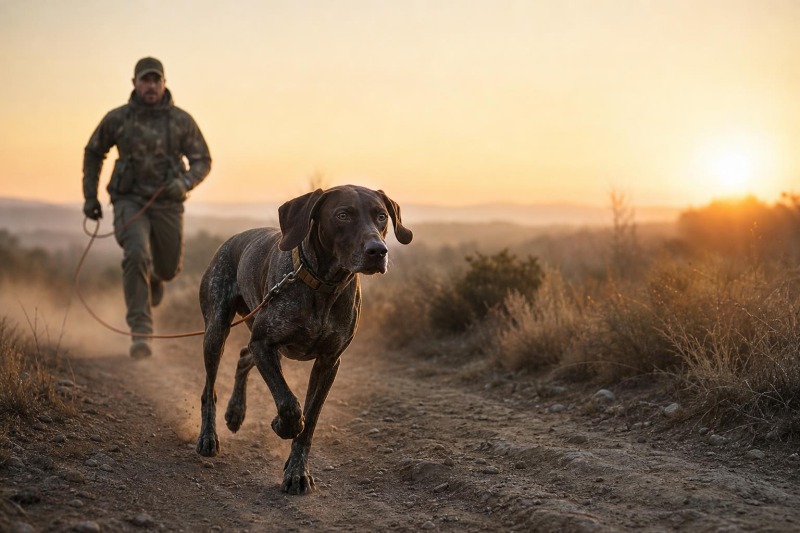
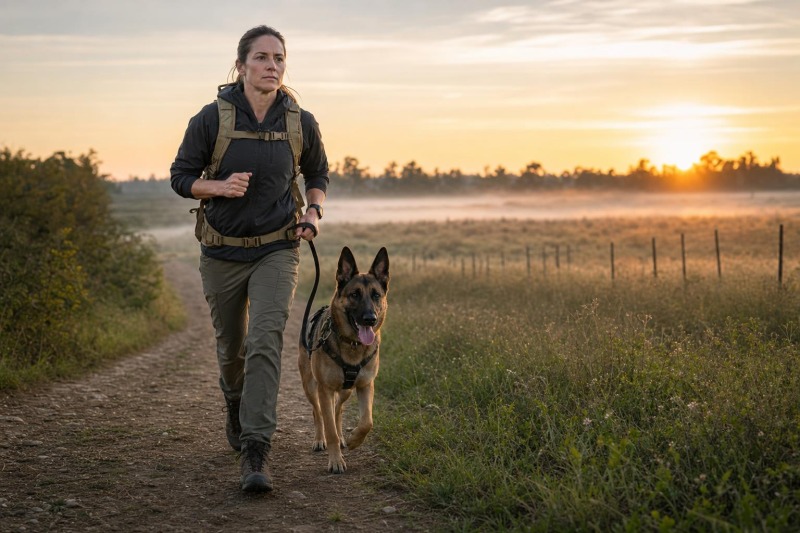
The foundation of physical conditioning for SAR dogs is aerobic work. This is the steady, controlled exercise that builds endurance and recovery capacity. Long walks over varied terrain, easy trail hikes, and moderate trotting are all useful tools. The key is consistency. You are not trying to crush the dog. You are teaching the body to work efficiently over time.
They walked creek bottoms, old logging roads, open fields, and wooded ridges. The dogs learned to move over changing ground without panic or wasted effort. Over time, lungs strengthened, feet hardened, and recovery improved. It was not flashy, but it was effective.
Progress should be gradual. Increase time, distance, or terrain difficulty in small steps. If you add everything at once, you are asking for soreness or injury. A dog coming off a slow period may start with shorter sessions several times a week, then build toward longer efforts with more elevation or tougher footing. The body adapts if you let it. Rush the process and it will push back.
Strength, Stability, and Functional Movement
Endurance alone will not carry a SAR dog through blowdowns, rubble piles, and awkward climbs. Strength matters, especially in the rear assembly, shoulders, core, and small stabilizing muscles that keep joints tracking properly. Functional strength is what helps a dog launch up a bank, crawl through debris, brace on a sidehill, and descend without pounding itself to pieces.
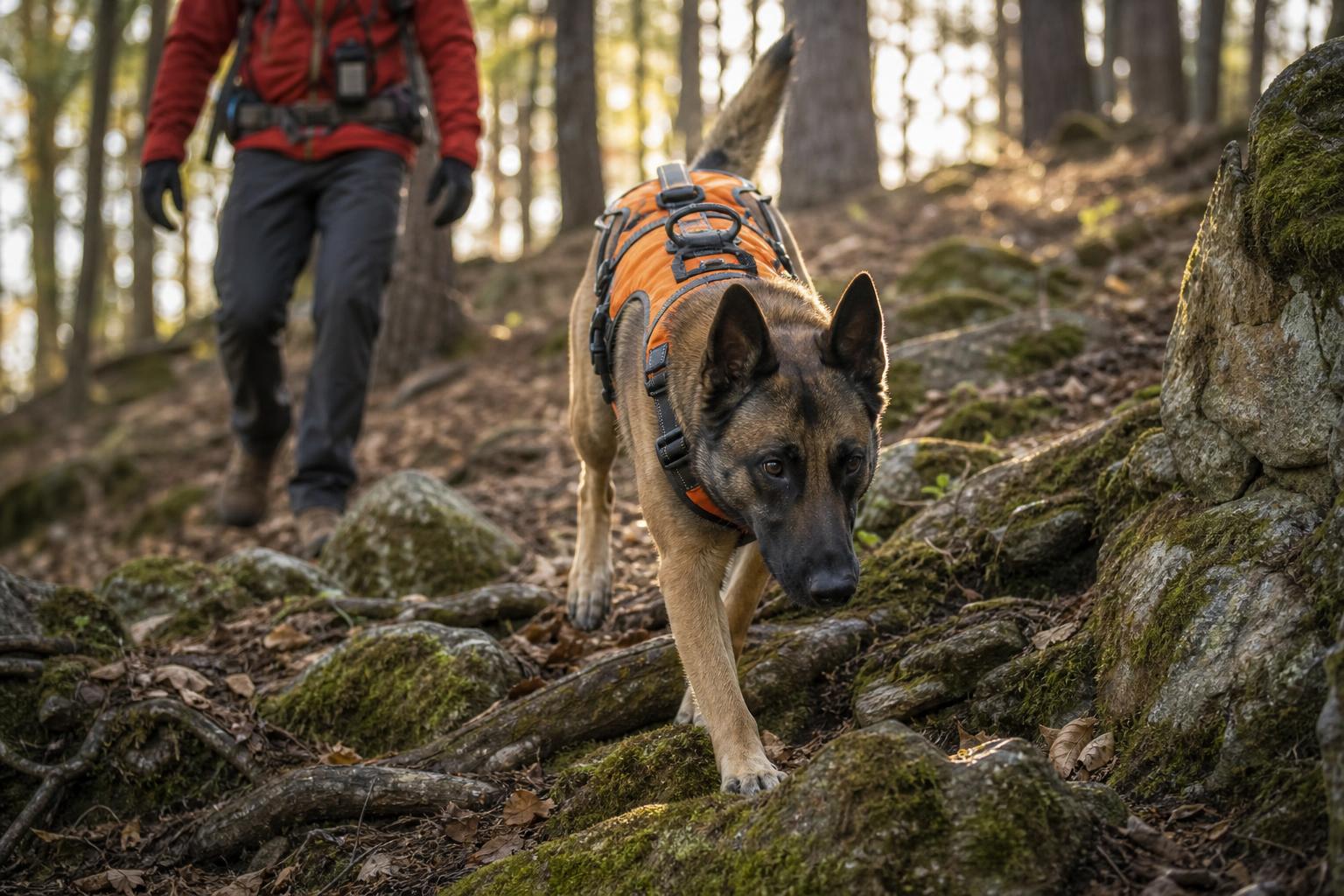
Hill work is one of the finest tools a handler can use. Controlled uphill movement develops rear-end power and cardiovascular capacity at the same time. Descending, done carefully, teaches balance and control. Uneven ground also has value because it challenges coordination in a way flat surfaces never will. Sand, leaf litter, shallow water crossings, rock, and deadfall all teach a dog to use its body with purpose.
Simple balance work can help as well. Stepping onto stable platforms, pausing on uneven but safe surfaces, and moving slowly through obstacles can improve proprioception, which is the dog’s sense of where its body is in space. That may sound technical, but in plain field terms it means fewer missteps and better movement when the dog is tired.
Conditioning for Real Terrain
A dog conditioned only on smooth paths is not truly field conditioned. Search and rescue missions rarely happen on forgiving ground. If your operational area includes rock, mud, slash, swamp edges, or urban rubble, the dog needs exposure to those environments in training. The paws, joints, and mind all need to learn what that footing feels like. There is no substitute for terrain-specific experience.
Heat, Cold, and Environmental Demands
Weather changes the equation fast. Heat is often the bigger danger because a hard-charging dog will keep working long after it should slow down. Conditioning improves heat tolerance somewhat, but no amount of fitness makes a dog immune. Handlers need to know their dog’s signs of overheating, adjust work-rest cycles, and use common sense about time of day, humidity, and surface temperature.
Cold brings its own problems. Dogs may work hard and stay eager while burning energy fast, especially in wet conditions or deep snow. Muscles can tighten in cold weather, and pads can wear or crack when ice and rough crust are involved. A conditioned dog usually handles environmental stress better, but it still needs smart management. Water, rest, and post-work care are as much a part of conditioning as the workout itself.
Recovery Is Where the Dog Gets Better
Hard work matters, but recovery is where the body adapts. Without enough rest, you do not build a stronger dog. You build a tired one. Soreness, reluctance, reduced appetite, flat attitude, and stiff movement can all signal that the dog needs a lighter hand for a few days.
Feet deserve special attention. Minor abrasions, torn nails, and pad wear can turn into bigger problems if ignored. Muscles and joints should be watched too. A dog that looks a little off the next morning is telling you something. Listen early and you can avoid a longer setback later.
Sleep, Nutrition, and Hydration
No conditioning program is complete without proper feeding and hydration. A working dog needs fuel that supports muscle maintenance, recovery, and sustained output. Quality nutrition, appropriate portion control, and steady hydration habits all contribute to field performance. On active days, many handlers find that careful meal timing helps avoid digestive upset while still keeping energy available. The details vary by dog, but the principle stays the same: a hardworking dog needs thoughtful support, not guesswork.
Avoiding Injury Through Smart Progression
The hardest lesson for enthusiastic handlers is that more is not always better. Repetitive impact on hard surfaces, sudden spikes in distance, endless ball throwing, and intense work without recovery all stack risk where you do not want it. Search dogs are valuable not only because of what they can do today, but because of how long they can stay sound enough to do it.
Rotate workloads. Mix easier aerobic days with strength-focused terrain sessions and lighter recovery days. Watch gait closely. A subtle hitch, shortened stride, or repeated stumble may be the first warning. Good handlers catch those signs before they become a veterinary problem.
Conditioning the Mind Through the Body
One thing old field hands appreciate is how physical preparation steadies the mind. A dog that trusts its body often works with more confidence. It pushes through thick cover better, commits to obstacles more willingly, and stays more composed when the search drags on. Conditioning done right does not create mechanical movement. It creates a dog that feels capable, and that feeling carries into the work.
That is what you want. Not a flashy sprint at the start followed by a fade, but a durable effort that holds together when the assignment turns difficult.
Physical conditioning for SAR dogs is about readiness and longevity. You are building more than muscle. You are building resilience, recovery, confidence, and the kind of practical durability that real search work demands. There is no secret formula, only good habits applied over time. Honest miles, varied ground, smart progression, attention to recovery, and a clear-eyed view of the dog in front of you will carry you a long way.
If you handle a SAR dog, treat conditioning as part of the craft, not an afterthought. The field has a way of exposing shortcuts. A properly conditioned dog moves better, works longer, and has a better chance of coming home sound after doing an important job. That is worth the effort every single time.