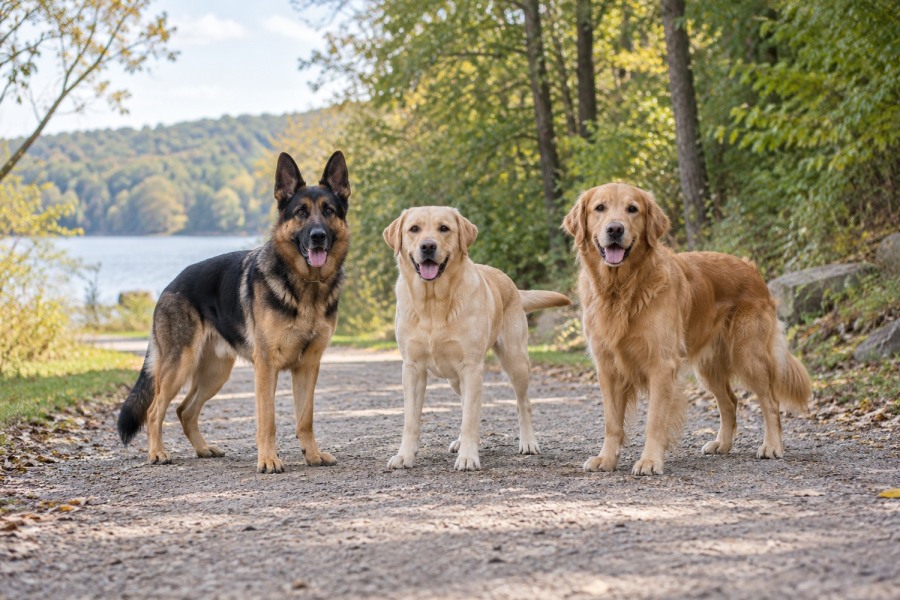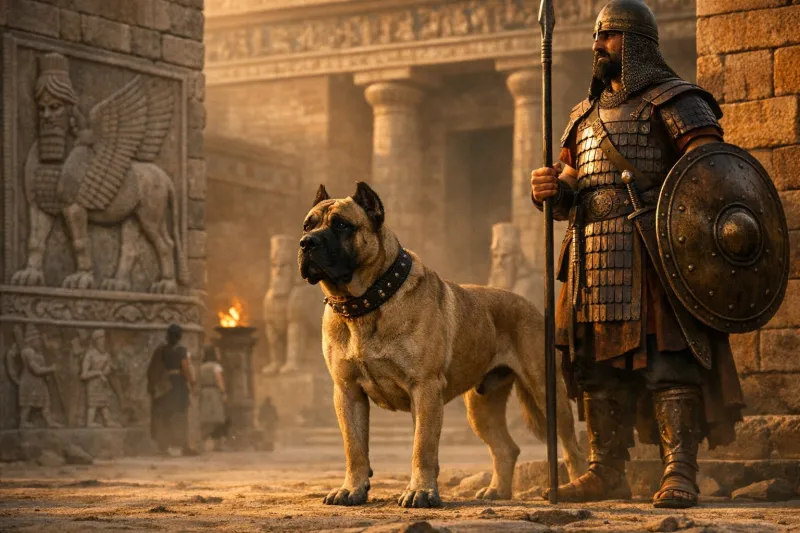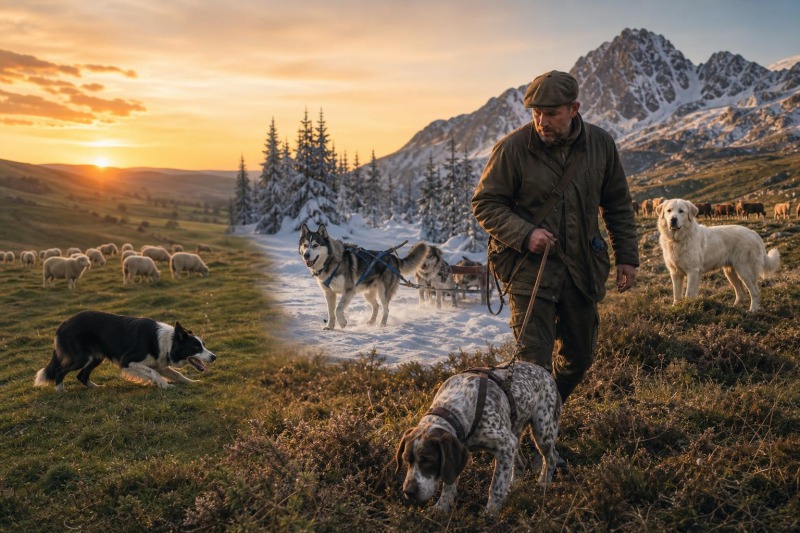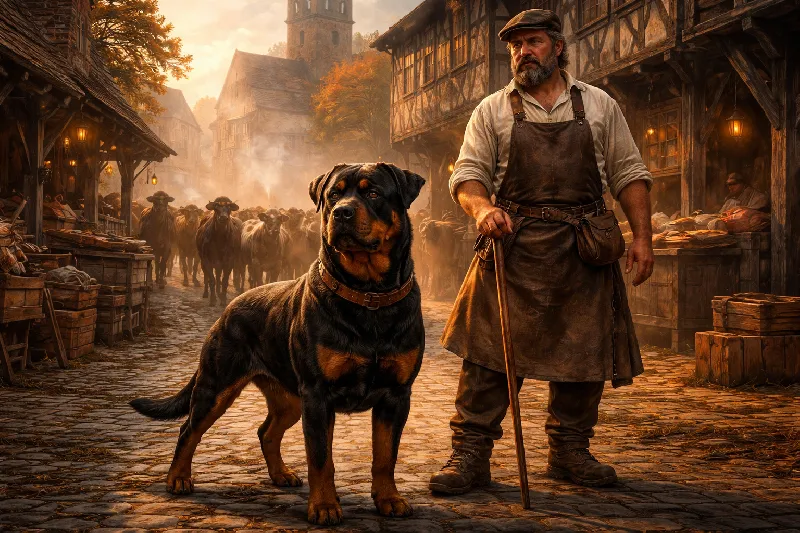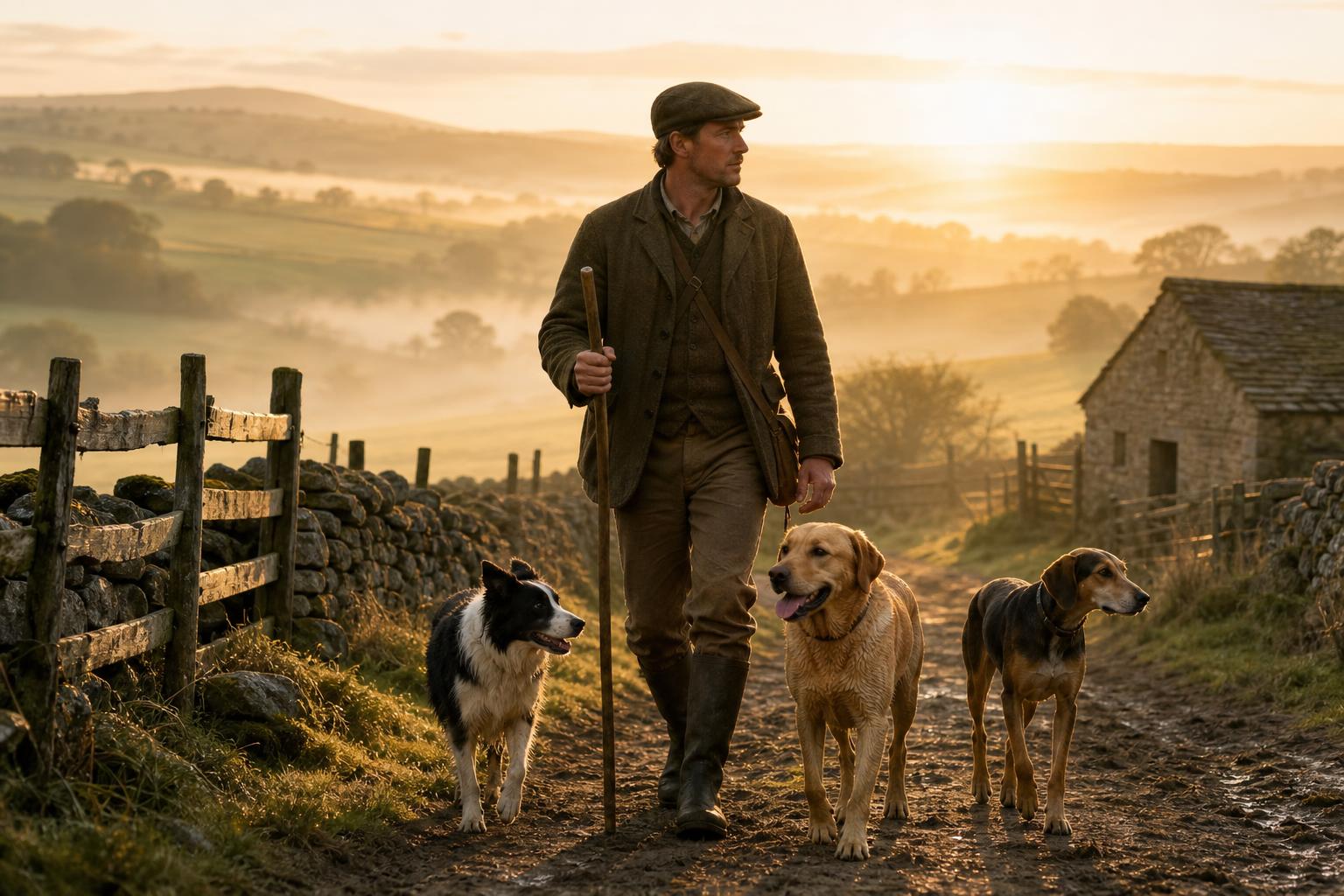
Dogs have worked alongside people in many landscapes and ways of life. Guarding, herding, hunting, transport, and assistance developed under different local pressures. Their history is a collection of working relationships rather than one simple story of progress.
The history of working dogs is not just a tale of animals doing jobs. It is the record of how humans shaped dogs, and how dogs in turn shaped the way people hunted, farmed, traveled, fought wars, and protected their homes. If you have ever watched a dog lock onto a scent, gather stock with a hard stare, or stand steady when the world turns chaotic, you have seen instinct carrying the weight of thousands of years.
The First Partnership Between Humans and Dogs
Most scholars agree that dogs were the first domesticated animals, and that fact alone tells you how deep this relationship runs. Early wolves likely hovered near human camps, drawn by scraps and opportunity. The boldest and most tolerant individuals stayed close. Over generations, those animals changed. They became more attuned to human movement, voice, and intention. People, for their part, learned that these early dogs were more than scavengers. They were alarms, protectors, trackers, and hunting partners.
Out in rough country, a dog could hear what a man could not hear and smell what a man could never hope to smell. That mattered in a world where one missed warning could mean death and one successful hunt could feed a family. The earliest working dogs were probably generalists by necessity. They guarded camps, helped locate game, and cleaned up waste. In practical terms, they earned their keep every single day.
That old arrangement still echoes in the dogs we know now. Even the modern house dog often carries the bones of that original contract: stay close, pay attention, be useful, and belong.
Working Dogs in the Age of Hunting and Survival
Before agriculture settled people into villages and fenced fields, hunting was central to survival. Dogs became invaluable because they extended human senses and endurance. A good hunting dog could trail wounded game, flush birds from cover, corner dangerous animals, and recover meat that might otherwise be lost. In thick timber, high grass, marsh water, or cold wind, a dog could keep working when a man’s eyes failed him.
There is no pretending in the field. Either the dog has heart, nose, intelligence, and grit, or it does not. Ancient hunters knew the same thing. They bred for traits that put food on the ground. Speed, scenting ability, courage, cooperation, and stamina were worth more than looks. Over time, different regions favored different abilities, and from that practical selection came the early roots of hounds, retrievers, pointers, sighthounds, and terriers.
In open country, swift dogs helped run game by sight. In forests and brush, scent hounds tracked what human noses never could. Around water, retriever-type dogs took naturally to cold swims and soft mouths. Underground hunters relied on smaller, tougher dogs to go after vermin and den animals. These were not hobbies in the beginning. They were survival tools with fur and instinct.
How Selective Breeding Shaped Function
As human societies grew more settled, dog breeding became more intentional. People began choosing dogs not just because they survived, but because they excelled at specific tasks. This is where the true history of working dog breeds starts to take shape. A shepherd needed a dog that could move stock without tearing them apart. A gamekeeper needed a dog that could flush birds and hold to hand. A farmer needed a guardian that would stand firm against predators and strangers alike.
Function drove form. A dog built to run all day over hills would not look like a dog bred to haul loads through snow. A dog expected to grip cattle would not move like a dog bred to point quail. The brilliance of working dogs lies in that practical diversity. Human needs changed from place to place, and dogs changed with them.
Dogs in Early Agriculture and Settlement
Once people planted crops and kept livestock, the role of dogs widened. Villages and farms needed order. Sheep had to be gathered, cattle moved, predators driven off, and property defended. Working dogs became central to agricultural life, especially in regions where one family could not afford to waste time or animals.
Herding dogs may be some of the most remarkable examples of canine intelligence. They read movement, pressure, and human signals with uncanny precision. A seasoned stock dog can shift a flock almost like water, pushing here, easing there, always balancing instinct with training. Livestock guardian dogs developed in a different direction. They were bred for steadiness, independence, and the courage to meet wolves, bears, or thieves in the dark. One kind of dog managed animals through control. Another protected them through sheer presence and force.
On old farms, dogs were rarely ornamental. They were labor. They guarded grain stores from vermin, watched children in the yard, alerted families to strangers, and accompanied men to market or field. In many parts of the world, a reliable dog was as valuable as any tool in the barn.
Working Dogs in War, Travel, and Trade
As civilizations expanded, dogs went where people went. Armies used them as sentries, messengers, scouts, and attack dogs. Traders and travelers depended on them for protection on lonely roads. In harsh northern regions, dogs pulled sleds loaded with food, furs, and supplies across ice and snow where horses could not go. In mountain country, pack dogs carried gear through country that would humble the average traveler.
History is full of accounts of dogs standing their ground under terrible conditions. Military working dogs have saved lives by detecting danger, carrying messages, and warning of ambush. Search and rescue dogs, though more modern in structure, come from that same old line of purposeful partnership. Whether the setting was a battlefield, a frozen trail, or a storm wreckage site, the pattern remained the same: people trusted dogs to do what humans alone could not do quickly enough.
The Emotional Bond Behind the Work
People often talk about the utility of working dogs, and rightly so, but utility is only half the truth. The deeper force is trust. Anyone who has hunted behind a solid dog knows this. You send that dog out into cattails, cut corn, briars, or black timber because you believe in what is bred into him and what you have built together. Civilizations leaned on that same trust. A guard dog asleep by the door, a drover’s dog at heel, a war dog in the trenches, a rescue dog on the rubble pile, all of them worked because they were tied to human purpose and human faith.
The Rise of Modern Working Dog Roles
In the modern world, many traditional jobs have changed, but working dogs remain as relevant as ever. Police dogs track suspects, detect narcotics, and protect handlers. Military dogs serve in high-risk operations. Service dogs assist people with disabilities in ways that are both practical and life changing. Detection dogs locate explosives, invasive species, missing persons, and even disease. Search and rescue dogs work through wilderness, avalanche debris, and disaster zones with a determination that still amazes seasoned handlers.
At the same time, classic working roles endure. Bird dogs still quarter fields and marshes. Stock dogs still gather sheep over rough country. Guardian breeds still watch flocks in predator country. Sled dogs still run where snow defines life. The tools around them may have changed, but the canine mind for work has not faded.
That matters for dog owners today. Too many people admire working breeds for their looks or reputation without understanding the depth of instinct inside them. A dog bred for generations to solve problems, cover ground, guard territory, or hunt game will not thrive on appearances alone. These dogs need structure, training, and a task that respects what they are.
What the History of Working Dogs Teaches Us Today
If there is one lesson in the history of working dogs, it is that purpose matters. Working dogs were never accidental. They were shaped by need, sharpened by hardship, and proven by results. The best of them still carry those same traits: intelligence, drive, resilience, loyalty, and the willingness to work beside people.
For modern owners, that history should inspire both admiration and responsibility. When you bring home a working-bred dog, you are not just choosing a pet. You are inheriting generations of selection for labor, partnership, and instinct. Whether that dog hunts pheasants, gathers sheep, patrols property, or simply thrives through advanced training and meaningful activity, it deserves a life that honors its design.
A truly good working dog does more than obey commands. It watches, learns, adapts, and gives itself fully to the task at hand. That quality did not appear overnight. It was forged across centuries of shared work between humans and dogs, from the first campfires to the present day.
That is why working dogs still hold such a strong place in our lives. They are not relics of a harder past. They are living proof that the oldest partnerships are often the strongest. In field, farm, forest, and home, they remain what they have long been: partners in human civilization.