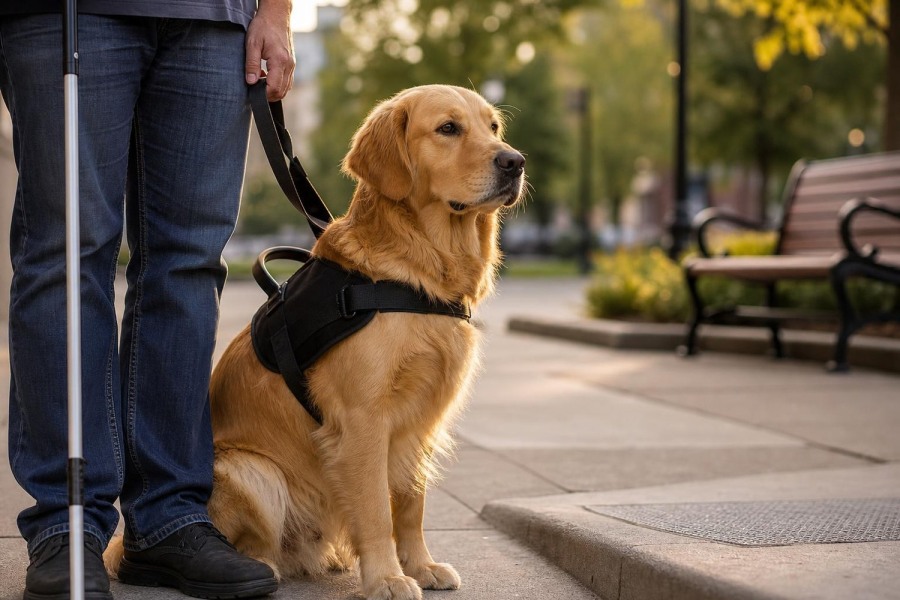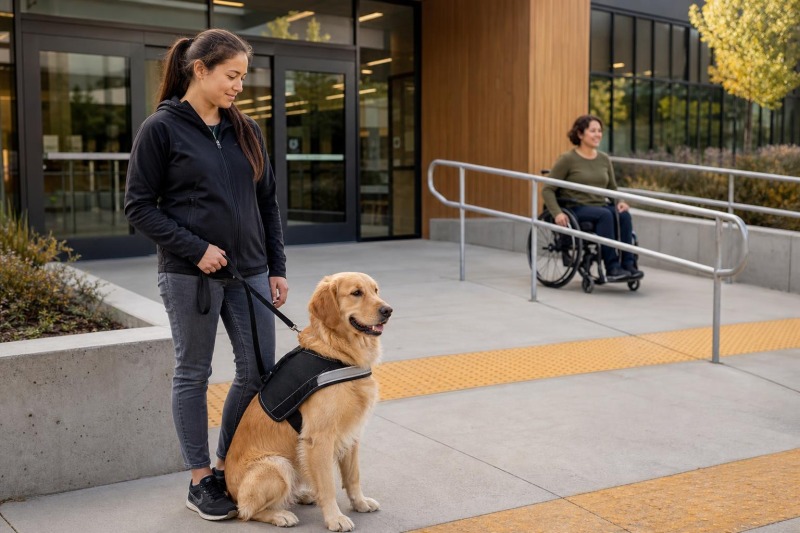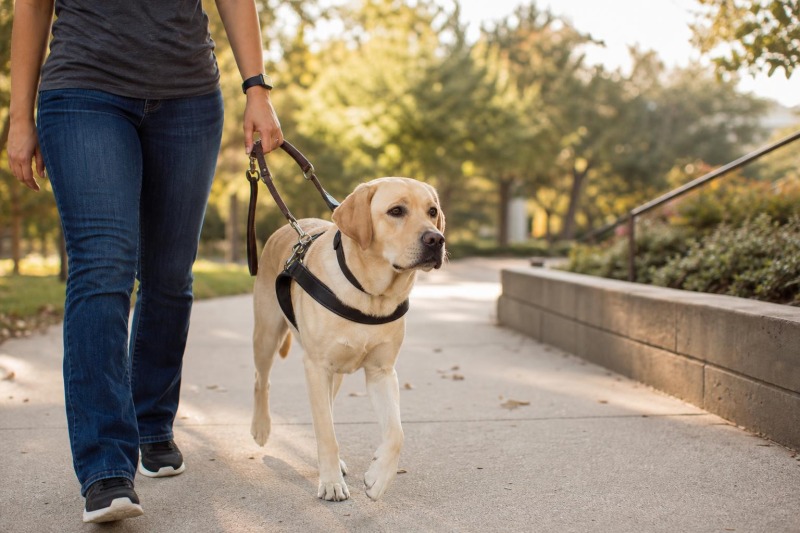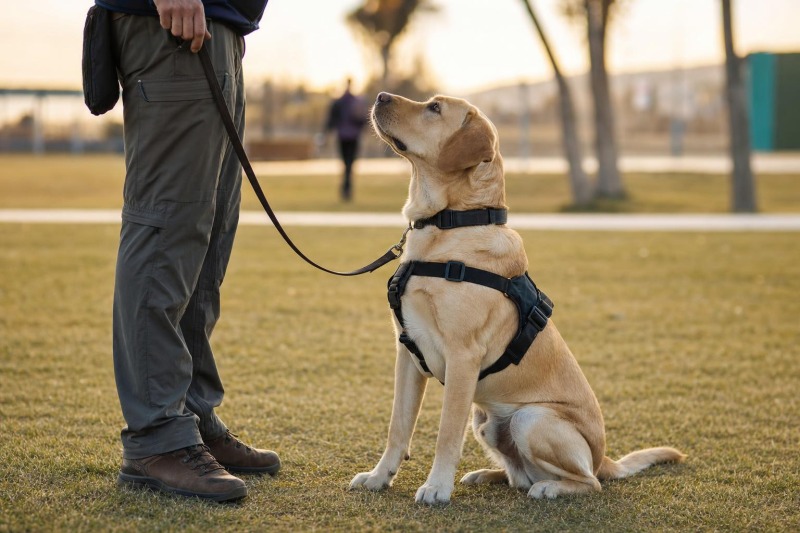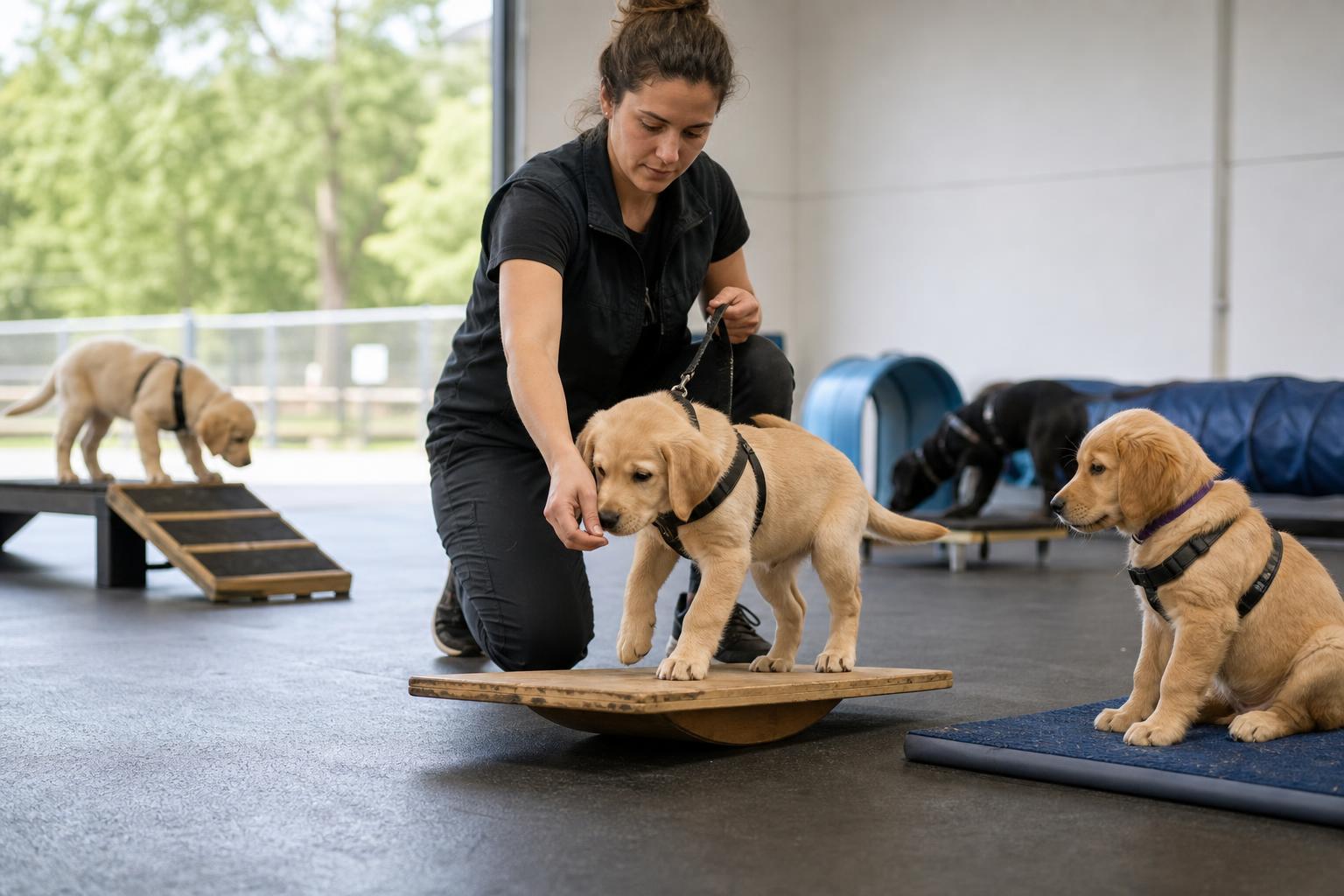
Raising a service-dog prospect involves daily routines, gradual exposure, and close attention to the puppy’s responses. The aim is to build confidence and useful habits while allowing healthy development. Progress should be evaluated without assuming every promising puppy will suit the work.
Folks sometimes imagine service dogs are simply obedient pets with a vest on. In the real world, the path is far more demanding. Puppies raised for service work are shaped from the start to handle strange sights, odd surfaces, loud sounds, busy public settings, and the quiet discipline of living for a purpose bigger than themselves. The process begins long before formal training and, in many ways, before the puppy is even born.
It Starts with Breeding, Temperament, and Early Planning
Any experienced dog person will tell you that training matters, but breeding matters too. Programs that raise puppies for service work usually select parents with stable nerves, biddable personalities, sound structure, and proven health histories. A service dog prospect must be physically capable of performing tasks and mentally suited for a life filled with repetition, focus, and public access. Dogs that are too sharp, too independent, too soft, or too driven in the wrong direction often struggle in this role, even if they are bright and talented.
From the breeder’s box onward, careful observation begins. Good breeders and service dog programs watch how puppies recover from mild stress, how they interact with littermates, whether they startle and bounce back, and how naturally they seek human engagement. Nobody worth listening to will promise a finished service dog from a seven-week-old pup, but seasoned hands can see early clues. Confidence, resilience, curiosity, and emotional steadiness all matter.
Early Neurological Development and Handling
During the first weeks of life, puppies raised for service work are often exposed to gentle handling routines designed to build tolerance and adaptability. These sessions are not rough or flashy. They are brief, measured, and appropriate to age. A pup may be held in different positions, touched on paws and ears, or exposed to mild, novel sensations. The goal is not to create stress for its own sake. It is to help the young nervous system learn that the world can shift and change without causing panic.
That lesson pays off later. A service dog may need to ride elevators, hear clattering carts, settle beneath restaurant tables, or ignore medical equipment in a clinic. Dogs that begin life learning to accept handling and small changes often have a better base for all that comes after.
Socialization Is Not Chaos
One of the most misunderstood parts of raising service dog puppies is socialization. Too many people think socialization means letting a puppy meet every person and dog in sight. In truth, proper socialization is controlled exposure. The puppy learns that the world is full of movement and noise, but it does not need to react to everything in it.
That distinction matters. A future service dog must be comfortable in public without becoming distracted by every child, shopping cart, barking dog, or swinging door. So the raising process introduces new places in a gradual, thoughtful way. Puppies may walk on tile, gravel, carpet, wood floors, and slick entry mats. They might hear traffic, appliances, thunder recordings, and public chatter. They learn to ride in cars, rest in crates, and recover after surprises.
The best young dogs are not the ones thrown into a mess and forced to sink or swim. They are the ones given enough exposure to build confidence while preserving their willingness. Service prospects are raised much the same way. Every outing should build the dog, not chip away at it.
The Role of Puppy Raisers
Many service dog organizations place young puppies with volunteer puppy raisers or foster homes for their first year or so. These raisers do not usually teach the final task work. Their job is just as important. They shape the pup’s daily habits, house manners, confidence, and self-control. A good raiser teaches the dog how to settle quietly, how to walk on leash without dragging, how to ignore dropped food, and how to remain composed when the world gets busy.
This stage is where consistency becomes everything. Puppies thrive on clear expectations. They are taught where to rest, when to eat, when to play, and how to handle alone time without panic. That routine builds emotional balance. A service dog cannot live in a state of excitement. It has to know how to switch off, conserve energy, and wait for direction.
Building Focus and Resilience
As puppies mature, training becomes more intentional. They begin learning markers, reward timing, leash skills, recall, duration on place, calm greetings, and reliable responses around distractions. The strongest programs do this in layers. First the puppy learns the behavior in a quiet setting. Then the difficulty increases little by little until the dog can perform in new places with the same understanding.
That progression may sound simple on paper, but it takes judgment. Push too fast and a puppy becomes confused or worried. Move too slowly and bad habits can harden. The art is in reading the dog in front of you. Some pups carry confidence into every room they enter. Others need a few extra repetitions before they feel certain. Good trainers know the difference and adjust without making a fuss about it.
Impulse control is another major part of service puppy development. The dog learns not to lunge toward attention, not to snatch food, not to vocalize for entertainment, and not to crumble when denied something it wants. That is hard work for a young dog. It is also essential. Public access work demands composure in situations where many pet dogs would unravel.
Health, Soundness, and Ongoing Evaluation
Not every puppy raised for service work makes it through the pipeline, and that is not failure. It is honesty. Throughout development, dogs are evaluated for orthopedic soundness, confidence, work ethic, environmental stability, and overall suitability. Some are released because they are too physically fragile for the demands of the job. Others may be affectionate and intelligent but lack the nerve or consistency required for daily public work.
That kind of screening protects both the dog and the future handler. A service dog must be dependable in ways that go beyond ordinary obedience. If a dog struggles under pressure, the humane and responsible choice is to place it in a role better suited to its temperament, sometimes as a pet or another kind of working companion.
From General Training to Specific Service Tasks
Once a young dog has the basics, advanced training begins to sharpen the skills needed for service work. This is where broad obedience gives way to purposeful tasks. Depending on the handler’s needs, a service dog may learn to retrieve dropped items, open or close doors, brace carefully when appropriate, interrupt harmful behaviors, alert to medical changes, guide around obstacles, or provide momentum and support in structured ways. These are not party tricks. They are trained behaviors tied directly to a person’s daily function and independence.
The dog must also learn that work happens in real life, not just on the training field. A clean retrieve in a quiet room means little if the dog cannot perform in a grocery aisle, a school hallway, or a doctor’s office. So trainers generalize those behaviors across locations, surfaces, and distractions until the response becomes reliable. Reliability is the whole game. Service work is built on trust, and trust is built through repetition done right.
Matching the Right Dog to the Right Person
One thing seasoned dog people come to respect is that ability alone is not enough. A dog and handler must fit each other. Energy level, pace, lifestyle, physical needs, home environment, and emotional chemistry all matter. A bold, forward dog may thrive with one person and overwhelm another. A softer, more measured dog may be exactly right for a calm household but not ideal for someone who moves fast through noisy urban spaces every day.
This matching process is one of the most important parts of raising service dogs. The finest prospect in the kennel can still be the wrong dog for a particular person. Good programs look beyond talent and ask where that dog will truly succeed. When the match is right, the partnership can be remarkable to witness. The dog works with quiet purpose, and the handler gains not just assistance, but confidence and freedom.
Why the Raising Process Matters So Much
By the time a service dog is placed, people often see the polished result and miss the years behind it. They see a calm dog under a table, a neat heel through a doorway, or a clean response to a cue. What they do not always see is the patient shaping that began in puppyhood. The gentle exposure to everyday life. The hundreds of rewarded choices. The setbacks managed without drama. The careful evaluations. The long effort to preserve both heart and steadiness.
That is what raising puppies for service work is really about. It is not just teaching commands. It is building a dog that can carry responsibility without losing itself in the process. Done right, the work honors the dog as much as the task. It produces an animal that is confident, sound, and eager to serve, not because it was forced into the mold, but because it was raised with the kind of structure that lets natural ability come through.
For dog owners interested in working dogs, there is a lesson in all this. Whether you are raising a service prospect, a hunting companion, or a family dog with a job to do, the principles hold steady. Start with the right dog. Build trust early. Expose with care. Reward calm thinking. Demand consistency. And remember that real working ability is shaped one ordinary day at a time. There is no shortcut around that. There never has been.