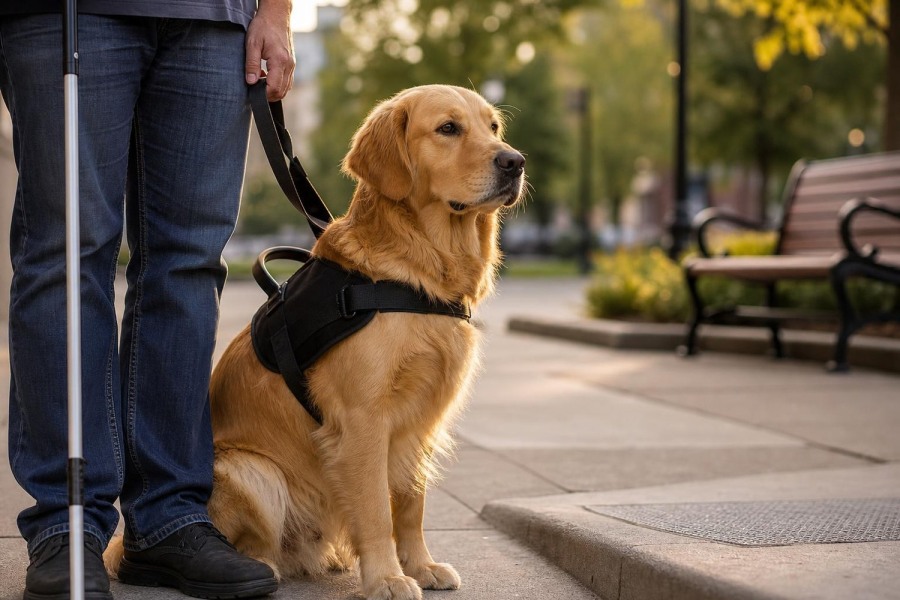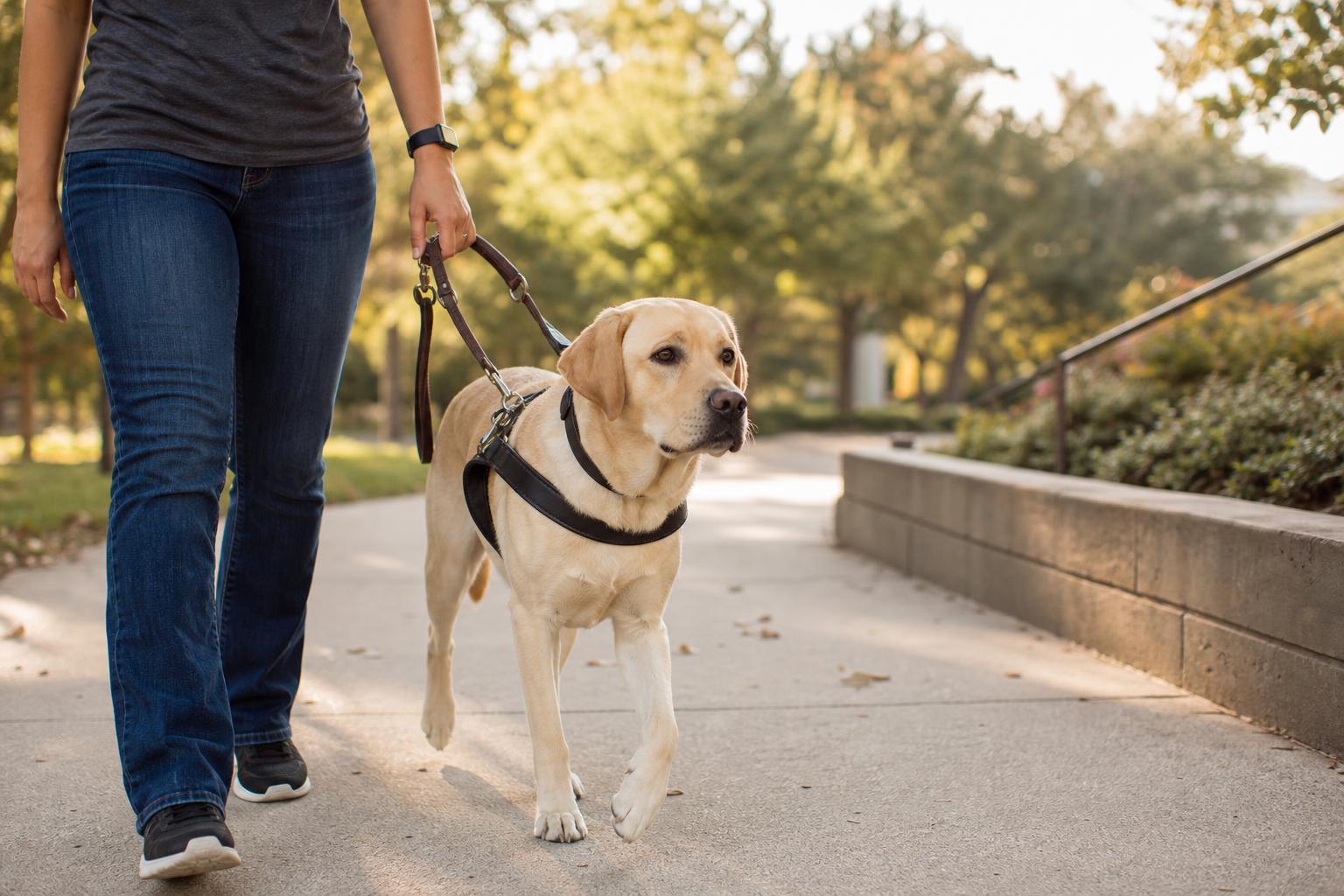
Service-dog training begins with identifying the handler’s needs and assessing a suitable dog. Task work develops alongside everyday manners and behavior in relevant environments. The plan needs to remain responsive to the individual partnership as it develops.
A real service dog is trained to perform specific tasks that directly help a person with a disability. That work may involve guiding, alerting, retrieving, interrupting harmful behaviors, bracing, opening doors, or responding to medical episodes. But before any of that happens, trainers are looking for something deeper than flashy obedience. They want a dog that can handle pressure without falling apart, stay engaged without becoming frantic, and work in the world with a level head.
What Makes a Dog Suitable for Service Work
Not every dog is cut out for service work, and saying that plainly helps dogs and people alike. A service dog prospect needs more than intelligence. The dog should be socially stable, environmentally confident, biddable, and physically sound. A dog that startles hard at every cart rattle, shies from slick floors, or struggles to recover after stress may not be a good fit, no matter how affectionate it is at home.
With working dogs, the best prospects often show a calm curiosity. They notice the world, but they do not unravel in it. That kind of steadiness cannot be faked for long. Trainers evaluate how a dog handles strangers, novel surfaces, noise, confinement, movement, and changing environments. They also pay attention to recovery time. A dog that spooks once and settles quickly is very different from one that carries stress like a burr in its coat.
Early Socialization Builds the Frame
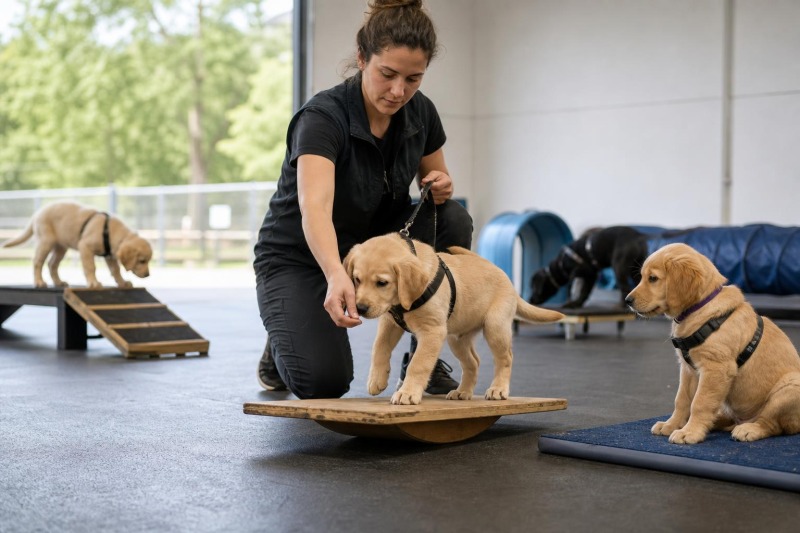
The training process usually begins young, often in puppyhood, with socialization that is thoughtful rather than reckless. Good socialization is not about flooding a pup with endless stimulation. It is about showing the dog the world in manageable pieces and teaching it that unfamiliar things are not a threat. Puppies may be introduced to stores that allow pets, sidewalks, elevators, medical equipment, traffic sounds, and people of different ages and appearances.
This stage matters because service dogs must operate in places where distractions stack up fast. A dropped cane, a screaming child, an automatic door, a shopping cart clipping by, the smell of food, and a crowd pressing close can rattle an unprepared dog. The goal is not to create a machine that ignores everything. The goal is to build a dog that can notice, process, and choose the handler over the environment.
Confidence Without Overexcitement
One trap many owners fall into is rewarding excitement when they mean to reward confidence. A service dog should not greet every person like a long-lost hunting buddy at the tailgate. The dog must be neutral. Trainers shape that neutrality early by reinforcing calm observation, quiet engagement, and patient settling. That may not look glamorous, but calm is one of the most valuable traits a working dog can carry.
Obedience Comes Before Specialized Tasks
Before a service dog learns life-assisting work, it needs clean, reliable obedience. That includes loose-leash walking, heel position, sit, down, stay, recall, place work, and polite behavior around food, doors, and strangers. These are not party tricks. They are the framework that lets a dog move safely through public life.
Obedience for service work goes beyond whether a dog can perform a command in the living room. The real test is whether the dog can do it under distraction, under duration, and at distance when needed. A down-stay beside a shopping cart while the handler reaches for an item is worth more than a dozen flashy spins in the backyard. Trainers proof behaviors in parking lots, sidewalks, waiting rooms, and stores so the dog learns that commands mean the same thing no matter where its paws are planted.
Task Training Is What Defines a Service Dog
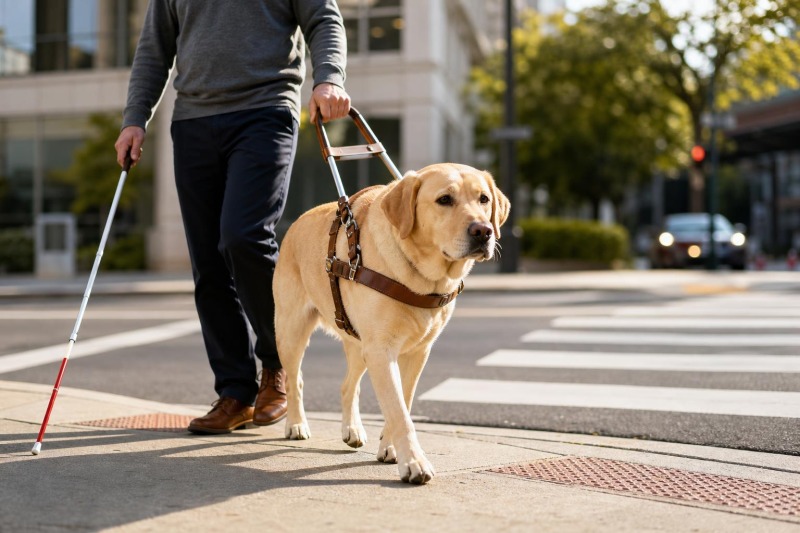
This is where the work becomes highly individual. A service dog is not defined by good manners alone. It must be trained to perform tasks that mitigate a handler’s disability. The exact tasks depend on the person’s needs. A dog may retrieve dropped items, tug open a refrigerator, bring medication, alert to blood sugar changes, provide guide work, respond to seizures, or interrupt escalating psychiatric symptoms.
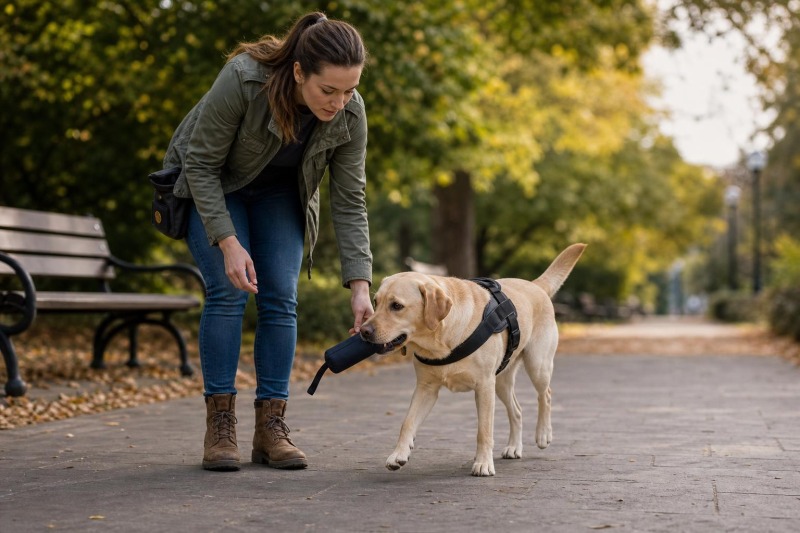
Task training is usually taught in small steps. A retrieve starts with interest in an object, then holding it, then picking it up, then delivering it to hand, and finally doing it in real-life situations. A medical alert behavior may begin with scent association or pattern recognition and then be reinforced for a specific alert response. Deep pressure therapy is introduced by teaching the dog to place body weight gently and steadily on cue or in response to a condition the dog has learned to recognize.
The best trainers break these jobs down until the dog can succeed, then layer on precision and reliability. It is patient work. Done right, it looks almost boring in the early stages. But boring, steady reps are where dependable service dogs are made.
Public Access Skills Are Non-Negotiable
A service dog can know a dozen tasks and still fail if it cannot behave properly in public. Public access training teaches the dog to settle under tables, ignore food on the ground, walk through crowds without forging, remain neutral around other dogs, and hold position during long periods of inactivity. That last part surprises many people. Some of the hardest work for a driven dog is doing nothing at all.
Think of it like a seasoned retriever waiting in the blind before sunrise. The good ones learn when to burn and when to be still. Service dogs need that same switch. They must move smoothly when asked, then tuck themselves away and rest without whining, fidgeting, or scanning for trouble.
How Trainers Handle Mistakes and Setbacks
Even strong prospects hit rough patches. Adolescence can bring distraction, sensitivity, and inconsistency. A dog that looked rock solid at six months may test boundaries at fourteen months. That is normal. Good trainers do not panic, and they do not ask the dog to push through confusion without guidance. They tighten up routines, lower the difficulty where needed, reinforce known behaviors, and rebuild clarity.
Some dogs wash out of service work altogether, and that is not a failure if it protects the dog’s welfare and the handler’s safety. A dog may be too environmentally soft, too physically limited, too vocal, too social, or too stressed by the demands of public work. Honest evaluation is part of responsible training. Not every willing dog is a suitable service dog, just as not every birdy dog can handle the pressure of a hard season in the field.
Handler Training Matters as Much as Dog Training
One point often overlooked is that the human half of the team needs training too. A service dog may perform beautifully with a professional trainer and then struggle when paired with a handler who has not learned timing, consistency, and maintenance routines. Handlers must understand how to reinforce behaviors, read stress signals, manage public interactions, and keep the dog’s skills sharp.
A strong service dog team is built through partnership, not dependency. The dog learns to watch the handler, and the handler learns to trust the dog while still guiding it clearly. That relationship is where the work takes on real meaning. A polished dog is impressive, but a polished team is what changes daily life.
Training Never Truly Ends
One of the biggest misconceptions about service dogs is that they are trained once and then simply go to work forever. In truth, training is ongoing. Behaviors need maintenance. Task work needs refreshing. Public access skills need reinforcement in new settings and during changing life circumstances. Dogs age, handlers’ needs shift, and environments throw fresh challenges into the mix.
Service dogs are no different. Their reliability is a living thing. It grows with careful use and slips when neglected.
The Real Heart of Service Dog Training
When people ask how service dogs are trained, they are often looking for a tidy formula. There really is not one. There are principles, tested methods, and proven progressions, but the craft comes from reading the dog in front of you and building the work with patience. The process blends socialization, obedience, task training, public access preparation, and continuous maintenance into one steady line of development.
At its best, service dog training is practical, disciplined, and deeply human. It is not about turning a dog into a gadget. It is about shaping a capable animal into a trusted partner that can walk beside a person through ordinary days and hard moments alike. And like any honest working dog, the ones that do it well are not just trained. They are prepared, seasoned, and respected for the work they carry.