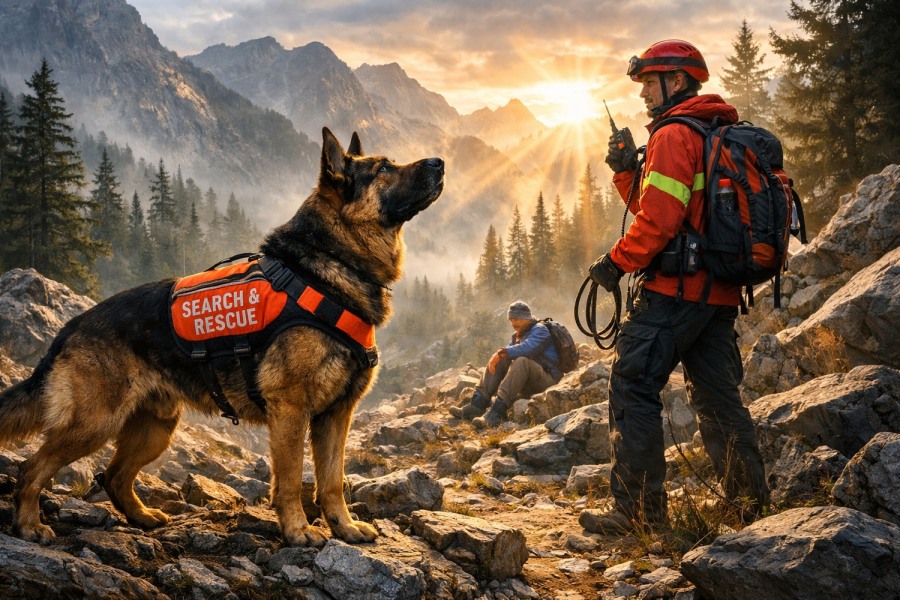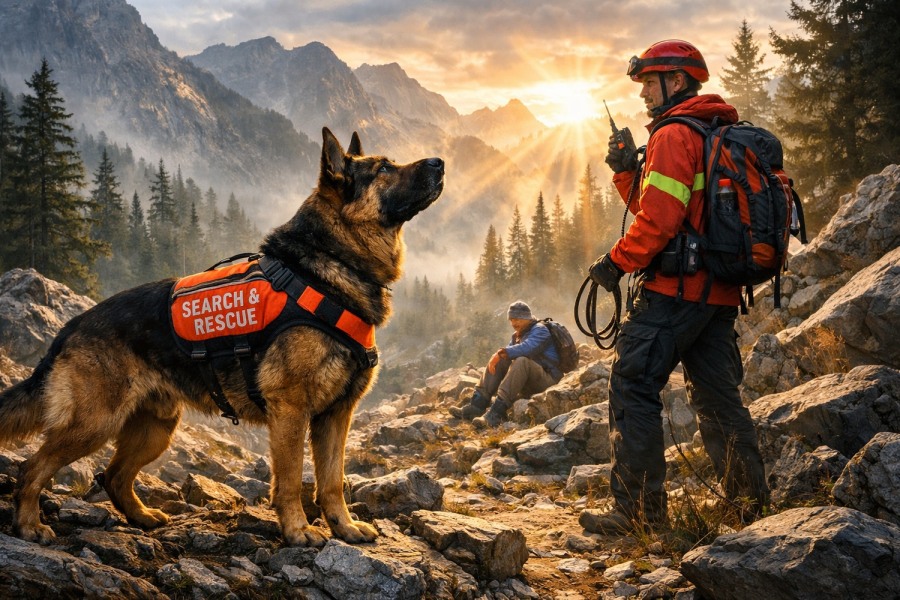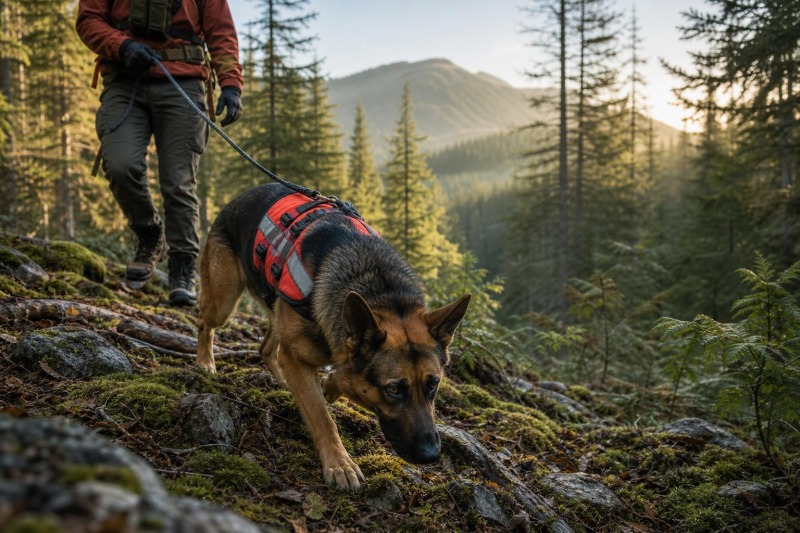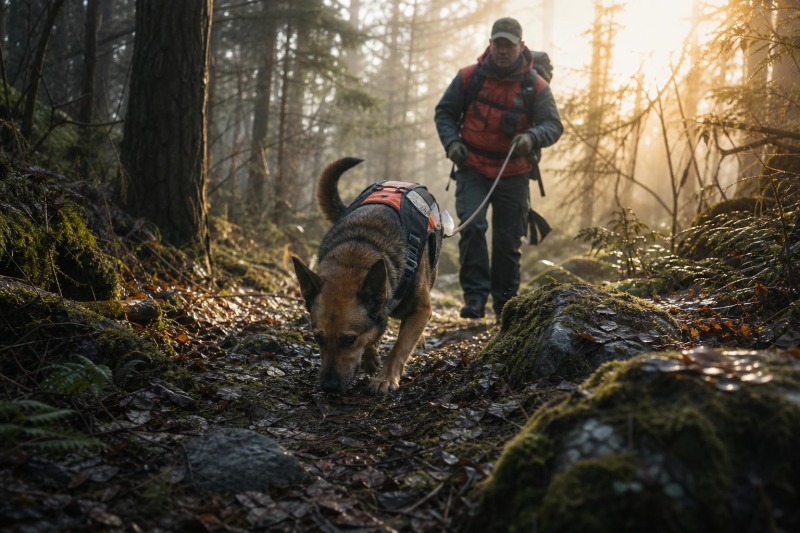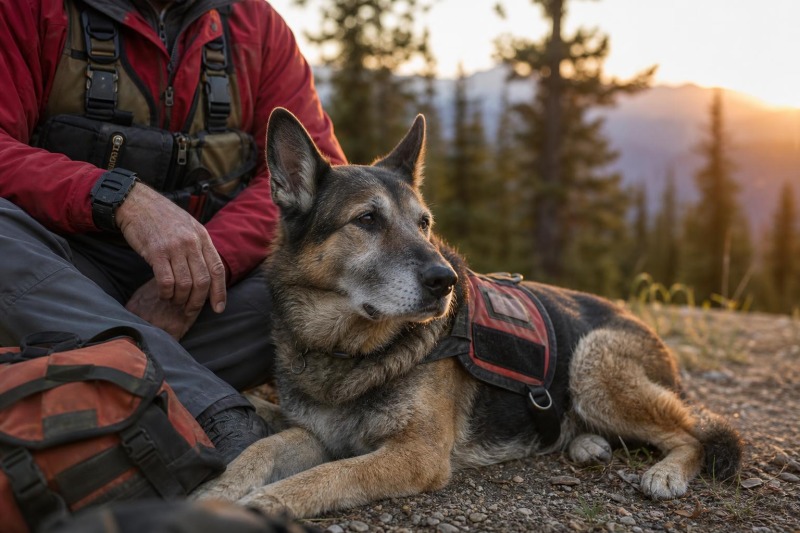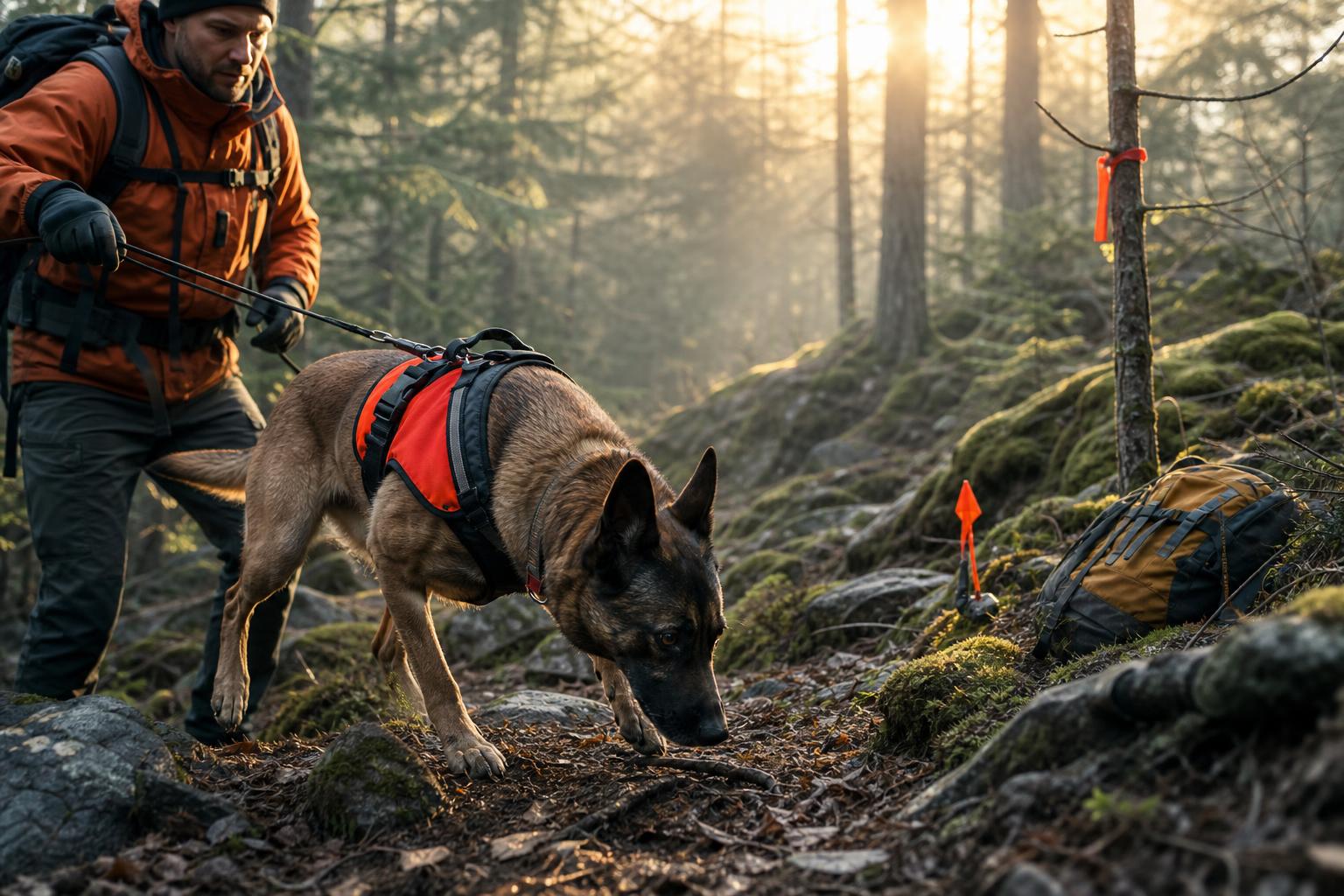
There is a big difference between a dog that likes to use its nose and a dog that can work a search with purpose when the pressure is on. The work asks for a sound mind, a willing heart, and a handler who understands that progress comes in layers. You do not rush this kind of dog. You shape it, test it, and season it until the dog can hunt for human scent with confidence in rough country, broken weather, and distracting ground.
For dog owners interested in working dogs, search and rescue training is one of the finest examples of what a partnership can become. This is not about tricks or flashy obedience on a short leash. It is about developing a dog that can leave your side, solve scent problems, stay steady under command, and keep hunting when terrain, noise, and fatigue start wearing things thin. A good search and rescue dog becomes a thinking partner, and that does not happen by accident.
What Makes a Good Search and Rescue Dog
Before training ever gets serious, it helps to understand what kind of dog tends to excel in this work. Breed matters some, but mindset matters more. A strong search and rescue dog usually shows confidence in new environments, curiosity instead of fear, willingness to work independently, and enough handler focus to take direction when needed. The dog should enjoy the hunt itself. You can teach patterns, obedience, and indication, but desire is hard to manufacture if it is not already in the dog somewhere.
Physical soundness is just as important. These dogs climb over blowdowns, move through brush, scramble on rubble, and cover big country. Weak structure, poor endurance, or chronic soreness will show up fast once training gets real. Temperament also matters in a practical way. A dog that shuts down under pressure or gets overwhelmed by crowds, strange footing, loud vehicles, or unstable surfaces will need a great deal of work just to reach the starting line.
Start with Obedience and Clear Communication
The best scent dog in the world is of limited use if you cannot direct it safely. Early obedience should be clean, calm, and useful in the field. Those plain habits save time and make every advanced lesson easier.
Markers and reward timing are worth your attention here. Whether you use food, a toy, praise, or a short game as payment, the dog needs to understand exactly when it got the answer right. That clarity carries into scent work later. Search and rescue training can become muddy in a hurry if the dog is confused about what earns reward. Keep the communication simple. The dog should know when to go, when to return, and when it has successfully found the target.
Confidence Comes Before Complexity
Early sessions should leave the dog wanting more. Introduce strange surfaces, dark rooms, brush piles, slick floors, stairs, and mild environmental stress in a way that builds boldness rather than hesitation. A dog that learns to solve little problems with enthusiasm is much easier to develop than one that starts associating training with uncertainty and correction.
Introducing Scent Work the Right Way
At the heart of training a search and rescue dog is teaching the dog that finding human scent leads to a clear reward. In the beginning, keep it simple enough that success comes quickly. A hidden person can tease the dog with a toy or voice, move a short distance away, and let the dog make an easy find. That first stage is less about technical scent theory and more about building desire to hunt for a person. The dog learns that using its nose and staying in the game pays well.
As that understanding grows, you can begin hiding the subject out of sight, increasing distance, adding wind shifts, and placing the dog in unfamiliar search areas. This is where handlers need patience. Dogs do not learn in a straight line. One day the wind is perfect, the ground is kind, and the dog looks like a seasoned professional. The next day scent hangs low in damp timber or drifts across a field edge and the same dog looks rough around the edges. That is normal. The lesson is to read conditions and avoid asking questions the dog is not ready to answer.
Building a Reliable Alert
A search and rescue dog also needs a dependable way to tell you it has located the subject. Some dogs bark at the find, some return to the handler and lead back, and some perform a trained indication close to the source. Whatever alert method you choose, consistency matters. The dog should understand that the job is not done when it reaches the person. The job is done when it clearly communicates the find. That piece needs repetition until it holds up under excitement and fatigue.
Taking Training Into Real Terrain
Once the dog understands the game, the work has to move out of neat training grounds and into the sort of country that tests both nose and nerve. Open fields, creek bottoms, cutovers, pine stands, urban edges, old buildings, and heavy cover all teach different lessons. A dog that looks sharp in one setting may struggle in another, and that is exactly why varied exposure matters. Real search work is rarely convenient. The dog must learn to problem-solve through changing scent conditions, distractions from wildlife, old foot traffic, and difficult footing.
Cool mornings with a light breeze can make a young dog look better than it is. Heat, dry ground, swirling wind, and crowded scent pools tell the truth. You want the dog to learn that the hunt goes on even when scent is thin and progress is slow. That does not mean setting the dog up to fail. It means stretching the dog gradually until persistence becomes part of its character.
Conditioning the Body and the Mind
Search and rescue dogs are athletes. Long before a mission, they should be conditioned for stamina, recovery, and sure-footed movement. Roading, hiking, swimming, and controlled free exercise all help, but conditioning should match the job. A dog expected to cover uneven ground for long stretches needs more than backyard play. Strong feet, healthy joints, and a body that recovers well from exertion are part of the training program whether people think of it that way or not.
Mental conditioning matters every bit as much. These dogs must work around stress without becoming frantic. They need enough independence to hunt away from the handler and enough emotional steadiness to stay functional around strangers, sirens, machinery, and confusion. A dog with a hot motor but a shaky mind will break down when the work turns serious. Good training develops control without taking the fire out of the dog.
The Handler’s Role in Search and Rescue Dog Training
Most training problems in this line of work are not really dog problems. They are handler timing problems, handler expectation problems, or plain old impatience. A search and rescue dog reads your movement, your voice, your tension, and your uncertainty. If you crowd the dog at the wrong moment, you can pull it off scent. If you talk too much, you can drown out the dog’s own problem-solving. If you demand perfection too early, you can cool off a promising worker.
They study wind, terrain, and behavior. They know when the dog is working odor, when it is confused, and when it is simply hunting with no real information. That kind of judgment comes from hours in the field, not from reading a manual. If you are serious about training a search and rescue dog, spend as much time learning to observe as you do giving commands.
Proofing, Patience, and Real Readiness
There comes a stage when the dog seems to know the work, and that is exactly when many handlers get careless. A dog that can find a hidden person in practice is not automatically ready for operational work. Training has to be proofed against distractions, false interest, long waits between turns, strange helpers, nighttime conditions, and searches where the dog does not win quickly. Reliability is built when the dog learns that the rules do not change just because the setting does.
Patience is the thread running through all of this. A finished search and rescue dog is not built in a season. Some dogs show promise early but need time to mature emotionally. Others start plain and grow into the work once the pieces come together. The smart approach is steady progression, honest evaluation, and a willingness to fix holes before they become habits.
Training a search and rescue dog is about more than producing a skilled worker. It is about shaping a dog that can answer pressure with purpose and meet uncertainty with discipline. When that dog casts into the wind, catches scent, and drives toward a find with conviction, you feel the full weight of what good training creates. It is not luck. It is not magic. It is the product of miles, repetition, trust, and the kind of field-earned partnership that only comes from doing hard things together.