Service Dog Training Steps: What the Journey Really Looks Like
A service-dog training plan starts with the tasks the handler needs and an assessment of a suitable dog. Foundations, task training, and behavior in everyday settings develop together. The timetable should follow demonstrated progress rather than promises of a quick finish.
When folks search for service dog training steps, they often expect a neat little checklist. The truth is more layered than that. A service dog is built in stages, and each stage matters because weakness in one area usually shows up later when the work gets harder. A dog that lacks confidence in public will struggle with advanced task work. A dog that never learned impulse control at home will have a hard time settling in a crowded restaurant. The process is not mysterious, but it does require patience, structure, and honest evaluation.
If you are a dog owner interested in working dogs, it helps to think of service training as a long foundation program followed by specialized job training. You are first raising a stable, obedient dog that can move through the world with composure. Then you are teaching that dog to perform specific tasks that directly help a handler with a disability. Those two parts must work together like a well-fitted collar and lead.
Start With the Right Dog
The first of all service dog training steps happens before formal training ever begins. You need the right prospect. Temperament matters more than flashy looks or high drive alone. The dog should be people-safe, environmentally stable, eager to work, and able to recover from surprises without falling apart. A service dog does not need to be timid or overly soft. In fact, the best ones often carry a calm kind of confidence. They notice the world, but they do not overreact to it.
Some were too sharp with strangers. Some lacked the resilience to handle busy public spaces. Others were so energetic and restless that asking them to settle quietly for long stretches was like trying to park a four-wheeler in a canoe. Breed can influence tendencies, but the individual dog in front of you always tells the real story.
Health screening is just as important. Hips, elbows, eyes, and overall structure matter in a dog expected to work consistently. A dog with chronic discomfort, weak nerves, or unstable temperament is starting with one foot in a hole. Service work asks too much of a dog to ignore those realities.
Lay the Foundation With Basic Obedience
Before a dog learns disability-related tasks, it must understand the language of training. Sit, down, stay, come, heel, leave it, and place are not glamorous commands, but they form the backbone of everything that comes later. The purpose of obedience is not to create a robot. It is to build communication and control, so the dog understands how to follow direction and make good choices around distraction.
In these early stages, consistency beats intensity. Short sessions done well are better than drilling the dog into confusion. Reward clear effort. Correct fairly. End on success. A service prospect should learn that work is structured and worthwhile. Reliable obedience at home should then be carried into the yard, the sidewalk, pet-friendly stores, parking lots, and any other setting where distractions test the dog’s focus.
Impulse Control Makes the Difference
One thing that separates a pleasant dog from a true working dog is impulse control. Can the dog ignore food on the ground? Can it stay composed when another dog passes by? Can it settle on a mat while people move around? These are not small details. They are daily realities for a service animal. A dog that lunges, vocalizes, scavenges, or constantly seeks attention creates risk for the handler and pressure for everyone nearby.
Impulse control is trained through repetition and fairness. The dog learns that patience is rewarded and wild behavior gets nowhere. That lesson pays off later when the environment grows harder and the expectations become tighter.
Socialization Must Be Intentional
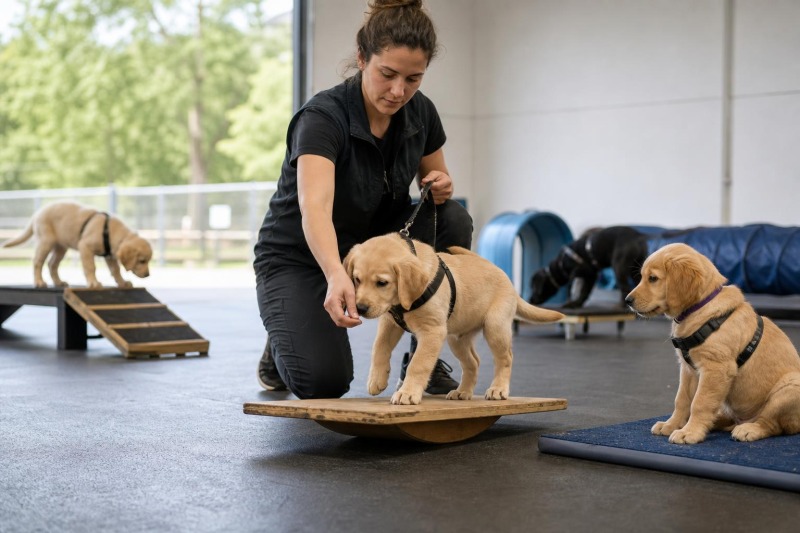
Socialization is often misunderstood. It does not mean letting the puppy greet every person and dog in sight. For a future service dog, socialization means calm exposure to the world. Elevators, carts rattling across concrete, automatic doors, children moving unpredictably, medical equipment, traffic sounds, slick floors, and crowded entrances all become part of the dog’s education.
The goal is neutrality. You are not teaching the dog to love every stimulus. You are teaching it to remain steady and responsive in the presence of those stimuli. That distinction matters. A service dog must move through the world like a seasoned horse on a trail ride, aware of what is around but not emotionally dragged around by it.
Good socialization progresses in manageable steps. Push too fast and the dog may become stressed or reactive. Move too slowly and the dog may miss valuable learning windows. Read the dog honestly. If it is alert but recoverable, you are likely in a productive zone. If it is shut down, panicked, or overstimulated, back up and simplify.
Teach Public Access Manners
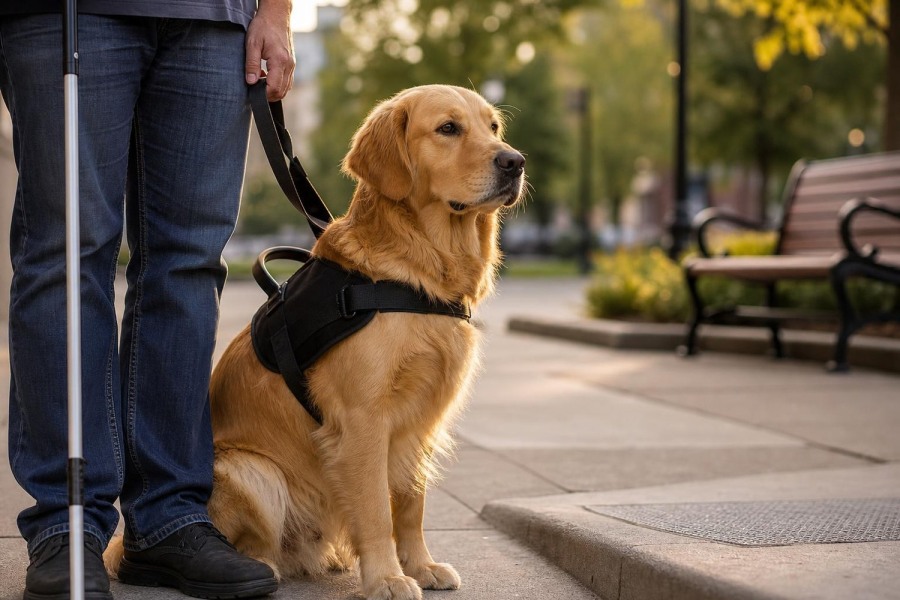
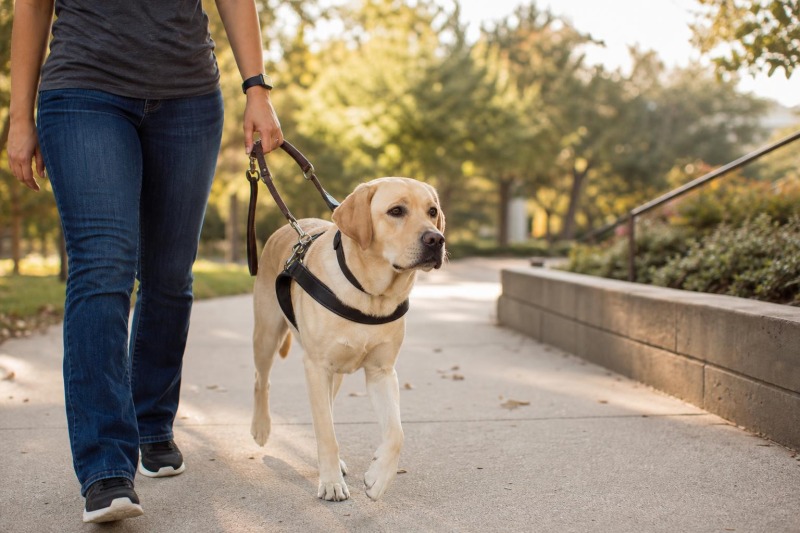
Public access work is where many service dog programs either shine or come unstitched. A dog may behave beautifully in the home and still struggle in stores, clinics, and busy sidewalks. That is why public access training deserves its own stage. The dog should walk politely through doorways, ignore strangers, remain quiet, tuck under chairs or tables, and stay focused on the handler even when the environment is noisy or unpredictable.
This part of training takes time because public behavior is not a single skill. It is a collection of small habits stacked together. A clean heel through a parking lot. A calm down-stay near shopping carts. A steady response when a child points and squeals. A refusal to sniff merchandise, beg for food, or seek greetings. Every repetition teaches the dog what the job requires.
One of the best ways to proof public access behavior is to work in gradually harder locations. Start where the dog can win. Then add movement, sound, tighter spaces, and longer duration. Experienced trainers know that reliability is built layer by layer, not by tossing the dog into chaos and hoping instinct carries the day.
Train the Tasks That Mitigate a Disability
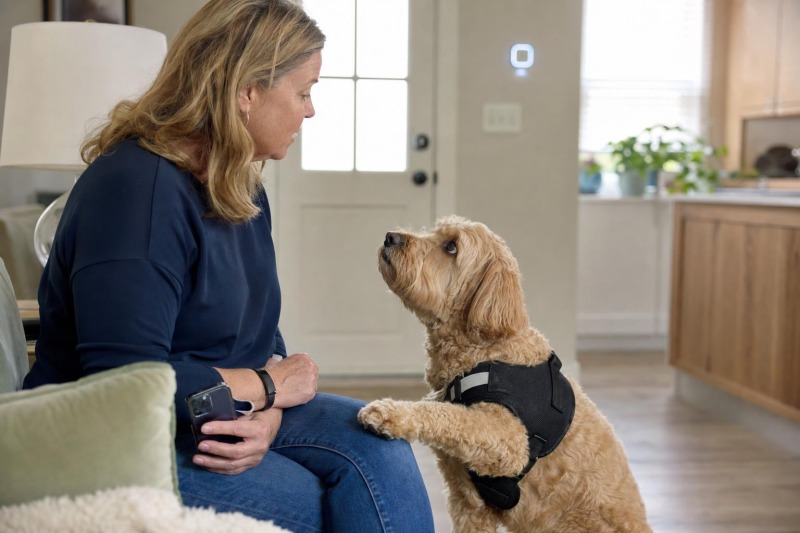
A service dog is defined not just by manners, but by trained tasks that directly assist a person with a disability. That is the heart of the work. Depending on the handler’s needs, tasks may include retrieving dropped items, opening doors, interrupting repetitive behaviors, alerting to medical changes, providing momentum pull where appropriate, pressing buttons, bracing only when safely trained and medically appropriate, or guiding the handler to an exit or support person.
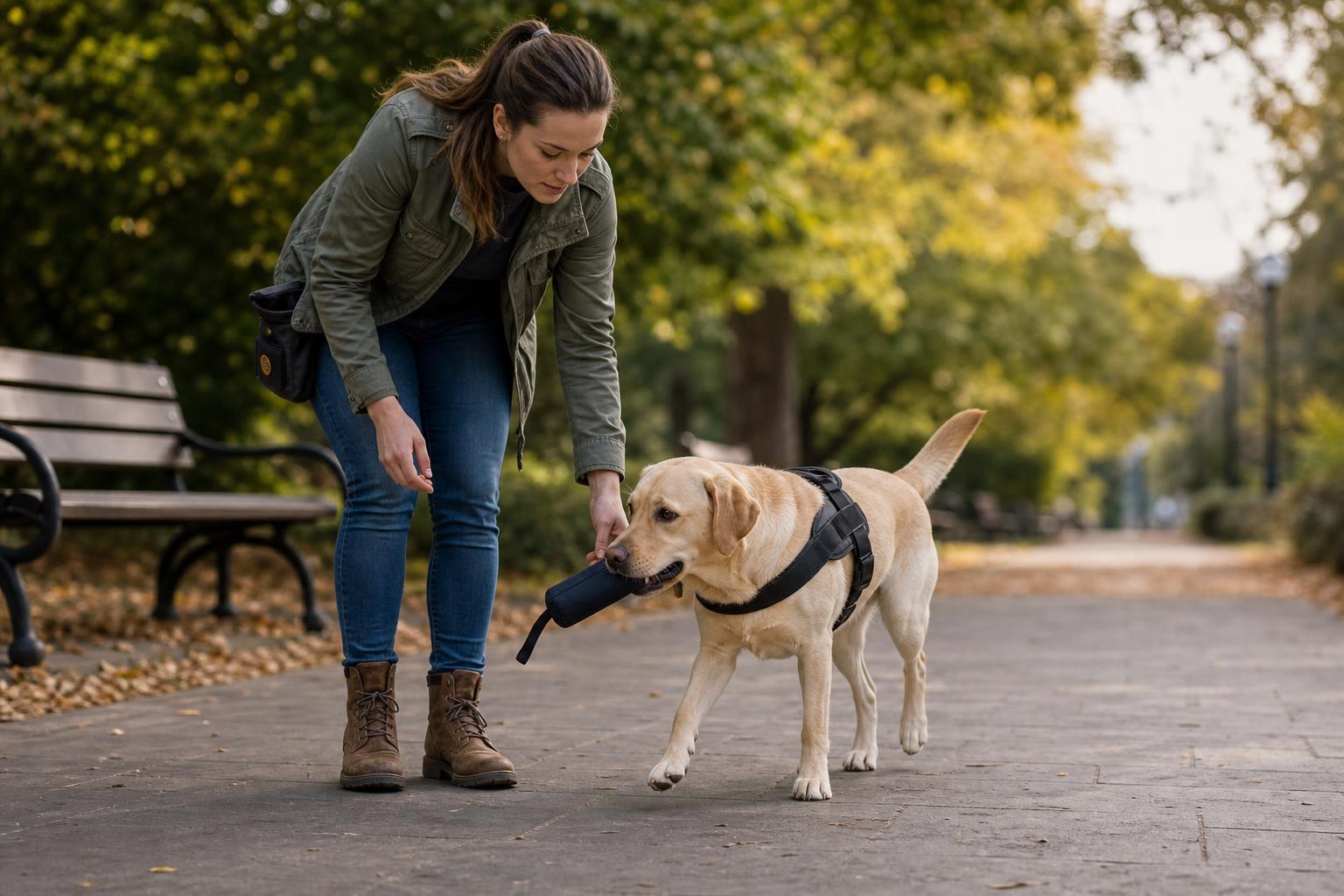
Task training should be broken into small pieces. First teach the mechanics, then the cue, then the reliability, then the application in real-life settings. For example, a retrieve begins with taking an object, holding it calmly, delivering it to hand, and generalizing the skill across many items and locations. It sounds simple on paper, but polished work comes from careful shaping.
Generalization Is Where Real Training Shows
A dog that performs a task in the living room is only at the beginning. Can it do the same task in a parking lot, a doctor’s office, or after a long wait in public? Can it respond when the handler is tired, stressed, or physically limited? Generalization is what turns a trained behavior into a dependable working skill. Dogs do not automatically understand that a command means the same thing in every setting. You have to teach that lesson through practice in many environments.
This is where patient handlers often pull ahead. They do not rush to claim a finished dog because the dog had one strong week. They keep testing, refining, and rewarding until the behavior is durable under real-world conditions.
Proof the Dog Under Distraction and Stress
Any hunting man who has watched a young retriever fall apart when the first flock swings low knows that training at home and performance under pressure are two different things. Service dogs face the same challenge. They must work when life is untidy. Sirens sound. Doors slam. People crowd too close. Another dog barks from across the room. The handler may be having a hard day. The dog still has to stay composed and responsive.
Proofing means rehearsing skills under increasing distraction without letting standards slide. It also means protecting the dog from situations beyond its current level. The trainer’s job is to stretch the dog, not break its confidence. When done right, proofing produces a dog that can absorb disturbance and continue working with a level head.
Maintain the Training for the Life of the Dog
One of the most overlooked service dog training steps is maintenance. Finished dogs still need tune-ups. Obedience should be refreshed. Tasks should be practiced. Public access standards should remain high. Dogs are living partners, not machines sealed at the factory. If handling becomes sloppy, behavior often follows.
A short heel before entering a store. A calm settle during an appointment. A quick task rehearsal at home. Nothing dramatic, just steady upkeep. That kind of maintenance preserves clarity for the dog and confidence for the handler.
Training a service dog is part craft, part discipline, and part honest observation. You need the right dog, a strong foundation, thoughtful exposure, clean public access work, and tasks that truly serve the handler’s needs. Skip one piece and the weak spot usually reveals itself sooner or later. Respect the process, though, and you can shape a dog that moves through the world with the calm assurance every serious working dog ought to have.
There is something deeply satisfying about watching a good dog settle into its purpose. The dog is not guessing, not fretting, not chasing every distraction that blows by like dry leaves across a gravel road. It knows its job, trusts its handler, and meets the day with steady eyes. That kind of reliability is never accidental. It is built through proper service dog training steps, one honest session at a time.