Labrador Retrievers are used in many detection settings because suitable individuals can combine search motivation with manageable behavior. Selection still matters. The dog’s health, confidence, reward preferences, and ability to work with a handler deserve individual assessment.
The finest detection dogs are not always the flashiest animals in the kennel. More often, they are the ones that come out of the truck with their mind steady, their tail engaged, and their nose ready to solve a problem. That description fits a good Labrador Retrievers in detection work better than most breeds you could name.
Why Labradors Are Natural Detection Dogs
The first thing to understand is that a Labrador was built, both mentally and physically, to work alongside people. That matters in detection more than many newcomers realize. A detection dog is not just finding odor. The dog is operating in partnership with a handler, often in changing environments, sometimes in noisy, crowded, or stressful places. Labs generally handle that pressure well. They tend to be social without being fragile, energetic without being wild, and eager to engage without constantly fighting the leash.
Then there is the nose. Any serious dog man will tell you that scenting talent varies by individual, but Labradors consistently bring the kind of odor discrimination and hunt drive that makes them exceptional candidates. They want to search. Good ones do not need to be begged into the work. They push forward, stay in the problem, and keep hunting until they get paid.
Food drive plays a bigger role here than many people think. A Labrador that lives to earn a reward can be trained with remarkable consistency. Some dogs will work for a ball, others for a rolled towel, and some for the chance to chase. Plenty of Labs will do all of it gladly, but many are especially reliable when food is part of the equation. In detection training, that willingness to work for a reward helps create a dog that hunts hard and stays motivated through repetition.
Temperament Makes the Difference
A dog can have a fine nose and still fail in detection work if the nerves are not right. Labradors usually shine because they are emotionally balanced. They recover well from distractions, they tend to adapt to different handlers and settings, and they can move from a kennel to a vehicle to a search area without their brain coming apart. That kind of stability is gold in real-world deployments.
It is one thing for a dog to search a quiet training room. It is another to work around traffic, strange footing, machinery, livestock smells, crowds, and the thousand distractions of daily life. The best Labs handle that transition with less drama than many other breeds. They keep working, and that consistency is what professionals are paying for.
Where Labrador Retrievers Excel in Detection Work
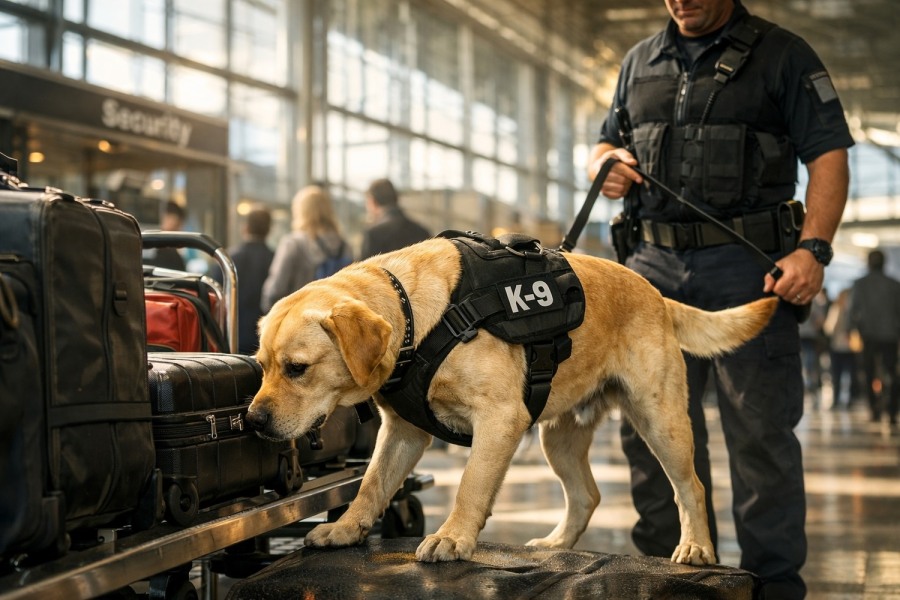
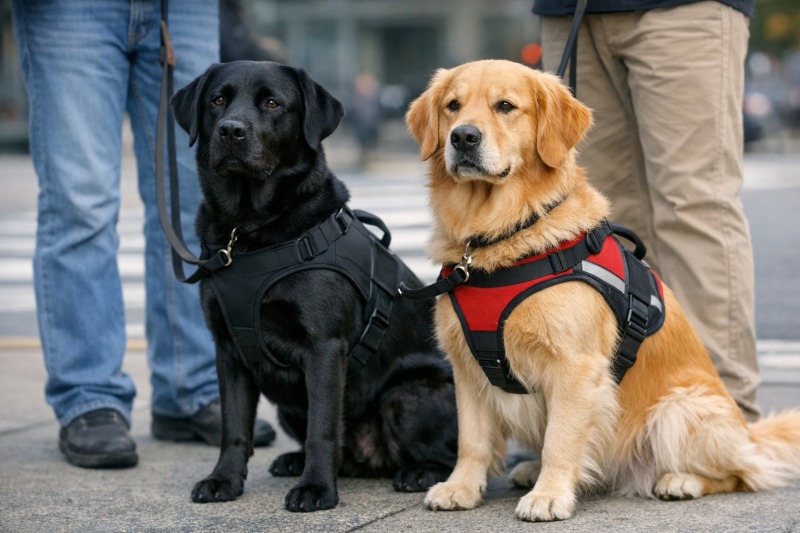
The public often associates detection dogs with narcotics and explosives, and Labradors have excelled in both for decades. Their approachable appearance can also be an advantage in settings where a less intimidating dog is preferred. A yellow or black Lab can move through airports, schools, event spaces, and public buildings without drawing the same reaction some harder-looking breeds do. That may sound like a small thing, but in practical use, public perception matters.
Beyond law enforcement and security, Labs have proven themselves in search and rescue scent work, cadaver work, wildlife detection, agricultural inspection, and conservation programs. In recent years, their use in detecting invasive species, scat from endangered wildlife, and even disease-related odor has helped broaden appreciation for the breed. A Labrador that would have thrilled a duck hunter fifty years ago may now be working a conservation line in rough country, helping biologists gather information they could never collect as efficiently on their own.
It speaks to the breed’s underlying utility. A truly good working Labrador is not a one-trick dog. He is an adaptable partner with enough sense to meet the day’s task.
Detection Work and the Labrador’s Retrieving Heritage
There is a straight line between a Lab’s retrieving roots and its effectiveness in scent work. Generations of breeding favored dogs that would mark well, handle pressure, work in cooperation with a human partner, and carry on through weather, water, cover, and fatigue. Those same traits matter in detection. A dog that naturally uses its nose, persists through difficulty, and finds satisfaction in completing a task is already halfway suited for the work.
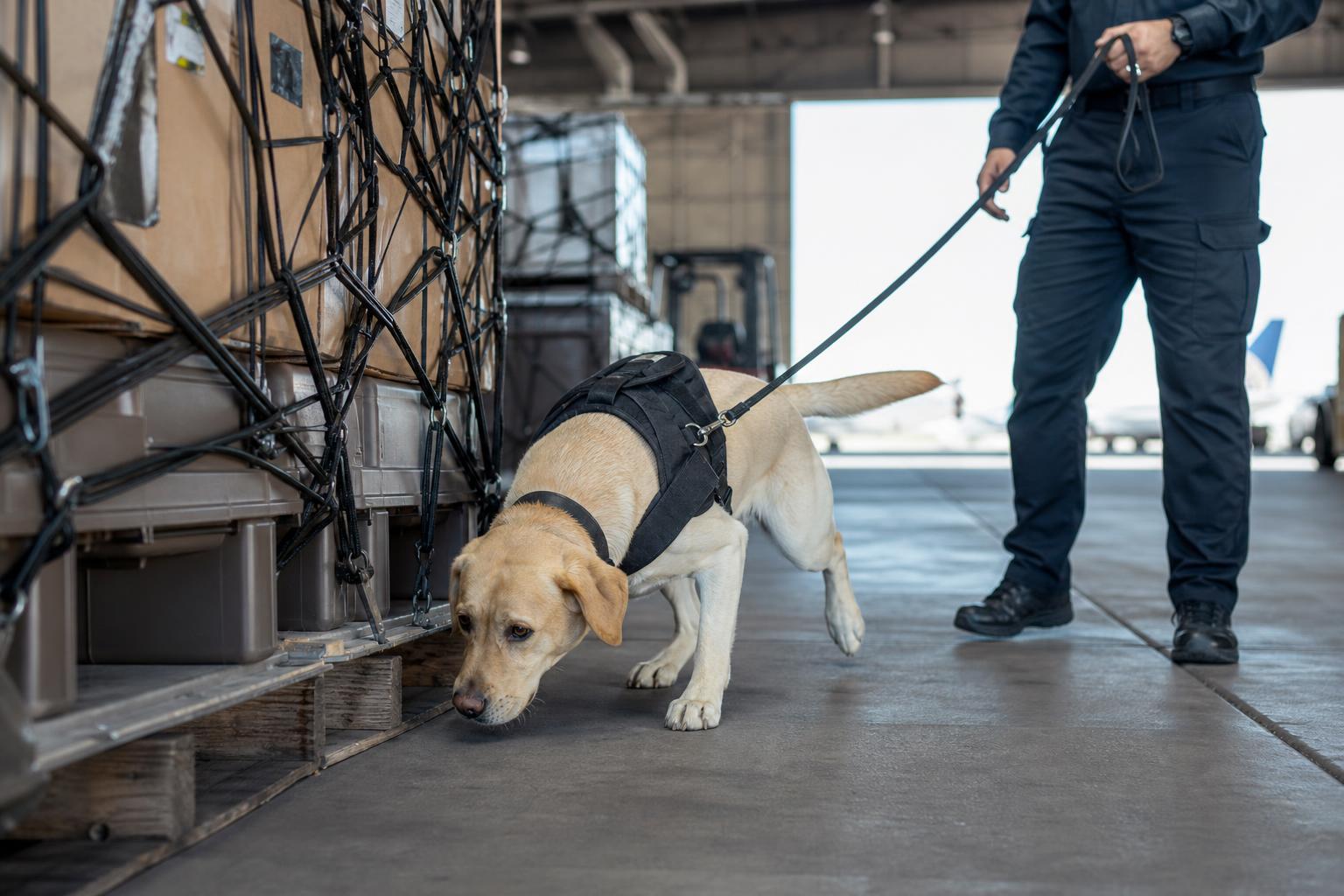
That heritage also gives many Labradors a practical kind of toughness. They are not usually delicate dogs. They can cover ground, handle long days, and keep their composure in less-than-ideal conditions. In a field setting, whether you are searching vehicles, cargo, outbuildings, or open terrain, that sturdiness counts.
How Labradors Are Trained for Detection
At its core, detection training is about teaching a dog that a target odor leads to reward. The best programs build that understanding carefully and honestly. A Labrador starts by learning that hunting is a game worth winning. Once that desire is established, the trainer pairs the reward with scent and gradually teaches the dog to locate, identify, and indicate the source.
What makes Labs such a pleasure in this process is their willingness to stay engaged. They are usually biddable dogs, but the good ones are not dependent dogs. That distinction matters. A detection dog cannot spend the entire search asking the handler for answers. It must work independently enough to solve odor problems on its own while remaining responsive to direction and control.
Most successful Labradors in detection are taught a clear final response, whether that is a sit, a down, or a focused stare at source. The cleaner the communication, the better the team performs. Sloppy indication creates confusion, and confusion in detection work can have serious consequences. A polished Lab learns to commit to odor with confidence and hold that response until the handler reads it.
Building Drive Without Losing Control
This is where experienced training really shows. A detection Labrador should hunt with intensity, but intensity is not the same thing as chaos. Trainers worth their salt know how to build desire without allowing the dog to become frantic. A frantic dog misses odor, blows past source, and tires mentally. A driven but thoughtful Lab is much more effective.
That balance is one reason the breed stays popular. Most Labradors can be brought up to work hard while still being manageable. They are generally trainable enough to live in the real world and powerful enough to perform when the search starts. That combination is not as common as people think.
What Handlers Should Know Before Choosing a Lab for Detection
Not every Labrador is cut out for serious detection work. That is worth saying plainly. A pleasant pet Lab may be a wonderful dog and still lack the hunt drive, environmental confidence, stamina, or focus needed for professional scent detection. Breeding matters. Early development matters. Exposure matters. So does the quality of training.
If you are a dog owner interested in working dogs, it helps to understand that top detection prospects are selected with purpose. Trainers look for dogs that chase reward with commitment, recover quickly from stress, show curiosity in new environments, and stay in the hunt when the task becomes difficult. A soft dog that quits under pressure or a scattered dog that cannot focus will struggle, no matter how lovable it is at home.
The good news is that Labradors offer a large pool of quality candidates when sourced well. Their popularity means there are many lines, but it also means buyers must be careful. The best working Labs come from breeders who value health, nerve, drive, trainability, and proven performance over appearance alone.
The Labrador’s Lasting Place in Detection Work
There are breeds with more edge, breeds with more intensity, and breeds that may suit certain handlers or specialties better. But when you step back and look at the whole picture, Labrador Retrievers in detection work remain hard to beat. They bring nose, steadiness, adaptability, and a natural partnership with people that makes the work cleaner and more dependable. That is why they continue to serve in so many roles, from public safety to conservation to private industry.
A good Lab does not need much fanfare. You see it in the way the dog enters a search area, settles into the hunt, works through contamination, and changes behavior the instant it catches the right scent cone. There is a quiet professionalism in that kind of dog. For handlers who value reliability over theatrics, the Labrador remains one of the finest detection partners ever bred.
And if you have spent any time behind one, watching that tail tighten, that nose sort the air, and that dog lock onto source with certainty, you understand why the breed keeps earning its place. In the world of working dogs, trust is everything. A sound Labrador earns it, search after search.