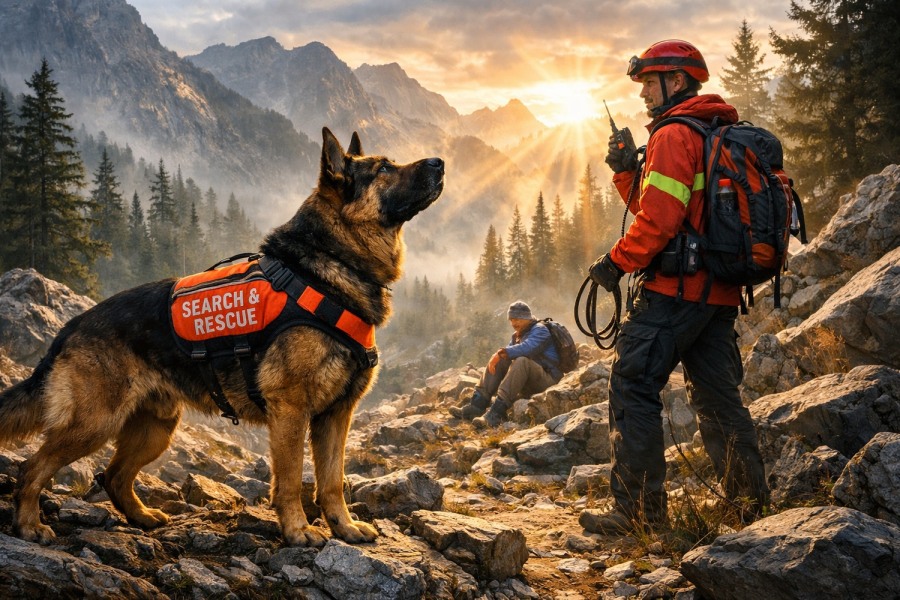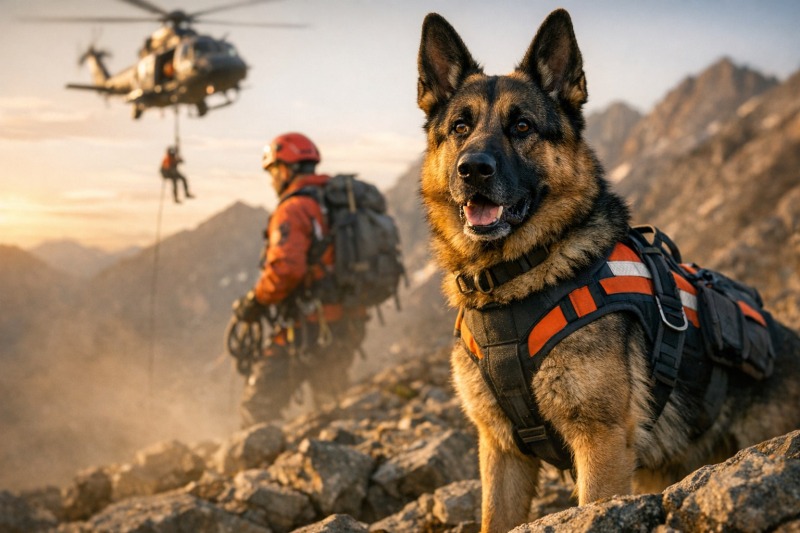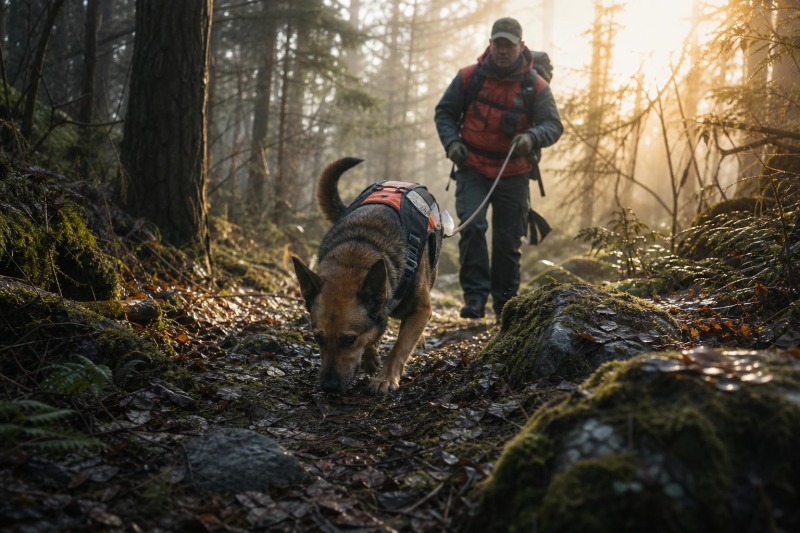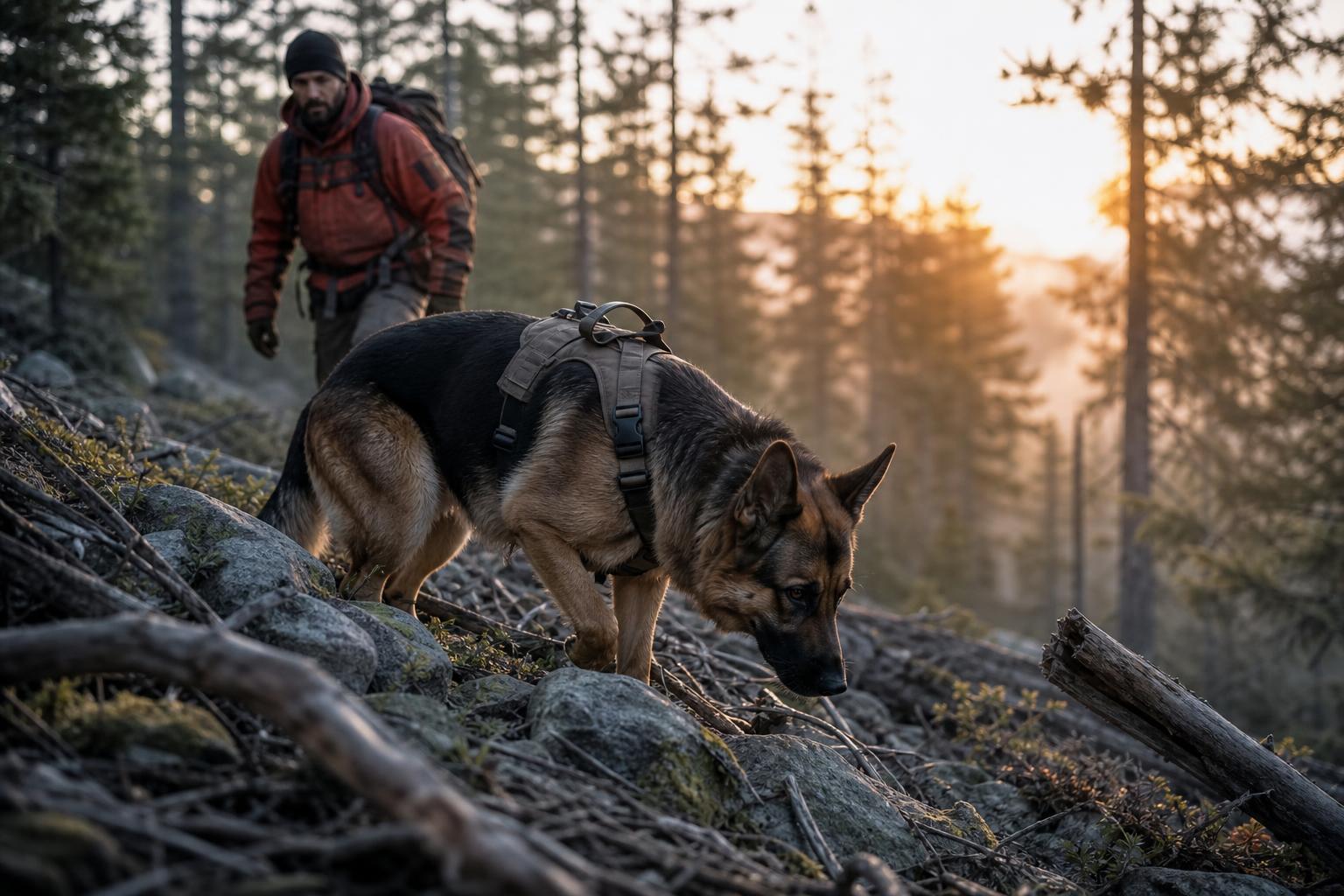
Search-and-rescue dogs work as members of trained teams. Accounts of well-known dogs are most informative when they explain the search, the handler’s role, and what records establish about the result. That context keeps the history grounded in the work.
When people talk about legendary search and rescue dogs, they often think first of headline-making rescues, collapsed buildings, avalanches, hurricanes, and lost children found against the odds. Those stories matter, but the real legacy of these dogs runs deeper than a single dramatic moment. It is built in cold predawn training fields, on steep mountain trails, in rubble piles, and across miles of wilderness where a handler learns to trust what the dog is telling him long before there is proof in sight.
What Makes a Search and Rescue Dog Legendary
A legendary search and rescue dog is not made by fame alone. The best ones carry a rare blend of hunt drive, nerve, stamina, biddability, and composure under pressure. They have to work through noise, unstable footing, bad weather, strange scents, and human panic. One minute they may be quartering open ground on air scent. The next they are threading through debris or working a trail hours old with distractions crossing every which way. That takes more than instinct. It takes training stacked on top of natural ability until dog and handler move like one creature with four eyes and one purpose.
Breed matters, but not in the simple way many folks think. Labrador Retrievers, German Shepherds, Belgian Malinois, Border Collies, and Golden Retrievers have all earned their place in search and rescue. So have mixed-breed dogs with the right motors under the hood. A great SAR dog is built less by pedigree on paper than by the combination of nose, drive, sound structure, confidence, and the will to keep searching when the easy answers are gone.
The Nose, the Mind, and the Heart
There is a temptation to speak only about scenting ability, and certainly that is where the magic begins. A dog can sort out drifting human odor in ways that still seem nearly supernatural to most people. But scent alone does not create a great rescue dog. The mind has to be steady. The dog must solve problems, ignore pressure, and stay engaged over long searches. Then comes the heart. Some dogs simply refuse to quit. They keep hunting when their muscles are tired, when the weather turns foul, and when the terrain would make a lesser dog fold up. Those are the dogs people remember.
Historic Search and Rescue Dogs That Left a Mark
One of the oldest and most enduring rescue dog legends comes from the Saint Bernards of the Swiss Alps. Long before modern gear, helicopters, or thermal imaging, monks at the Great St. Bernard Hospice relied on powerful dogs to help locate travelers lost in snow and ice. Among them, Barry became the stuff of history. He is often credited with saving dozens of lives in the early 1800s. Some of the old stories have likely grown in the telling, as such stories often do, but that does not erase the truth at the center of them. In brutal alpine country, these dogs became symbols of hope, endurance, and the unshakable bond between human need and canine service.
Barry’s legend still matters because it gave the world an early picture of what rescue dogs could be. He was not simply a big mountain dog wandering the snow. He represented purposeful canine work under deadly conditions, and that image has shaped public respect for rescue dogs ever since.
Modern Heroes in Disaster Response
If Barry belongs to the old world of rescue, the dogs that worked the wreckage of September 11 belong to a chapter etched into modern memory. Search and rescue dogs deployed at Ground Zero showed the world what courage looks like when steel, smoke, dust, and grief cover everything. Dogs like Bretagne, a Golden Retriever who later became one of the most recognized 9/11 search dogs, embodied the calm determination needed for urban disaster work. These dogs climbed unstable piles, ignored chaos, and kept searching where no machine could replace them.
Handlers from that era often speak about the emotional burden on the dogs as much as on the people. Search dogs are rewarded for finding. In situations where survivors are few, handlers have to work hard to keep the dogs engaged and confident. That piece of the story rarely gets enough attention. A dog may be physically capable of the job, but maintaining drive in the face of overwhelming scenes is part of what separates a well-trained dog from a truly legendary one.
Then there are the wilderness and avalanche dogs, the kind that work far from cameras and public applause. In mountain country, minutes matter. Snow settles heavy, scent behaves strangely, and terrain can kill rescuers as quickly as victims. Dogs trained for avalanche recovery and live find work operate in conditions that punish hesitation. Their speed and nose can turn a desperate search into a recovery of the living rather than the dead. Folks who spend time in the backcountry know well that these dogs are not novelties. They are serious assets with proven value.
The Handler and Dog Partnership
No legendary search and rescue dog works alone, no matter how gifted it is. The handler has to read body language down to the finest change in tempo, head turn, breathing pattern, or tail carriage. Good handlers learn when the dog is in odor, when it is sorting, when it is checking source, and when outside conditions are fooling the picture. In SAR, that matters doubly. Push too much, and you can talk a dog out of being right.
The strongest teams are built over years. Training is repetitive by design, but it should never be mindless. Dogs must see different terrain, shifting wind, old and fresh scent, urban settings, rural cover, water edges, and high-distraction environments. They need obedience, but not the kind that dulls initiative. The best SAR dogs are obedient enough to be safe and independent enough to solve the problem in front of them.
Why Real Experience Matters
Trial fields and training days are essential, but real searches reveal things no staged scenario can fully teach. Weather changes. Families are emotional. Search areas expand. Scent pools in one pocket and vanishes in another. Fatigue creeps into both dog and handler. Legendary teams are forged when all that uncertainty shows up at once and the dog still hunts honestly. There is no shortcut for that. Experience puts weight in a team’s judgment, and that judgment saves time when time is the one thing missing.
How Search and Rescue Dogs Are Trained
Most SAR dogs begin with play. That may surprise people who imagine stern drills from day one, but good trainers know prey drive, reward, and enthusiasm are the foundation. The dog learns that finding a person leads to the best game in the world. As the dog matures, the problems become harder. Hidden subjects are placed in tougher terrain. Scent age increases. The dog learns to work through contamination, distraction, and environmental stress.
Different disciplines demand different skills. Air-scent dogs cast for human odor carried on the wind. Tracking and trailing dogs work closer to the path of travel, often untangling complex ground scent. Disaster dogs search unstable structures and rubble. Human remains detection dogs perform one of the hardest jobs in the working dog world and do it with remarkable precision. Behind every polished search is a mountain of repetition, timing, correction, and reward that most people never see.
Physical conditioning is just as important as nose work. A SAR dog must be fit, agile, heat-tolerant, and able to recover quickly. Paw care, hydration, nutrition, and injury prevention are not side topics. They are part of the job. A dog can have all the drive in the world, but if its body breaks down, heroics are over in a hurry.
The Lasting Legacy of Legendary Rescue Dogs
The reason legendary search and rescue dogs stay with us is simple. They represent the best kind of working partnership. They do not care about applause, and they never ask for credit. They search because they are trained to search, because they love the work, and because somewhere along the line humans learned to trust one of nature’s finest noses in moments when hope was thin.
For dog owners interested in working dogs, there is a lesson here beyond admiration. Great dogs are built through selection, patient training, respect for instinct, and a willingness to let the dog become what it is meant to be. Not every dog will work a disaster zone or mountain slope, but the same principles apply whether you are raising a retriever, a shepherd, or a family dog with a working heart. Purpose matters. Structure matters. Confidence matters. And above all, the relationship matters.
The legendary search and rescue dogs we remember, from Barry in the Alps to the modern dogs that have worked storms, avalanches, and disaster sites, remind us that canine greatness is never an accident. It is bred, shaped, tested, and proven where conditions are hard and the stakes are real. That is why these dogs deserve to be remembered. They do not just find the lost. They show us, time and again, what a working dog can truly be.