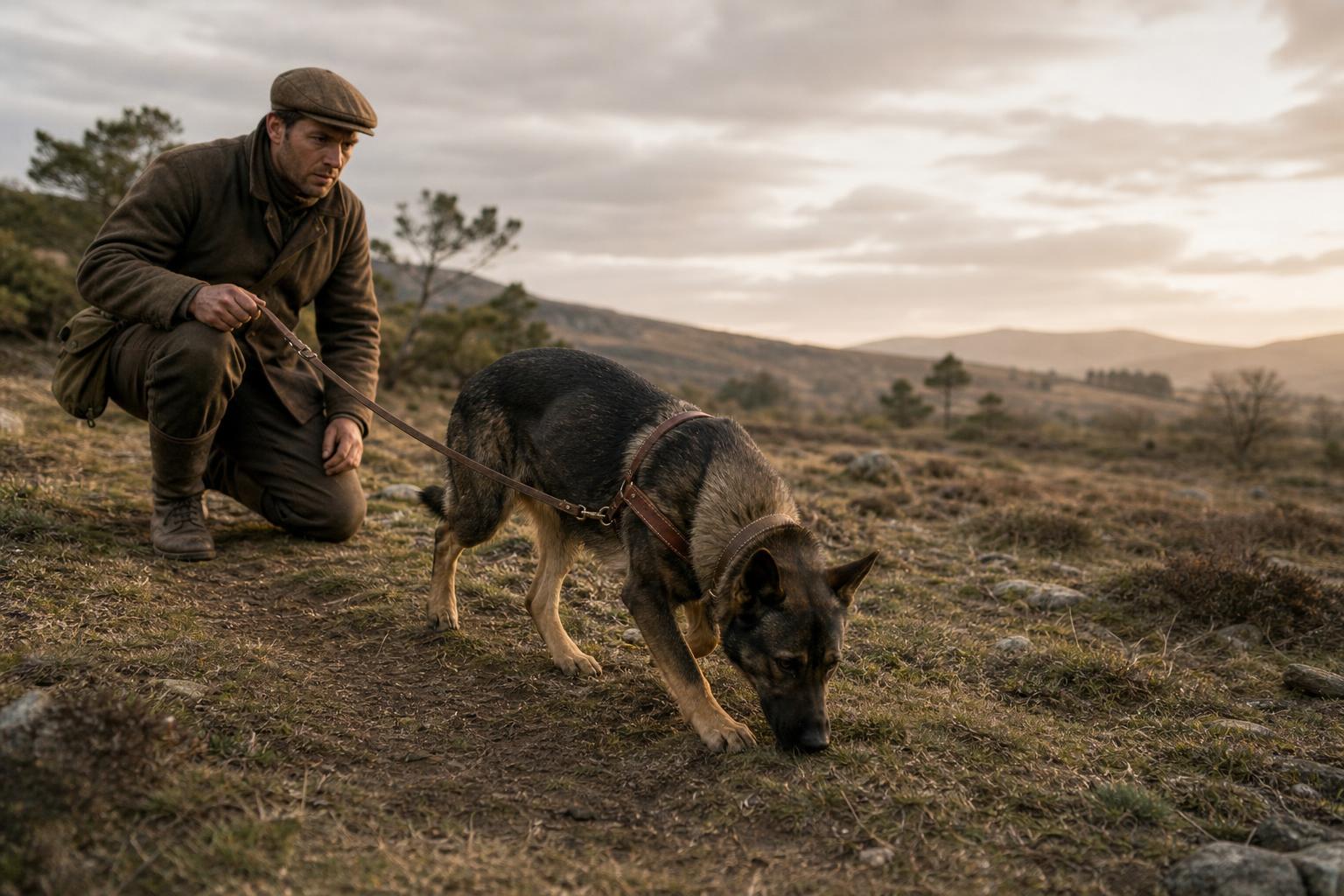
When folks hear the term detection dog, they usually picture a sharp-eyed K9 at an airport or a patrol dog working a vehicle stop. That image is true enough, but it leaves out the deeper story. The origins of detection dogs reach far beyond modern law enforcement. They go back to the oldest partnership between man and dog, rooted in scent, survival, and plain usefulness in the field. Long before anyone called it scent detection, hunters, soldiers, and stockmen understood one thing well: a good dog could find what a human never would.
If you have spent any time around working dogs, especially hounds, retrievers, shepherds, or versatile gun dogs, you already know the nose comes first. A dog lives in a world of scent layers. Ground odor, wind drift, age of track, human disturbance, animal movement, powder residue, decay, and fear all leave a picture in the air and on the ground. What we now classify as detection work was born from that natural canine gift and shaped over generations by people who learned how to harness it.
The Ancient Roots of Scent Work
The earliest detection dogs were not called detection dogs at all. They were hunting dogs, tracking dogs, camp dogs, and guardians that happened to excel at finding what mattered. Ancient civilizations relied on dogs to track wounded game, locate people, and guard settlements. In practical terms, that is the foundation of modern detection work. The job was simple: find the hidden thing, follow the scent source, and lead the handler to it.
Hunters likely understood before scholars ever wrote it down that some dogs could separate one scent from another with astonishing precision. A wounded deer slipping into a cedar swamp, a missing child wandering from camp, an intruder crossing a property line under cover of darkness—these problems all called for the same tool. A dog with brains, nerve, and nose could solve them.
Across Europe, Asia, and the Middle East, specialized dogs were developed for tasks that depended on scent discrimination. Scent hounds became famous for trailing game over long distances. Mastiff-type dogs and shepherding breeds were valued for territorial awareness and alertness to unfamiliar human scent. Even before formal records, these uses laid the groundwork for the idea that dogs could identify and locate specific targets based solely on odor.
From Hunting Companion to Practical Finder
From a hunter’s perspective, the leap from game finding to detection work is not much of a leap at all. A bird dog quartering a field for quail is reading scent conditions every second. A blood-trailing dog sorting a wounded buck’s line out of a mess of crossing tracks is doing a form of selective detection. The old handlers did not use modern training language, but they recognized drive, focus, and reliability when they saw it.
That practical knowledge matters because detection dogs were not invented in a laboratory. They were refined by real needs. Farmers needed stolen livestock recovered. Gamekeepers needed poachers found. Armies needed scouts warned. Villages needed lost people located. In every one of those jobs, the right dog proved that scent could be turned into dependable work.
The Rise of Formal Detection Dog Roles
As cities grew and organized policing developed in the 19th and early 20th centuries, people began to formalize what experienced dog men already knew. Dogs could do more than chase or guard. They could search. This shift was especially important in Europe, where police and military organizations started experimenting with dogs for tracking suspects, locating hidden people, and carrying messages.
Germany, in particular, played a major role in shaping early working dog standards. Breeds like the German Shepherd Dog were developed with utility in mind, and that included scent-based tasks. Around the same time, Bloodhounds earned a reputation for trailing human scent over difficult ground, which helped cement the idea that dogs could be trained for highly specialized finding jobs.
Still, the modern detection dog did not fully emerge until handlers began pairing canine scenting ability with reward-based search behaviors. That was a turning point. Instead of only trailing a person or following a track, dogs could be taught to seek out a specific odor source and communicate its location in a clear, repeatable way. That principle opened the door to narcotics detection, explosives detection, cadaver work, conservation detection, and medical alert applications.
War Changed the Working Dog World
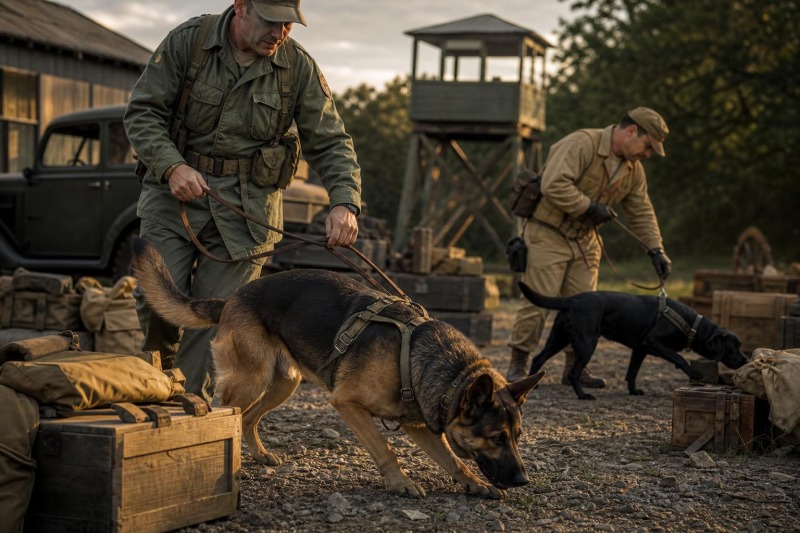
If there was one force that accelerated the development of detection dogs, it was war. Large-scale conflict creates urgent problems, and urgent problems drive innovation fast. During both World Wars, dogs were used for sentry work, messenger duties, casualty location, and tracking. Handlers saw firsthand that dogs could detect hidden people, equipment, and danger before human senses ever caught up.
Later military programs, especially in the mid-20th century, helped shape modern detection methods. Dogs were trained to identify explosives, munitions, tunnels, and enemy presence. These tasks required a higher level of precision than traditional tracking alone. Trainers needed dogs that could work under stress, ignore distractions, and indicate target odor without compromising safety. That demand refined breeding choices, handling systems, and training methods in a big way.
Out of those hard lessons came a more disciplined understanding of working drives. Trainers learned that a dog did not need to be aggressive to be effective in detection. In fact, many of the best detection dogs were selected more for hunt drive, environmental stability, toy reward motivation, and problem-solving ability than for confrontation. That remains true today.
How the Dog’s Nose Made It All Possible
No history of detection dogs means much if it ignores the nose itself. A working dog’s scenting ability is the engine behind everything. Dogs process odor at a level humans can barely imagine. While we move through the world seeing shape and color first, a dog reads scent as layered information. Age, direction, concentration, contamination, and disturbance all matter.
That is why detection dogs became so valuable across so many fields. Whether the target is explosives, narcotics, human remains, bed bugs, electronics, wildlife scat, or a missing person, the basic principle stays the same. Odor exists. The dog can isolate it. The handler learns to trust what the dog is saying.
That trust is built over time, and any seasoned handler will tell you it is not just about the nose. It is about the dog’s desire to hunt, the clarity of the indication, and the bond between dog and handler. Good detection work is quiet work most of the time. It looks simple from the outside, but under that calm surface is years of training, repetition, and honest field exposure.
Breeds That Helped Shape Detection History
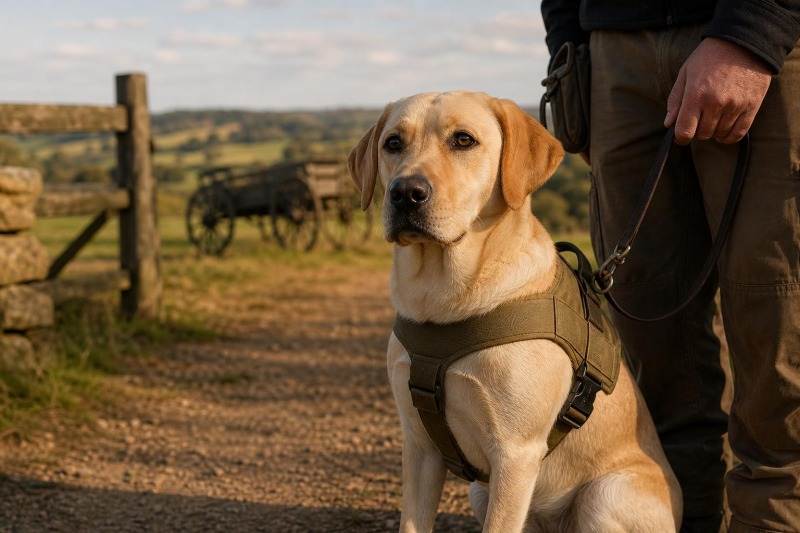
No single breed owns the story of detection dogs, but some certainly left a mark. Bloodhounds stand tall in the history of trailing human scent. German Shepherds became central to police and military work because they brought versatility, nerve, and trainability. Labrador Retrievers earned their place through food and toy drive, sociability, and steady search habits. Springer Spaniels, Belgian Malinois, and various hound breeds also proved themselves in specialized scent roles.
The history of detection dogs is full of standout animals that succeeded because they had the heart and wiring for the task. Good trainers noticed that early and built programs around traits, not just pedigree.
Detection Dogs in the Modern World
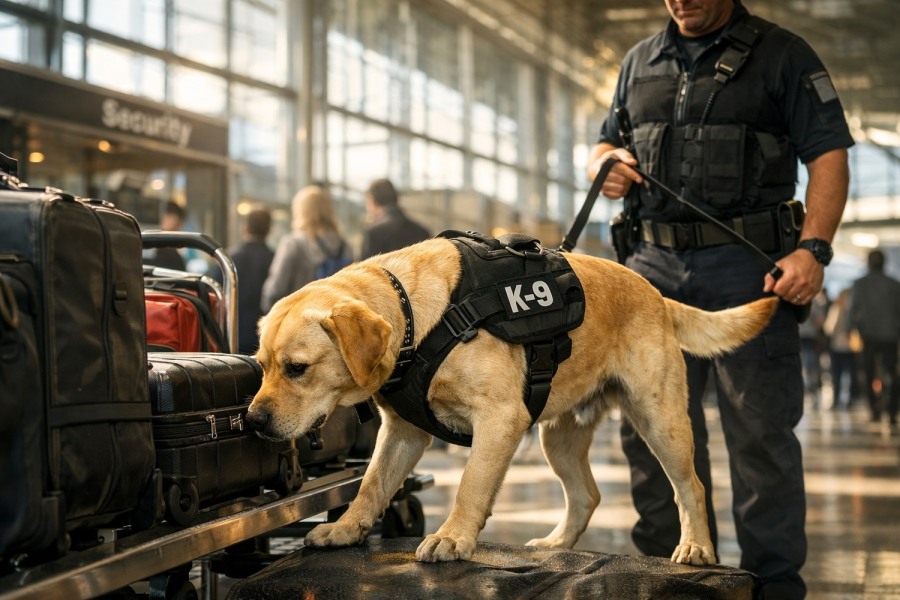
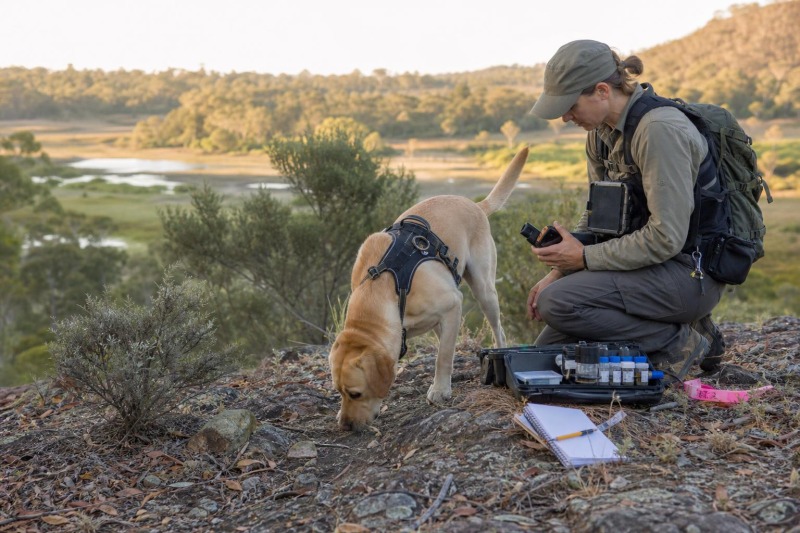
Today’s detection dogs serve in airports, on borders, in schools, at crime scenes, in disaster zones, and in wildlife conservation efforts. Some detect accelerants after fires. Some locate digital storage devices. Some help doctors and researchers identify changes in human health. Those modern jobs may sound far removed from the old hunting camp or battlefield, but the thread connecting them is plain. We are still asking dogs to use their nose to find what we cannot.
That continuity is what makes their history so compelling. Detection dogs are not a modern novelty. They are the result of centuries of observation, practical breeding, and practical training. Humans saw a natural talent in dogs, then gradually gave it sharper purpose. Every generation added something, from old trailing hounds to disciplined military programs to the reward-based search systems used now.
For dog owners interested in working dogs, that history is worth knowing because it explains why these dogs are so remarkable. Their work is not magic, even when it looks like it. It is instinct shaped by partnership. It is prey drive redirected into hunt drive. It is confidence, repetition, and trust built one search at a time.
Spend enough time around a true scent dog and you come away humbled. You watch that nose lift into a breeze or drop to a patch of disturbed earth, and suddenly the dog knows something you do not. That old truth has not changed since the first hunters and handlers learned to read their dogs. The origins of detection dogs began with survival and utility, but they endure because no machine has matched the living nose of a well-trained dog working for a handler it trusts.
And that, in the end, is the heart of it. Detection dogs came from the same timeless bond that built every honest working dog tradition: a job that mattered, a dog capable of doing it, and a handler wise enough to pay attention.