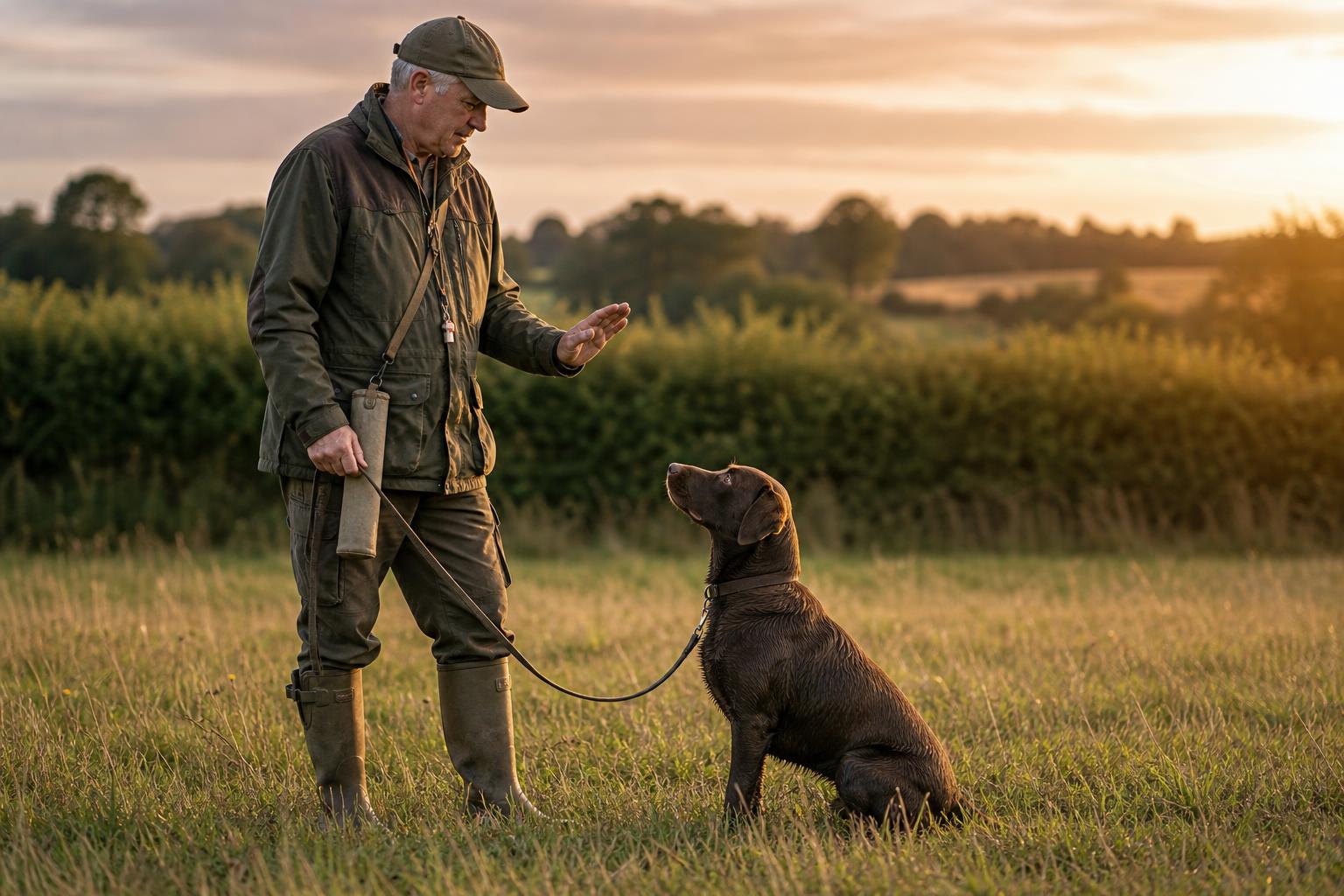
Positive Reinforcement vs Compulsion Training
Training methods affect more than whether a dog performs a cue during a session. They also shape confidence, clarity, and the dog’s willingness to keep learning. Comparing approaches requires attention to timing, welfare, and what the dog actually understands.
So this is not a fairy-tale argument where one side is all good and the other is all bad. It is about understanding what these methods do to a dog’s mind, and why that matters when the cover is thick, the birds are running, and your dog has to make the right decision with excitement boiling over.
What Positive Reinforcement Training Really Means
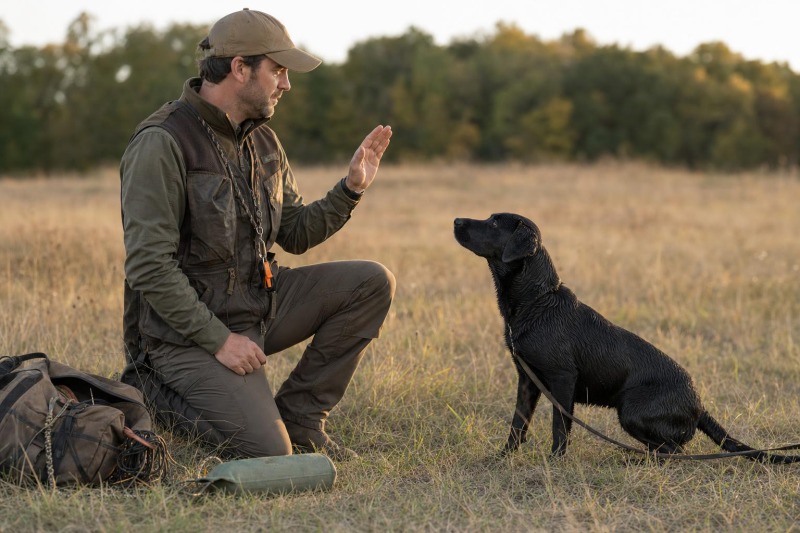
Positive reinforcement training is often misunderstood by folks who have never seen it done properly on a working dog. It does not mean letting a dog do whatever it pleases. It does not mean training without standards. It means adding something the dog values when it gives the desired behavior. That reward might be food, praise, a retrieve, access to birds, or the chance to continue the hunt. The dog learns that correct choices produce good outcomes.
For a working dog, that matters more than many people realize. A dog that learns through reward tends to stay mentally engaged. It starts offering behavior instead of shutting down and waiting to be corrected. In practical terms, that can mean faster learning on place work, cleaner recall foundations, and a pup that carries confidence into more advanced drills. In the field, confidence is no small thing. A dog that trusts its handler and understands the game often hunts with more animation, recovers from mistakes faster, and keeps its initiative when conditions get rough.
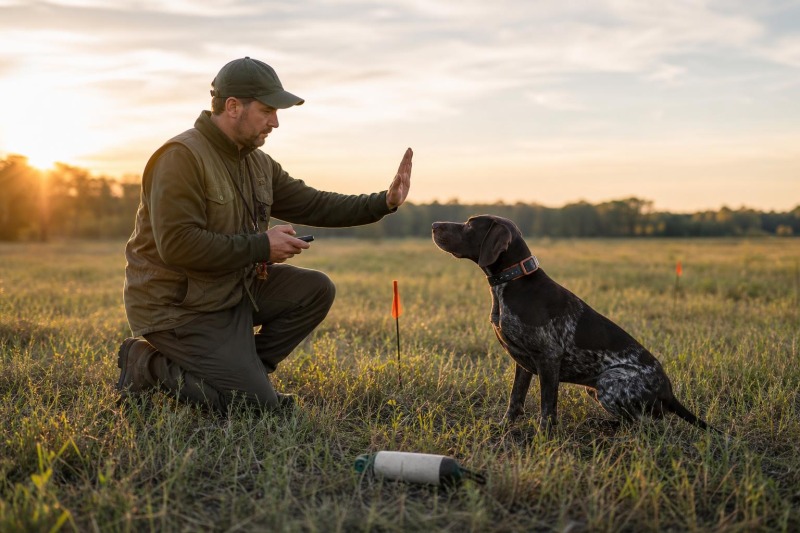
He was all legs and fire, the kind that hit the edge of a field like he owed the wind money. Instead of trying to collar him into shape right out of the gate, we spent weeks rewarding check-ins, steady attention, and calm handling around birds. That dog did not lose an ounce of style. He became easier to direct because he learned that cooperation paid. By the time hunting season opened, he was not just running hard. He was running with us.
Why Reward-Based Training Fits Many Working Dogs
Working dogs are bred to solve problems, read pressure, and key off human behavior. Positive reinforcement taps into that natural intelligence. It builds enthusiasm for the task rather than compliance born from avoidance. For puppies especially, this approach creates a solid foundation. Early obedience, kennel manners, leash work, and exposure to birds or retrieving objects all tend to progress smoothly when the pup feels safe experimenting and earning success.
That foundation can shape the whole career of a dog. When a young retriever learns that a clean hold, a straight return, and a calm sit bring reward, the lesson reaches deeper than a single drill. The dog begins to understand that self-control opens doors. That is powerful in a hunting companion.
What Compulsion Training Means in the Working Dog World
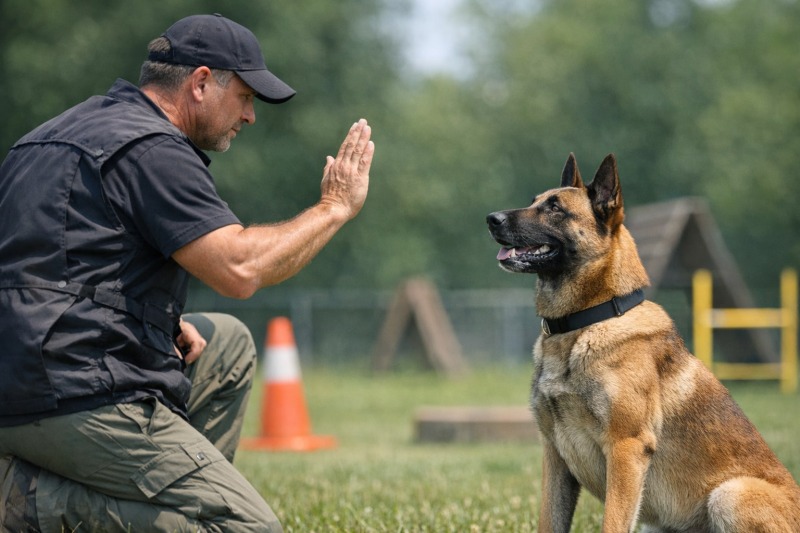
Compulsion training relies on pressure and correction to discourage unwanted behavior or enforce a command. In the hands of an experienced trainer with excellent timing, compulsion can create reliability. A dog that ignores a known command may receive leash pressure, a stern correction, or electronic collar stimulation. The pressure ends when the dog complies, and that release becomes part of the lesson.
Used carefully, compulsion can help sharpen behaviors a dog already understands. That is where many old-school trainers make a fair point. A finished gun dog does need accountability. If a dog breaks on the flush, blows off recall, or creeps after being thoroughly taught steadiness, there has to be a consequence. The field is not a casual environment. Safety, control, and consistency matter. A dog running near roads, livestock, or other hunters cannot be governed by wishful thinking alone.
But compulsion has a cost when it is overused, poorly timed, or introduced before the dog fully understands the lesson. Too much pressure can create confusion, avoidance, blinking birds, sticky retrieves, or a dog that appears obedient but works with hesitation. In hunting dogs, hesitation is often mistaken for stubbornness when it is really uncertainty. That distinction matters.
Where Compulsion Often Goes Wrong
The biggest failure in compulsion training is not correction itself. It is unfairness. If the dog does not clearly understand the command, correction does not educate. It punishes confusion. When that happens, you do not get polished work. You often get diminished work.
A working dog must trust that pressure has meaning. Without that trust, the dog begins to guard itself instead of hunting free and honest. Once that attitude creeps in, progress gets slower and the relationship gets thinner.
The Real Difference: Motivation vs Avoidance
At the center of this debate is a simple question. Is the dog performing because it wants to earn something good, or because it wants to avoid something unpleasant? Most dogs trained under both systems will show a mix of both over time, but the balance matters. Motivation tends to produce energy, creativity, and resilience. Avoidance tends to produce caution and compliance, sometimes at the expense of initiative.
For working dogs, initiative is a prized quality. You want a retriever that drives into cold water, a pointing dog that handles running birds with brains, and a versatile dog that can switch tasks without losing composure. Positive reinforcement tends to preserve that spark. Compulsion can support reliability, but if it becomes the main language the handler speaks, the dog may stop bringing its full self to the job.
Which Method Works Best for Hunting Dogs?
The honest answer is that the best training programs usually teach with positive reinforcement first and use fair correction later, once the dog knows the task. That is not fence-sitting. It is practical dog training. You build understanding through repetition, reward, and clear communication. Then, when the dog has proven it knows the command, you hold it accountable in measured ways.
This approach fits how many top working dogs mature. You do not teach force fetch, steadiness, whistle stops, honoring, or remote handling by guessing. You build layers. Reward creates clarity and desire. Structure creates consistency. Pressure, if used at all, should be a finishing tool, not the foundation under every lesson.
The handlers who get the most from their dogs are not the loudest or toughest. They are the clearest. Their timing is clean. Their standards are steady. Their dogs know when they are right, know when they are wrong, and never have to wonder whether the handler is fair.
How to Choose the Right Approach for Your Dog
Temperament matters. A soft dog may crumble under correction that a tougher dog shrugs off. A bold, high-drive dog may need more structure to stay honest. Age matters too. Young dogs need room to learn. Finished dogs need accountability. Your own skill matters just as much. If your timing is inconsistent and your emotions run ahead of your judgment, heavy correction will usually make things worse, not better.
For most dog owners interested in working dogs, positive reinforcement offers the safest and most productive place to begin. It builds communication, strengthens the bond, and helps the dog understand the job without dulling drive. Correction should come only after the lesson is truly learned, and even then it should be proportionate, calm, and specific.
Hunting dogs are not machines and they are not porcelain either. They are athletes, partners, and students. They need guidance, repetition, and clear expectations. But above all, they need a handler they can trust. If you have ever watched a seasoned dog work a field with confidence, swinging to the gun with just enough independence and just enough obedience, you know what good training looks like. It does not look fearful. It does not look chaotic. It looks like a dog that understands the job and loves doing it.
That is why this debate matters. Positive reinforcement and compulsion training do not merely produce behaviors. They shape attitude. For most modern working dog handlers, the smartest path is to teach generously, reward often, and correct fairly only when understanding is already in place. Do that, and you stand a much better chance of ending up with the kind of dog every hunter wants at heel when the morning breaks cold and the birds start moving.