Training equipment works best when its purpose in the lesson is clear. A lead, marker, reward toy, or harness can support communication, but none supplies the training plan. Choose tools for the dog, the task, and the handler’s ability to use them consistently.
Working dogs live in a world where hesitation can ruin a retrieve, break a point, blow a blood trail, or create danger around stock, guns, roads, or rough country. That is why training tools matter. They are not decorations clipped onto a vest. They are aids that shape habits and reinforce standards. When chosen wisely, they help a dog move from excitement and instinct into dependable performance under distraction.
The Foundation Tools Every Handler Learns First
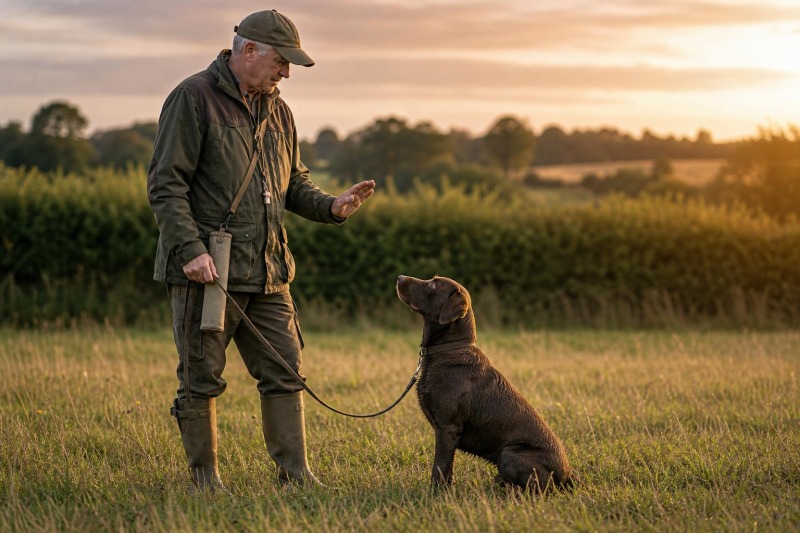
The first tools in any serious program are usually the simplest. A quality flat collar, a sturdy lead, and a long line do more real work than most people expect. The lead is not just for walking a dog from kennel to truck. It teaches the dog to yield, to stay connected, and to accept direction without conflict. A long line adds distance while preserving control. That matters when you are teaching recall, steadiness, quartering patterns, place work, or calm behavior around game scent.
A lead lets you show a young dog what you want instead of merely correcting what you do not. In the early months, that difference shapes attitude. A dog that feels led and taught often stays bolder and clearer than one that feels constantly checked and restrained.
Place boards and raised platforms also deserve a spot among the foundation tools. They look plain, and that is part of their value. A place board teaches a dog that there is a defined spot where steadiness begins. For retrievers, it can improve patience and delivery habits. For versatile and pointing dogs, it helps settle the mind and clarify stop-and-stay behavior. For protection or service-oriented working dogs, it becomes a clean marker for stationing and impulse control.
Why Simple Tools Build Better Habits
Simple tools reduce confusion. A young dog does not need six signals layered at once. It needs one clear command, one fair expectation, and a clean way to succeed. The more straightforward the setup, the easier it is for the dog to connect behavior with outcome. That is why seasoned trainers often return to basic gear even after years in the field. The basics never stop mattering.
Whistles, Check Cords, and Communication at Distance
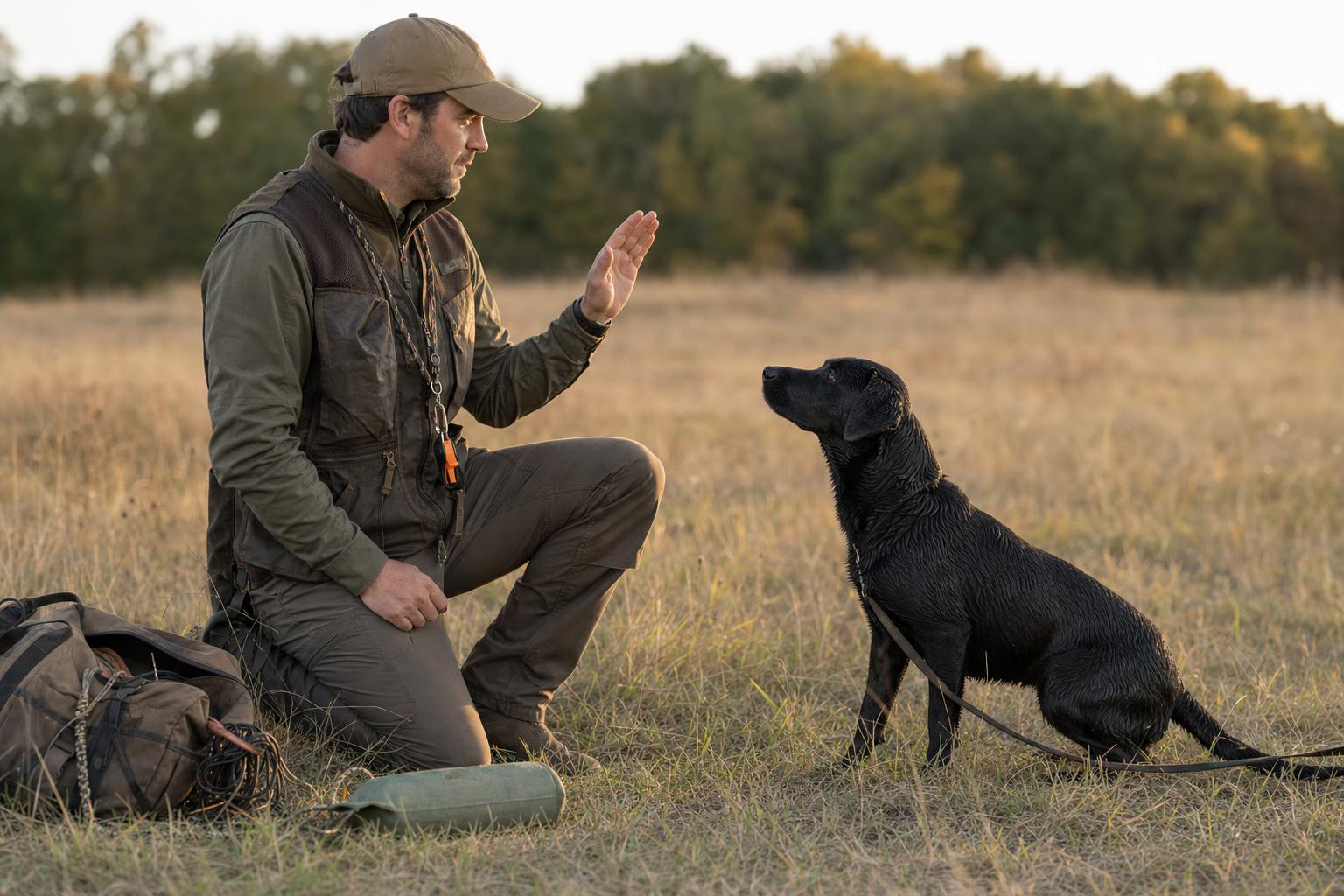
If you spend enough time with working dogs, especially in bird country or water, the whistle becomes nearly as important as your own voice. Voice commands are useful, but they fray at distance and emotion creeps into them. A whistle cuts through wind, cover, and excitement with less clutter. One blast can mean sit. Several pips can mean turn. In retriever work, spaniel work, and some upland handling situations, that little tool becomes the bridge between handler and dog when yards stretch and adrenaline rises.
The check cord plays a similar role in early field training. It gives freedom while keeping your hand on the lesson. It is one of the finest tools for transitioning a dog from obedience into practical field control. The dog starts believing it is making choices, but you still have the ability to reinforce the right path.
Used correctly, these tools do not suppress initiative. They channel it. That is a critical distinction in working dogs. You do not want a dull dog that waits for every breath of instruction. You want a dog with drive and confidence that still stays reachable.
Retrieving Tools That Build Marking, Delivery, and Confidence
For retrievers and versatile hunting dogs, dummies, bumpers, and training birds are central tools. A bumper is more than something to throw. It teaches line, focus, mouth habits, and return. White bumpers may help a young dog learn to mark in short cover, while orange bumpers can shift the dog away from sight and toward scent depending on the exercise. Dead birds, frozen birds, and live training birds each teach something different, and each should be introduced with thought.
Plastic can build mechanics, but birds stir instinct. That said, instinct alone can make a mess if the dog has no structure underneath it. A pup that bolts, parades, hard mouths, or refuses delivery is telling you the excitement has outrun the education. The right training tools help keep those two in balance.
Launchers and remote release devices can also be useful, especially for pointing dogs and advanced marking drills. They create timing that a helper with poor reflexes often cannot match. A properly timed bird flush can teach steadiness far more cleanly than a late correction after the dog has already broken. Timing is everything in dog work, and some tools are valuable simply because they make timing more precise.
Birds Are Tools, But They Are Also Teachers
No bumper ever fully replaces a live bird in training a hunting dog. Birds teach scent, movement, temptation, and consequence in a way nothing man-made can duplicate. The dog learns that game is exciting, but excitement must still live inside the rules you set. That lesson is at the heart of every finished gun dog.
Electronic Collars and the Need for Judgment
No discussion of training tools used in working dogs is complete without the electronic collar. Few tools are more useful, and few are more abused. In skilled hands, the e-collar is a communication tool that reinforces known commands at distance. In careless hands, it becomes a shortcut for missing foundation. That is where trouble starts.
An e-collar should not be used to teach a command the dog does not already understand. It should layer onto known behavior with fair timing and consistent standards. When introduced correctly, it can create reliability in recall, stopping, casting, and off-lead control when the field is full of distractions. For many working dogs, especially those covering big country or facing dangerous temptations, that reliability can be invaluable.
If your timing is poor, your standards are unclear, or your temper runs ahead of your judgment, the collar will expose every weakness you have. Before anyone reaches for that transmitter, the dog should know the lesson on lead, on long line, and in a fair progression. The collar is not magic. It is accountability at distance.
Specialized Tools for Scent Work, Protection, and Farm Duties
Not all working dogs are trained for birds and retrieves. Scent hounds, detection dogs, protection dogs, and stock dogs all use tools suited to their jobs. Harnesses are important in tracking and detection because they create a physical cue that tells the dog it is time to work scent independently. A tracking line allows the dog to move out and solve problems while the handler reads body language from behind. Flags, scent articles, and marked tracks help create training setups that gradually become more difficult and realistic.
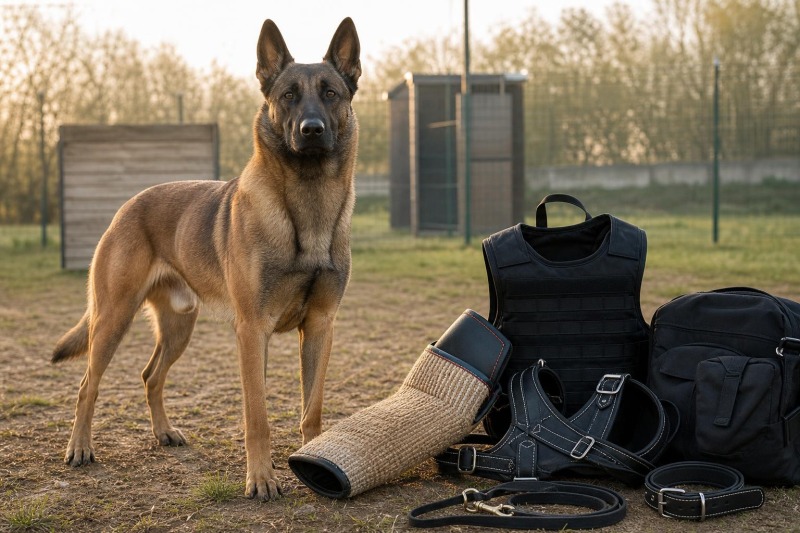
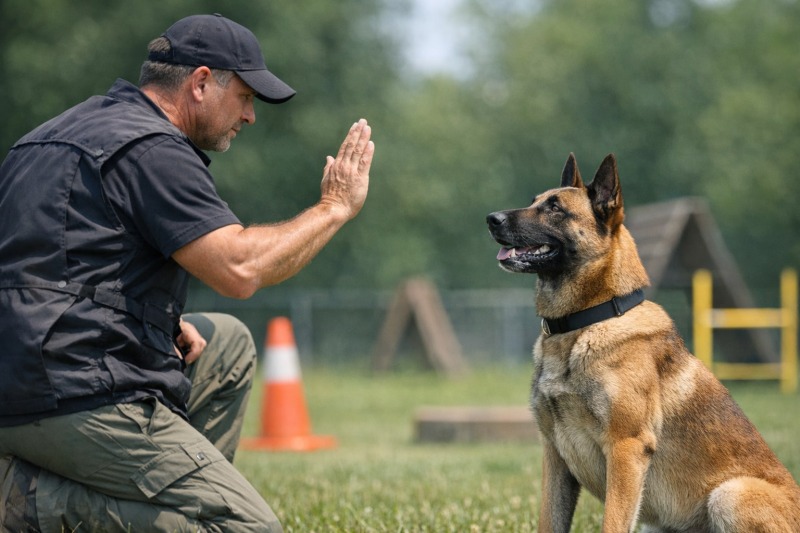
In protection work, sleeves, bite tugs, hidden equipment, and muzzles are all highly specialized tools. None belong in casual hands. Their purpose is to build targeting, confidence, control, and discipline under expert supervision. In stock work, long lines, crooks, sorting aids, and carefully managed livestock become part of the educational picture. The dog learns pressure and release not just from the handler, but from the movement of animals themselves.
What ties all these disciplines together is that the tool must serve the task. Good trainers do not force every dog through the same box of gear. They choose equipment based on the dog’s work, maturity, weaknesses, and stage of development.
How to Choose the Right Training Tools
The best way to choose training tools for working dogs is to start with your end goal. Ask what job the dog must perform, what behaviors are missing, and what kind of communication will make those lessons clearest. A young retriever learning hold and delivery does not need the same setup as a stock dog learning outruns or a tracking dog learning article indication.
Durability matters too. Working dog gear gets dragged through mud, frozen in truck boxes, soaked in marsh water, and tangled in cover. Cheap buckles break. Weak stitching fails. Poorly designed equipment wastes time and can create safety problems.
Most of all, choose tools that encourage consistency. Dogs thrive when the same cue means the same thing every time. The right collar, line, whistle, platform, or bumper should make your standards easier to deliver, not harder to remember.
The Tool Is Never the Whole Story
Their handlers read the dog, respected the process, and knew when to push and when to back off. That is the real craft. Tools support it, but they do not replace it.
On a cold morning in the field, when a dog sits steady through a flush, takes a clean line on a blind, or honors pressure without losing heart, you are seeing far more than equipment at work. You are seeing repetition, trust, and fair handling carried out over time. The tools helped build the bridge, but the relationship carried the dog across it.
Use what is useful. Skip what is trendy. Keep your standards plain, your timing honest, and your dog’s confidence intact. If you do that, the gear in your hand becomes what it ought to be: not a crutch, but a clear extension of good training.