Psychiatric service dogs perform trained tasks related to a handler’s disability. The practical questions concern those tasks, the dog’s reliability, and the support needed to maintain the partnership. A calm appearance alone says little about the work involved.
For dog owners interested in working dogs, psychiatric service dogs deserve a closer look. They are not a trend, and they are not just a softer corner of the dog world. These dogs are trained to help people living with psychiatric disabilities such as PTSD, severe anxiety disorders, panic disorder, depression, and other qualifying conditions. The key point is simple: a psychiatric service dog performs trained tasks that lessen the impact of a disability. That is what separates a true service dog from a companion animal, no matter how beloved that companion may be.
What a Psychiatric Service Dog Really Does
A lot of confusion comes from the public lumping several categories together. Folks hear about emotional support animals, therapy dogs, and service dogs and assume they all serve the same purpose. They do not. A psychiatric service dog is individually trained to perform work or tasks directly related to a handler's psychiatric disability. That can mean interrupting harmful behaviors, creating space in crowds, guiding a disoriented handler to an exit, waking someone from night terrors, reminding them to take medication, or applying deep pressure during a panic episode.
In practical terms, this is task-driven work. The dog is not present simply because dogs are calming, though that can certainly be a welcome benefit. The dog is trained to respond with reliability and purpose. Think of it the same way you would any other specialized working dog. Desire matters, temperament matters, and training matters. Without those pieces, you do not have a dependable worker. You just have a dog in a vest.
The Difference Between Comfort and Task Work
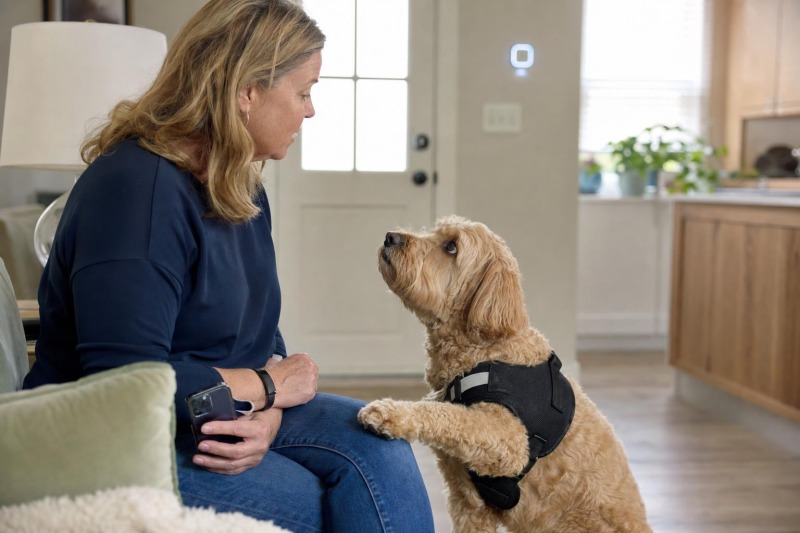
This distinction matters, especially for owners trying to understand the role. Plenty of dogs offer comfort. An old Lab resting his head on your knee after a bad day can do a world of good. But a psychiatric service dog goes further. The dog may recognize the physical signs of an oncoming panic attack and intervene before the handler spirals. The dog may block approaching strangers from crowding too close. The dog may nudge, paw, or lean into the handler to break dissociation. Those are not happy accidents. They are trained responses, built carefully through repetition and reinforced until they hold under pressure.
The Kind of Dog Suited for This Work
If you have spent enough years around hard-going dogs, you know not every good dog is right for every job. The same truth applies here. A psychiatric service dog needs sound nerves above all. Flashy drive without emotional stability is a poor bargain. The best candidates are biddable, people-focused, environmentally steady, and able to settle for long stretches without losing their head. They need enough confidence to move through busy public spaces but not so much edge that every odd sound, swinging door, or passing cart becomes a problem.
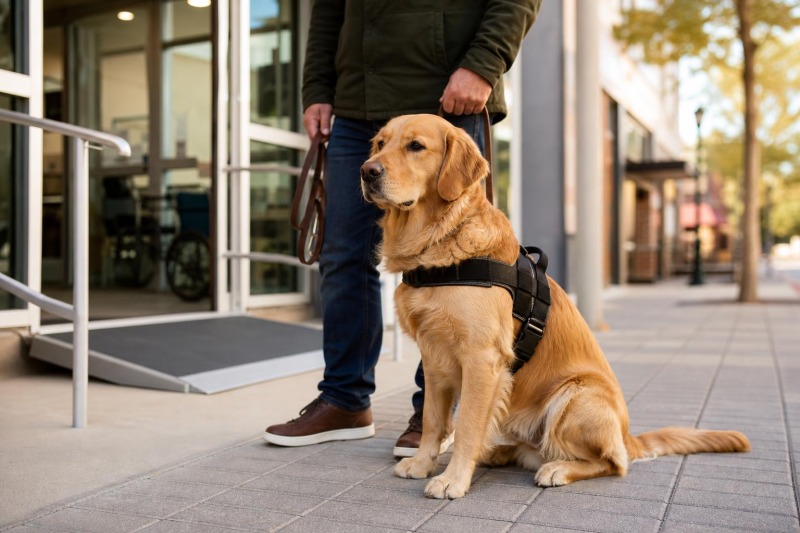
Breed can play a role, but temperament always comes first. Labrador Retrievers, Golden Retrievers, Standard Poodles, and some well-bred mixed dogs often do well because they tend to combine trainability, sociability, and steadiness. That said, no breed gets a free pass.
The washout rate is something people do not always appreciate. Service work is demanding. Public access work demands neutrality, impulse control, and consistency in environments that can rattle even seasoned dogs. Add the pressure of task work tied to a human being's health, and the standard gets even higher. Not every dog can or should do it.
How Psychiatric Service Dogs Are Trained
Good training starts with the same foundation you would want in any reliable working partner. The dog must understand obedience, impulse control, leash manners, and how to settle quietly in public. From there, the training becomes much more specialized. Some dogs are taught to notice changes in breathing, body posture, fidgeting, or scent shifts that precede an episode. Others are taught specific interrupting behaviors on cue first, then later shaped into alerts or responses tied to the handler's condition.
The work is often layered. A dog might learn to retrieve medication, lead the handler outside, stand in front as a buffer in checkout lines, and provide pressure across the handler's lap when anxiety spikes. None of that should be rushed. Reliable task training takes patience, consistency, and proofing in real-world settings. A dog that performs perfectly in the living room may struggle when fluorescent lights buzz overhead and shopping carts rattle past. That gap between practice and real life is where experienced trainers earn their keep.
Public Access Is Part of the Job
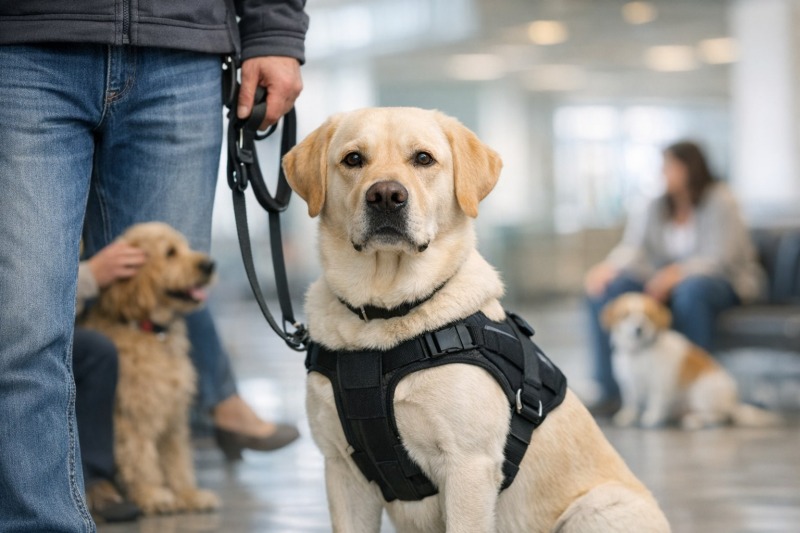
One thing that separates a psychiatric service dog from many other trained dogs is the need to work calmly in public. That means ignoring dropped food, staying neutral around strangers, settling under tables, riding elevators, and handling crowds without becoming reactive or overwhelmed. That steadiness is the mark of a true working animal. It may not look dramatic, but discipline rarely does. A dog lying quietly at its handler's feet in a packed waiting room is showing a kind of control that deserves respect.
Who Benefits From a Psychiatric Service Dog
People living with PTSD often come to mind first, and for good reason. A psychiatric service dog can help interrupt hypervigilance, nightmares, panic responses, and isolation. Veterans are often part of this conversation, but they are far from the only people who benefit. Civilians dealing with trauma, severe anxiety, panic disorder, major depression, autism with psychiatric overlap, or other disabling conditions may also qualify depending on their individual needs and medical guidance.
The right dog can bring structure back to a life that has narrowed down to survival. That is not romance. That is function. It is the same old story found in every honest working partnership: the dog makes a difficult task possible again.
Common Misunderstandings and Why They Matter
The biggest misunderstanding is believing a psychiatric service dog is simply a pet that makes someone feel better. That notion does a disservice to handlers and to the dogs themselves. It also fuels bad behavior from people trying to pass untrained pets off as service animals. When that happens, legitimate teams pay the price through public suspicion, access disputes, and unsafe encounters.
A poorly trained dog in a service vest can create real trouble. It can distract another service dog, frighten the public, and undermine trust in working teams. Anyone serious about dogs ought to understand that titles mean nothing without performance. A service dog should be calm, controlled, and task-capable. If the dog cannot meet that standard, sentiment will not fix it.
Psychiatric Service Dog vs Emotional Support Animal
The line is plain even if people blur it online. An emotional support animal provides comfort through presence and does not have specialized public access rights in the same way a service dog does. A psychiatric service dog is trained to perform specific tasks related to a disability. That task training is the dividing line, and it is not a small one.
Choosing the Right Path
For someone considering a psychiatric service dog, honesty is important from the start. Not every person who loves dogs is ready for the workload that comes with a service animal. This is a daily training relationship, not a shortcut around treatment. The dog is one part of a broader support plan that may also include therapy, medication, and medical care. The best outcomes usually come when the dog is integrated thoughtfully rather than treated as a miracle answer.
There is also the practical side. The handler needs a dog suited for the job, a clear understanding of the tasks needed, and access to reputable training help. Owner-training is possible in some cases, but it takes discipline and a realistic eye. If a dog shows instability, reactivity, fearfulness, or poor recovery from stress, that dog may be a fine pet and still be the wrong candidate for service work. Knowing the difference is part of responsible dogmanship.
Why These Dogs Belong in the Working Dog Conversation
Folks who admire working dogs often appreciate grit, drive, and visible performance. Psychiatric service dogs ask us to appreciate a different kind of excellence. Their work is quieter, but it is no less real. They must think clearly, remain steady, and respond with precision when their handler needs them most. In many cases, they carry that responsibility every single day.
Sometimes that means finding birds in thick cover. Sometimes it means gathering stock with calm authority. And sometimes it means standing between a vulnerable person and a rising wave of panic, then guiding them safely back to level ground. That is work. Important work. The kind that changes lives not with noise or spectacle, but with steadiness.
For dog owners drawn to the world of working dogs, psychiatric service dogs are worth understanding on their own terms. They represent discipline, training, sound temperament, and purpose, all the things that matter in any serious canine job. And when they are bred right, trained right, and matched right, they prove once again what good dogs have always known: the work may change, but service is service.