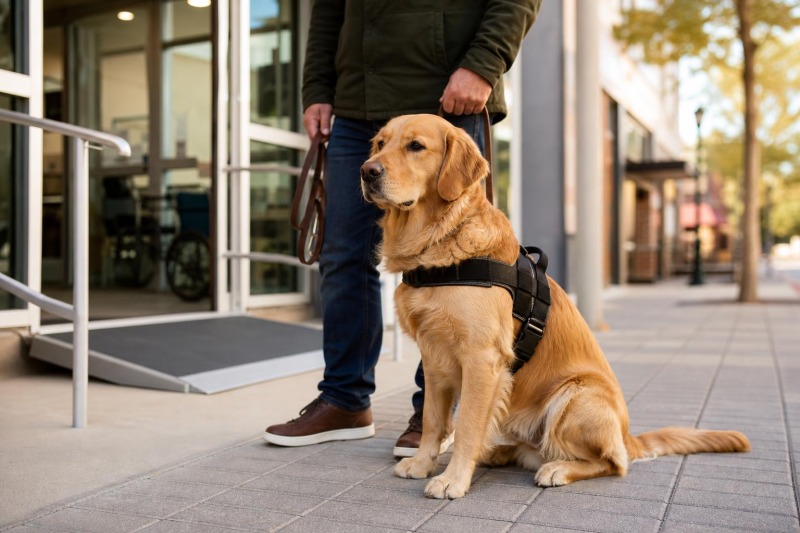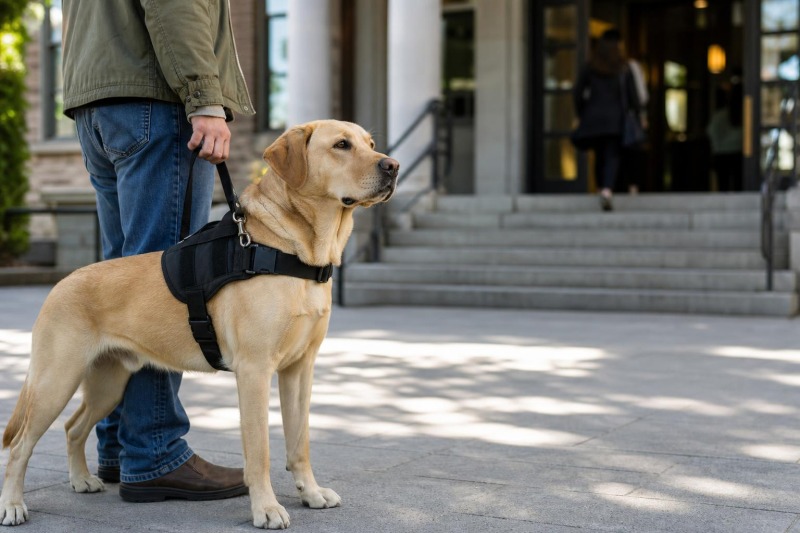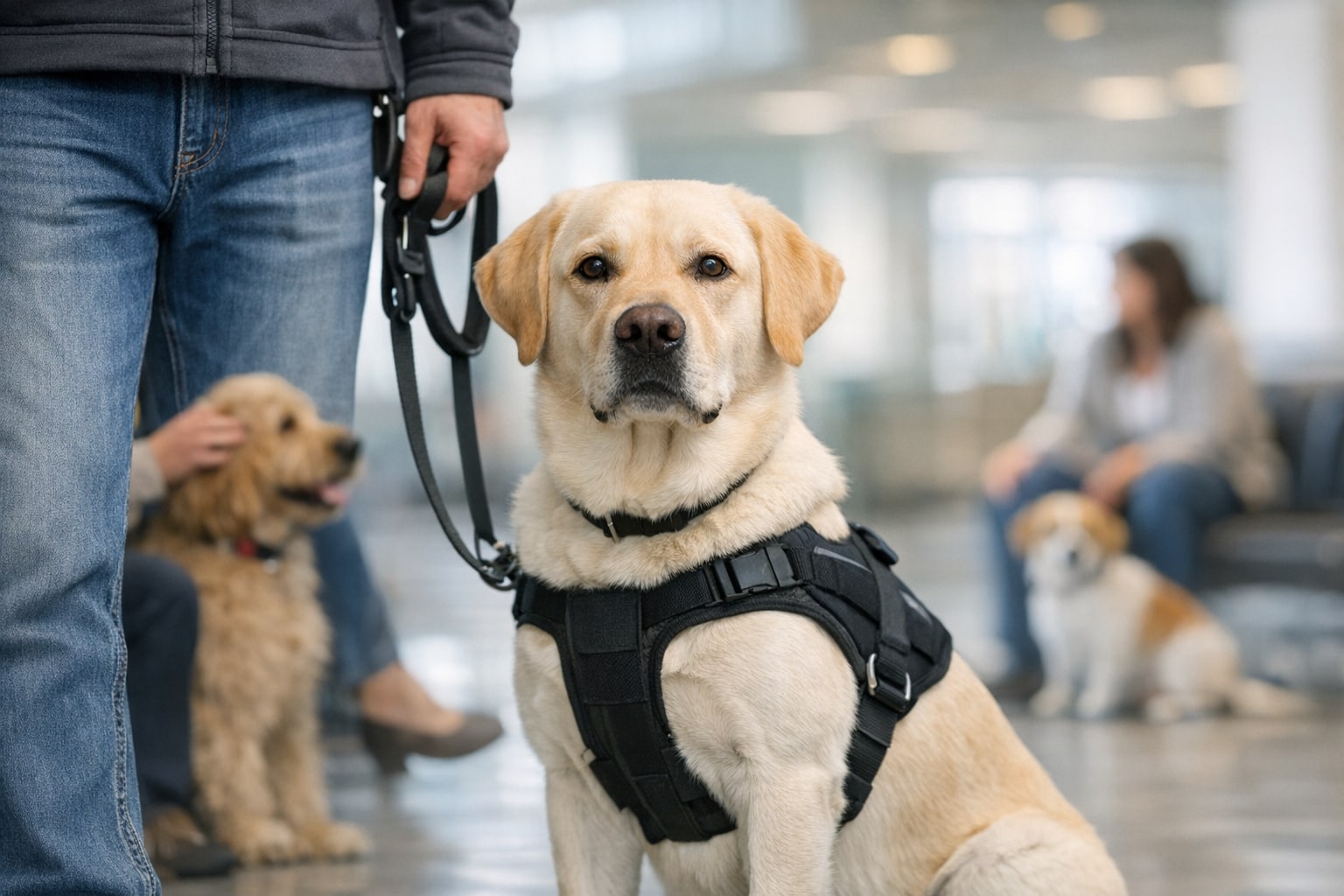
Service dogs, therapy dogs, and emotional support animals have different roles. Their training and the rules applying to them also differ by context. Clear terminology helps owners, handlers, and businesses understand the questions they need to ask.
For dog owners interested in working dogs, understanding the difference between service dogs, therapy dogs, and emotional support animals matters. It helps you choose the right path for your dog, keeps you on the right side of the law, and protects the reputation of serious working dogs that perform life-changing tasks every day.
Why the Confusion Happens
From the outside, all three may look like calm, well-mannered dogs helping people. A golden retriever lying quietly under a chair at a clinic, a shepherd guiding a handler through a store, and a mixed-breed dog comforting someone during a panic episode at home can all seem similar to the casual eye. But a dog’s appearance tells you very little about its actual role.
In the field, a dog’s job defines the dog. A retriever is not a pointing dog just because it is obedient. Same thing here. These categories are built around purpose, training, and access rights, not emotion or affection alone. A dog can be deeply loved, wonderfully behaved, and still not qualify as a service dog.
What Is a Service Dog?
A service dog is trained to do specific work or tasks for a person with a disability. That is the heart of it. The dog is not there simply to provide comfort by being present. It is there to perform trained actions that directly help its handler navigate daily life.
Those tasks can vary widely. A service dog may guide a person who is blind, alert a handler to an oncoming seizure, interrupt self-harming behavior, retrieve dropped items, open doors, brace for balance, or signal changes in blood sugar. In each case, the dog is performing trained work tied to a disability.
Good service dogs are not thrown together overnight. They are selected for temperament, stability, focus, and the ability to work through noise, crowds, distractions, and stress. Anyone who has trained hunting dogs or other serious working dogs recognizes the pattern. Natural ability matters, but so does a patient hand, repetition, exposure, and standards that do not bend just because a dog is sweet at home.
Service Dog Legal Rights
In the United States, service dogs are generally protected under the Americans with Disabilities Act, often called the ADA. That means they are allowed in most public places where dogs are otherwise not permitted, including stores, restaurants, hotels, and many public facilities. This public access is what sets them apart most clearly from therapy dogs and emotional support animals.
There are limits, of course. A service dog still must be under control, house-trained, and safe in public. If a dog is lunging, barking through a grocery aisle, or causing disruption, it may be removed. A vest alone does not create legal status, and there is no official federal registration that magically turns a pet into a service dog.
What Is a Therapy Dog?
A therapy dog is trained and temperament-tested to provide comfort and support to other people, usually in structured settings. These dogs often visit hospitals, schools, nursing homes, rehabilitation centers, and disaster response areas. Their work is valuable, but it is very different from that of a service dog.
Where a service dog is trained to help one handler with a disability, a therapy dog works with many people. Think of the old bird dog that could switch from one cover to the next and adjust to changing ground with a level head. Therapy dogs need that same kind of steady temperament. They must accept strange hands, odd sounds, wheelchairs, sudden movement, and emotional environments without losing their composure.
Most therapy dogs go through testing or certification with a recognized organization before participating in visits. The standards usually focus on obedience, manners, confidence, and sociability. They are expected to be approachable, reliable, and calm. The key difference is that they do not have the same public access rights as service dogs. A therapy dog may be invited into a hospital or school as part of a program, but it cannot simply accompany its handler into every public place by default.
Where Therapy Dogs Shine
There is a reason therapy dog programs continue to grow. A good dog can soften a room faster than most people can. In schools, anxious readers often settle down with a dog at their feet. These dogs offer calm, connection, and comfort, but they do it as welcomed visitors, not as legally protected medical assistance animals in the way service dogs do.
What Is an Emotional Support Animal?
An emotional support animal, often shortened to ESA, provides comfort through companionship to a person with an emotional or psychological condition. Unlike a service dog, an ESA is not required to perform specific trained tasks. The benefit comes from the animal’s presence, routine, and bond with the owner.
That distinction is where many people get tripped up. A dog that helps someone feel safer, calmer, or less alone may be tremendously important in daily life, but unless it has been trained to perform disability-related tasks, it is not a service dog under the ADA. That does not make the dog less meaningful. It simply places the dog in a different category.
ESA Legal Considerations
Emotional support animals do not have the same public access rights as service dogs. In most cases, they are not automatically allowed in stores, restaurants, or other public businesses that do not permit pets. Housing rules can differ, and that is often where ESAs come up most often, but broad public access is not part of the package.
This is where dog owners should be careful. The internet is full of flashy certificates, registry sites, and miracle promises. A paid badge and a printable letter from a questionable website do not grant the legal standing people think they do. If you are considering an ESA, it is wise to understand current federal, state, and housing guidelines and work with legitimate professionals where needed.
Service Dogs vs Therapy Dogs vs Emotional Support Animals: The Real Difference
If you strip away the online chatter and the fake vests, the difference comes down to job, training, and legal access. A service dog is trained to perform specific tasks for one person with a disability and has strong public access protections. A therapy dog is trained to comfort many people in organized settings but does not have blanket public access. An emotional support animal provides comfort through companionship and generally does not require task training or receive broad public access rights.
That difference matters because public trust matters. When poorly behaved pets are passed off as service dogs, genuine handlers face more skepticism and more barriers. Store owners grow wary. Staff start asking questions they should not. Real working teams get side-eyed because someone else wanted the privileges without the preparation.
Choosing the Right Role for Your Dog
Not every good dog is suited for every kind of work. That is true in the uplands, in the duck blind, and in public service. Some dogs have the nerve, focus, and steadiness for demanding task work. Others are softer, more social, and ideal for therapy settings. Some are simply beloved companions that make life better at home, and there is nothing wrong with that.
Honesty is the best place to start. Look at your dog’s temperament with clear eyes. Can the dog ignore distractions? Handle strangers calmly? Recover from surprises without unraveling? Work consistently in unfamiliar environments? A dog that startles hard at carts, children, noise, or other dogs may not be suited to public-facing work, no matter how affectionate it is on the couch.
The owner matters too. Working dogs are a commitment. Service work in particular demands time, structure, skill, and often professional help. Therapy work requires regular practice and a handler who understands boundaries, facility rules, and dog stress signals. Even emotional support dogs benefit from obedience, routine, and fair expectations.
Why Clear Labels Protect Working Dogs
Working dogs earn respect the old-fashioned way. They show up, hold steady, and do a real job when it counts. Service dogs belong in that tradition. Therapy dogs do too. Even emotional support animals, while different in legal standing, can play an important role in a person’s life when described honestly.
What hurts everyone is muddy language and wishful branding. Calling every helpful dog a service dog cheapens the title and creates trouble for people who depend on task-trained dogs to move through the world safely. Dog owners interested in working dogs should be the first to defend that distinction, because true working ability has always meant something.
The best dog work is plain to see. It is calm under pressure. It is useful, honest, and dependable. Whether a dog serves one handler, visits a room full of strangers, or offers steady companionship at home, the role should fit the dog, fit the need, and be represented truthfully. That kind of clarity helps handlers, businesses, and the dogs themselves. And in a world already full of noise, a straight answer is worth a lot.