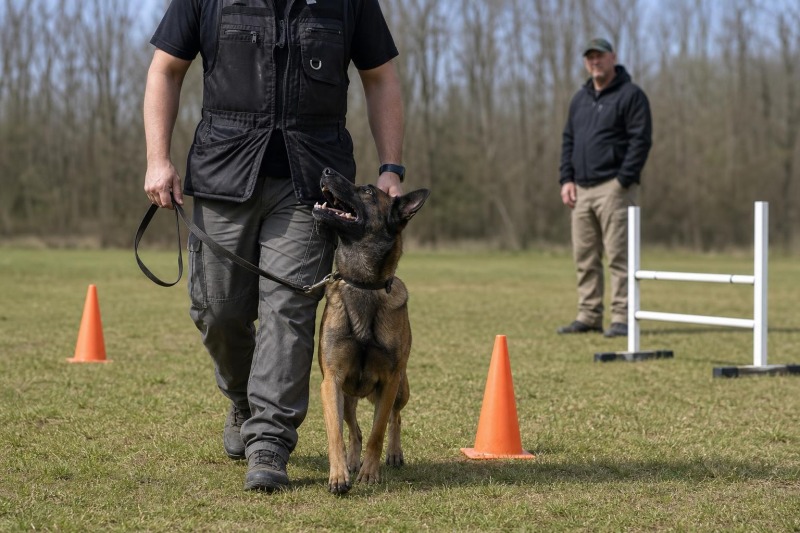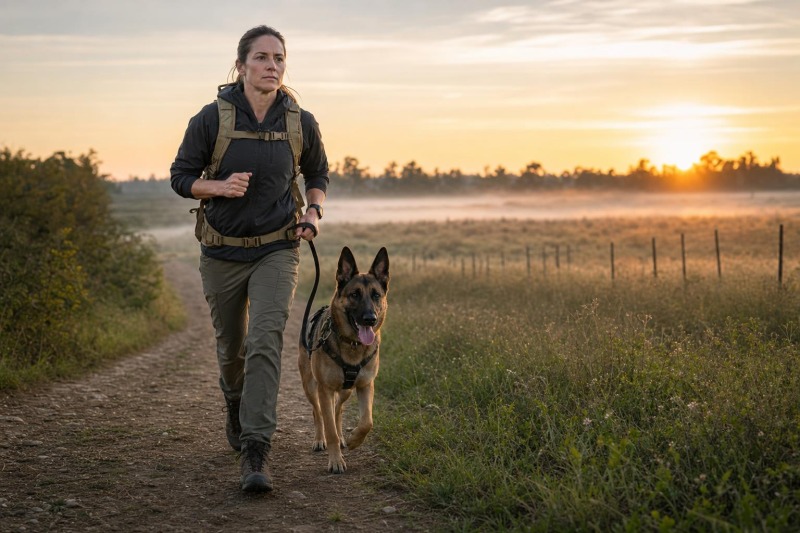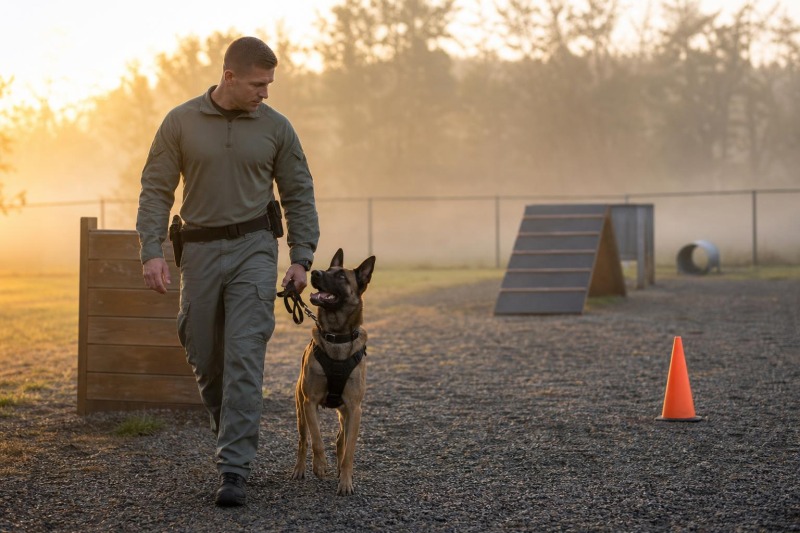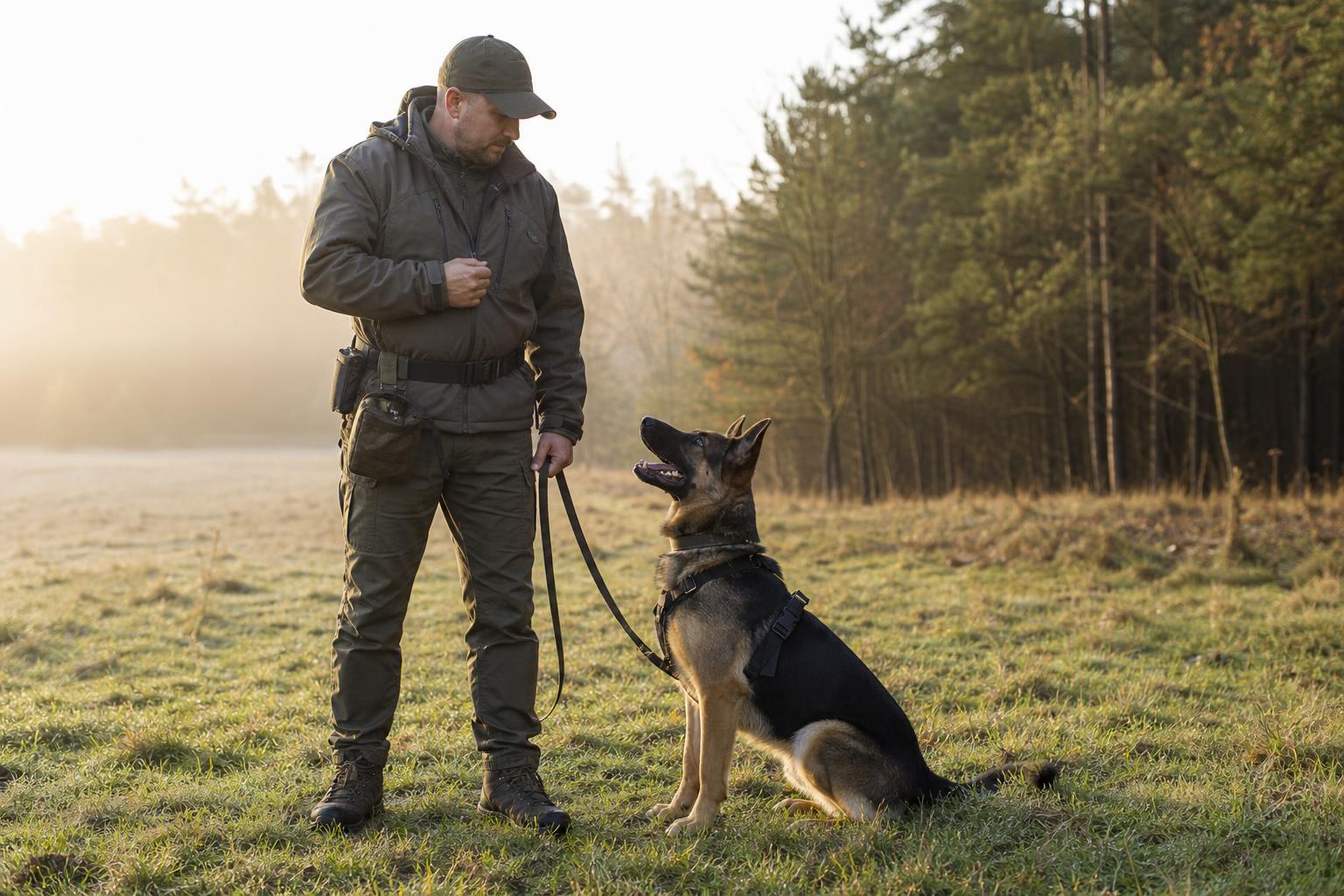
K9 handling asks for observation, patience, judgment, and the ability to act clearly under pressure. Those skills can be practiced alongside the physical parts of the job. Recognizing uncertainty is important when interpreting a dog’s behavior.
That is why psychological skills for K9 handlers deserve as much attention as obedience drills, bite work, scent development, or field conditioning. A dog reads more than words. He reads pressure, tone, rhythm, confidence, uncertainty, and intent. Whether you are training a police K9, a protection dog, a detection dog, or a hard-charging hunting companion, your mental game matters.
Why the Handler’s Mind Shapes the Dog’s Performance
Working dogs live in a world of pattern recognition. They study consequences and absorb tiny shifts in behavior. When a handler is calm, clear, and predictable, the dog has solid footing. When a handler is tense one day, permissive the next, and angry when things go wrong, the dog starts guessing. Guessing is poison in any working partnership.
A good dog does not just follow commands. He learns the emotional climate around those commands. If “heel” always comes with steady direction, the dog understands the job. If “heel” sometimes comes with irritation because the handler is distracted, tired, or embarrassed, the cue loses clarity. Over time, many handling problems that look like disobedience are really the fallout of human inconsistency.
That is especially true in demanding environments. In the field, at a trial, during a deployment, or on a training ground with distractions stacked high, the dog often takes his emotional cue from the handler. If you tighten up, breathe shallow, and rush your timing, the dog often speeds up, crowds, vocalizes, or disconnects. If you stay measured, the dog has a better chance to stay in the work.
Emotional Regulation Under Pressure
One of the most valuable psychological skills a K9 handler can build is emotional regulation. That sounds clinical, but in plain terms it means not letting your temper, ego, nerves, or frustration dictate what happens next. Dogs make mistakes. Young dogs especially make a living out of testing patience. The question is whether the handler responds with purpose or simply reacts.
He broke position twice, hit the end of the line, and nearly convinced his handler that he was being stubborn. The handler started correcting harder, talking faster, and trying to muscle control into the session. The dog only got hotter. We paused, reset the handler first, slowed his breathing, shortened his words, and cleaned up his timing. Within minutes the dog settled and started making sense again. Nothing magical happened. The dog did not suddenly change character. The human changed the atmosphere.
That is the point. Controlled emotion creates usable information for the dog. Uncontrolled emotion creates noise.
Patience Without Passivity
Patience is often misunderstood in dog work. It does not mean standing idle while a dog rehearses bad habits. It means giving the learning process enough room to develop without poisoning it through hurry. Skilled handlers know when to wait, when to pressure, and when to end the session before quality starts slipping.
A patient handler understands that progress is not always linear. Some dogs mature quickly. Others need repetition and confidence before they commit fully. If a handler expects every session to look sharp, disappointment creeps in, and disappointment often leaks into tone and body language. Dogs feel that leak. They may become cautious, defensive, over-aroused, or flat, depending on temperament.
They were not soft. They were not lax. They simply understood that building reliability in a working dog is more like stacking good days than forcing one perfect moment.
Self-Awareness: The Skill Behind Better Timing
Ask most handlers what they want from their dog and they can answer quickly. Ask them what they themselves look like in the middle of stress, and many struggle. Self-awareness is one of the least glamorous and most important traits in K9 handling. If you do not know your own habits, you cannot fix the ways you confuse your dog.
Some handlers talk too much. Some move too abruptly. Some correct too late and praise too vaguely. Some carry nervous energy into every repetition and then wonder why the dog cannot settle. A self-aware handler notices those tendencies before the dog pays the price for them.
Video review helps. Honest training partners help. Those questions are not just technical. They are psychological. They train humility, and humility is a powerful asset when handling a capable dog.
Confidence Without Ego
Dogs respond well to confident leadership, but confidence should not be confused with stubborn pride. Ego ruins more dog work than most people care to admit. A handler who cannot admit confusion, poor timing, or a bad plan will keep pressing a dog into avoidable conflict. The result is often blamed on the dog’s attitude, when the real issue sits much closer to the leash.
Real confidence is quiet. It shows up in consistent standards, fair corrections, and clean follow-through. It also allows a handler to adapt. If a dog is not understanding a task, the confident handler changes the picture instead of starting a war. If a session goes sideways, the confident handler resets and rebuilds rather than forcing a point for the sake of pride.
Reading the Dog’s Mental State
Another core psychological skill for K9 handlers is the ability to read canine state, not just behavior. Two dogs may both fail an exercise, but for different reasons. One may be confused. The other may be overstimulated. One may be worried about pressure. Another may be testing boundaries with clear eyes and plenty of nerve. If the handler cannot tell the difference, the response will likely miss the mark.
This is where experience matters. You learn to notice the set of the ears, the carriage of the tail, the breathing pattern, the grip intensity, the way a dog enters odor, the speed of the recall, the quality of eye contact, the difference between avoidance and simple distraction. Those details tell you whether to add clarity, reduce pressure, raise accountability, or quit while the dog still feels successful.
Good handlers do not just issue commands. They observe, interpret, and adjust. That process is mental work every bit as much as physical handling.
Building Trust Through Predictability
Trust is a major piece of any working dog relationship, and trust grows from predictability. Dogs do not need endless softness, but they do need fairness. They need to know that the rules stay the rules, that correct behavior earns clear reward, and that pressure arrives for a reason rather than from the handler’s mood.
When dogs trust the structure, they work with more freedom. They commit harder, recover faster, and show more resilience in new settings. That kind of trust is not built in one dramatic moment. It is built in hundreds of ordinary repetitions where the handler is steady and honest.
Decision-Making in Real Time
Handling a working dog often comes down to rapid judgment. Do you press through distraction or back up a step? Do you correct now or wait a beat? Is the dog fatigued, mentally overloaded, or simply lazy? Field conditions rarely give you the luxury of a perfect setup. Wind changes, terrain interferes, decoys draw attention, scent pools in odd places, and the dog brings his own temperament into the equation.
The handler who thinks clearly under imperfect conditions has a real advantage. That clarity comes from preparation, but it also comes from a disciplined mind. Panic leads to muddy communication. Overthinking leads to hesitation. Strong decision-making lives in the middle ground: calm, informed, and timely.
This is one reason scenario training matters so much. It is not just for the dog. It is for the handler’s psychology. Exposure to varied challenges teaches the human to remain functional when the picture changes fast.
Mental Endurance and Recovery
People talk plenty about a dog’s endurance, but a handler’s mental endurance matters too. Long training days, difficult dogs, weather, poor sleep, setbacks, and public pressure all chip away at judgment. Tired handlers become inconsistent handlers. They repeat commands, miss opportunities, and overreact to problems that would normally be manageable.
Serious K9 handlers learn recovery just like athletes do. Sometimes that means ending a session on a constructive note instead of grinding through frustration. Sometimes it means stepping away, reviewing what happened, and coming back with a cleaner plan tomorrow. There is no shame in recognizing when your own mental state is becoming a training variable.
The Best K9 Teams Are Mentally Connected
The strongest handler-dog teams share more than training hours. They share understanding. The handler learns how to govern himself, how to communicate with precision, how to read pressure, and how to make fair choices when things get messy. The dog, in turn, learns that the person beside him is worth listening to.
That is the heart of psychological skills for K9 handlers. It is not motivational talk and it is not theory for theory’s sake. It is practical, field-proven discipline of the mind. If you want a working dog that performs with clarity, confidence, and trust, start by sharpening the person holding the line. The dog can only work as steadily as the partnership allows, and the handler’s mind is where that partnership is either strengthened or quietly undermined.