Retirement changes a service dog’s job and the handler’s routines. Planning needs to address the dog’s health, daily care, home arrangements, and any transition to another working partner. Adoption, when appropriate, calls for an honest account of the individual dog’s needs.
For many dog owners interested in working dogs, the idea of adopting a retired service dog carries real appeal. These dogs often come with deep training, steady temperaments, and a history of living closely with people. Still, they are not ordinary pets coming out of an ordinary situation. They have routines behind them, expectations shaped by years of work, and in many cases a strong bond to the task that gave their day meaning. Bringing one home takes understanding, patience, and a fair view of what retirement truly means for a dog bred and trained to serve.
When a Service Dog Retires
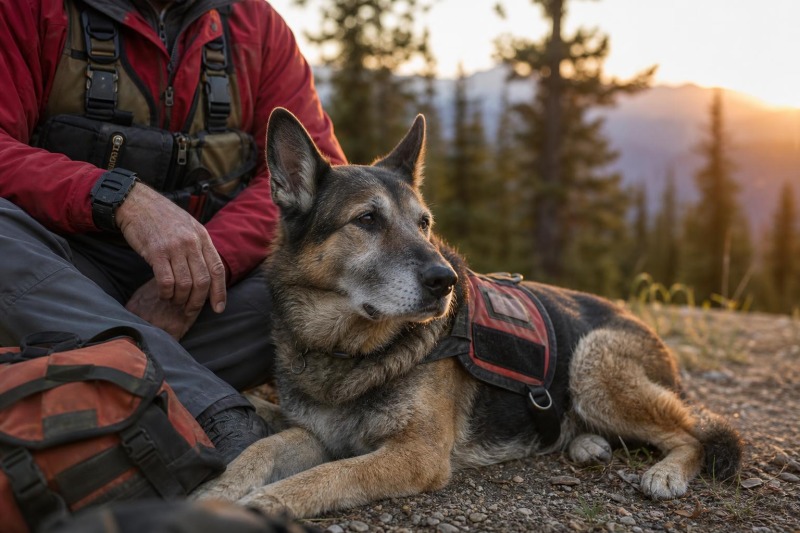
Retirement does not happen on a fixed date for every service dog. Some step away from full duty around eight to ten years of age, while others may retire earlier because of orthopedic issues, stress, illness, or changes in their handler’s needs. A dog might still look bright-eyed and willing, yet no longer have the physical durability or mental consistency the work demands. In service work, close enough is not good enough. The dog must be reliable every day, in every environment that matters.
That willingness is admirable, but it is also exactly why handlers and programs must be honest. A service dog may continue to perform some tasks in a reduced way while transitioning out, but true retirement should come before the dog is forced to fail. Good organizations and responsible handlers watch for subtle signs: hesitation on stairs, slower recovery after outings, increased distraction, anxiety in once-familiar settings, or the simple wear that settles into an old worker’s body like cold into old barn boards.
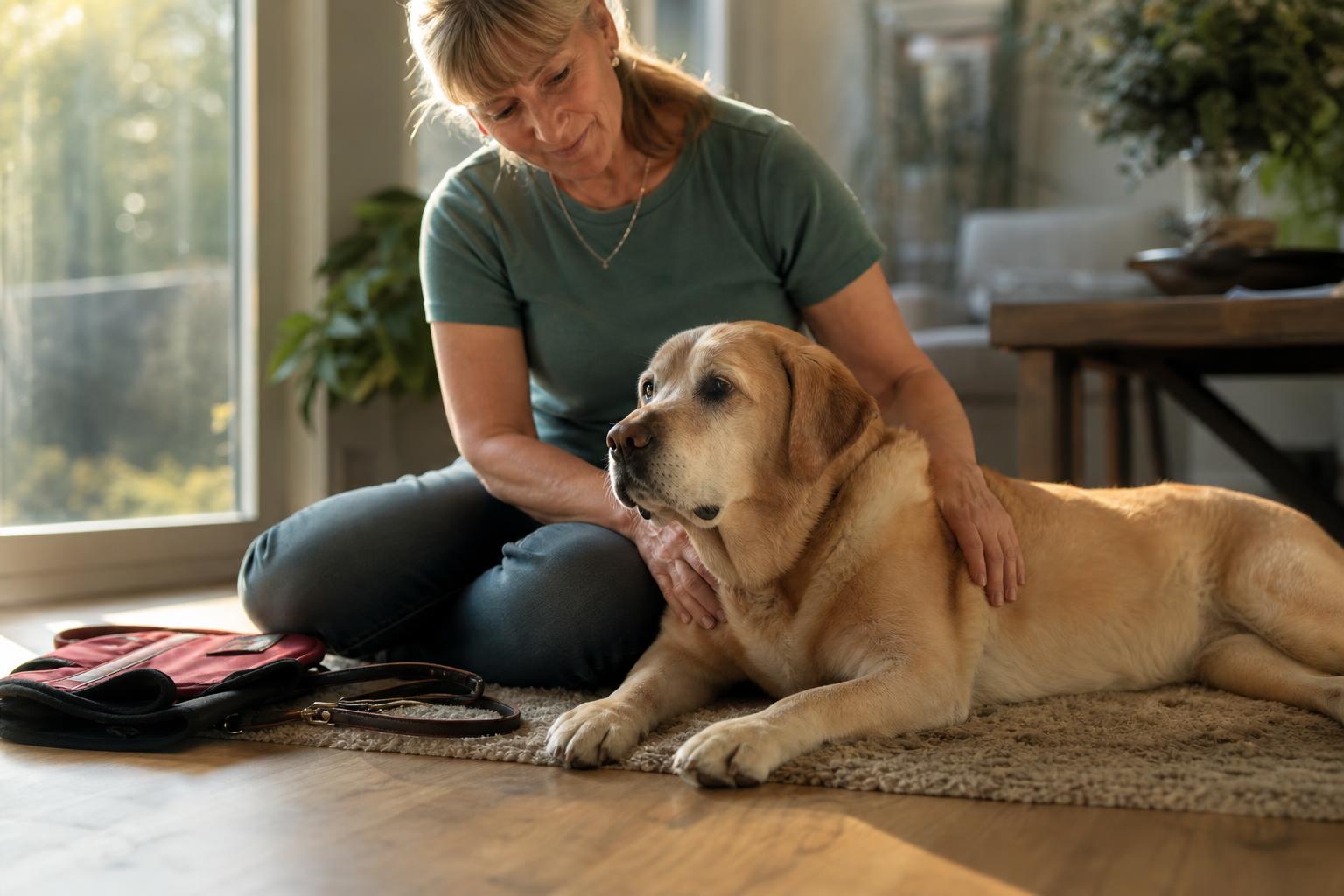
Sometimes the handler keeps the dog through retirement. That is often the best outcome when the bond remains strong and practical circumstances allow it. In other cases, the dog may move to a family member, a puppy raiser, a foster home, or an approved adopter. The goal should always be the same: give the dog a safe, calm, and dignified next chapter.
Health, Temperament, and Quality of Life
The decision to retire a service dog should center on quality of life, not on squeezing out one more year of usefulness. Veterinary evaluations matter. So does behavior. Some dogs retire because their hips, spine, or vision cannot support the work. Others remain physically sound enough for daily life but lose comfort with noise, traffic, crowds, or travel. A retired service dog does not need to be broken down to justify retirement. Sometimes he is simply ready to be done.
That distinction matters to adopters. A retired service dog may be healthy enough for walks, play, and companionship, while still being unfit for public access work. Retirement is not failure. It is a transition from duty to comfort.
How Adoption of a Retired Service Dog Works
Adoption policies vary by organization, but most reputable service dog programs follow a careful process. These dogs are valuable, not in a dollar sense alone, but in the years of training and trust invested in them. Programs usually screen potential homes closely. They may ask about fencing, other pets, work schedules, activity level, financial stability, and prior dog experience. Some place retired dogs first with the original handler, then with puppy raisers or staff, and only afterward open consideration to outside applicants.
In plenty of cases, there is a waiting list. That surprises people who assume an older working dog is a hard placement. In truth, the opposite can happen. A retired service dog often appeals to families who want a calmer, mature companion with excellent house manners. But that polished reputation can also create unrealistic expectations. These dogs may know how to settle quietly under a table, ignore distractions, and move through the world with grace, yet retirement can unsettle them at first. The structure they lived under is gone. The gear may disappear. The routines shift. Some bloom immediately. Others take months to understand that they no longer have to be “on” all the time.
Adopters should expect paperwork, interviews, and often a contract requiring the dog to be returned to the program if the placement fails. That is a good sign, not a bad one. It shows the organization values the dog’s welfare above convenience.
What Retired Service Dogs Need in a New Home
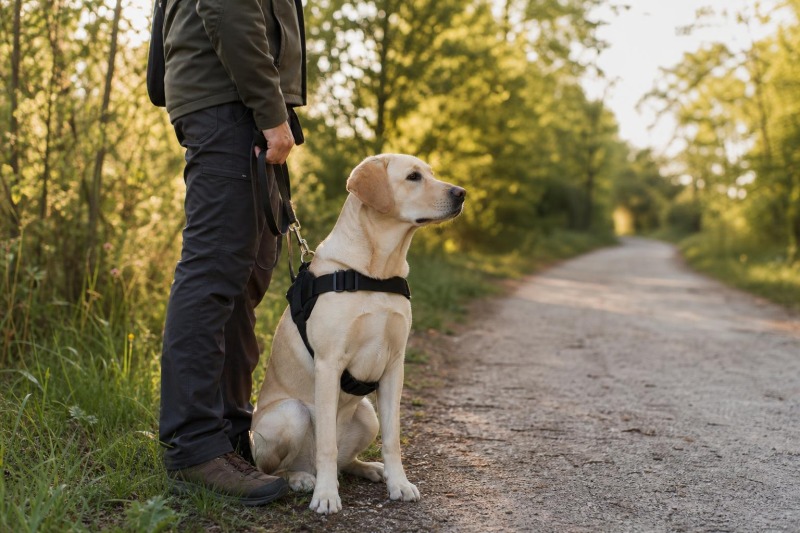
A retired service dog usually does best in a home that offers consistency without pressure. Think steady meals, regular walks, a comfortable bed, and clear household rules. These dogs are accustomed to structure, and many feel more secure when life has a predictable rhythm. At the same time, they need room to decompress. Retirement should not feel like being transferred from one job into another.
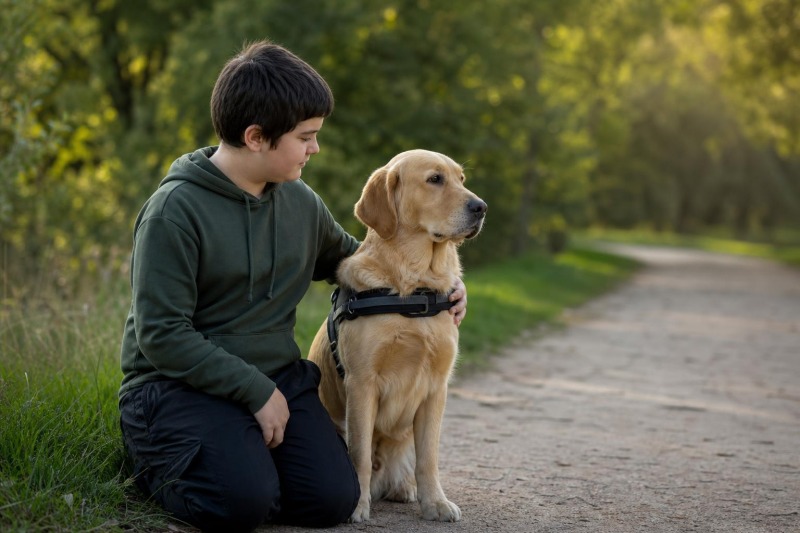
Many of these dogs are social and deeply people-oriented, but that does not mean every retired service dog wants the chaos of a loud household or the rough handling of young children. Matching matters. A dog that spent years working quietly beside one adult may prefer a calm home with a similar pace. Another may settle beautifully into a family setting. There is no one-size-fits-all answer.
Exercise remains important, though it should fit the dog in front of you, not the image you had in mind. Some retired service dogs still enjoy long walks and active play. Others are happiest with moderate outings and ample rest. He will show you whether he still wants to range the field, so to speak, or whether he would rather stay near the porch and watch the day pass by.
Common Misunderstandings About Retired Service Dogs
One of the biggest misconceptions is that a retired service dog is automatically easy. Well-trained, yes. Easy, not always. These dogs may have ingrained habits tied to their former work. Some will alert, brace into position, or remain hyperaware in public even after retirement. Others become confused when praised for behavior they were once expected to perform without fuss. A dog can be obedient and still need help adjusting emotionally.
Another misunderstanding is that retired service dogs are all old and frail. Some retire young due to reasons unrelated to age, and they may have plenty of energy left. Others may carry manageable medical needs, such as arthritis support, prescription diets, or routine medications. Prospective adopters should ask direct questions about health history, current limitations, behavior around strangers and other animals, and whether the dog enjoys or avoids busy environments.
There is also the legal side. A retired service dog is generally no longer a working service animal with public access rights once he is no longer performing that role for a disabled handler. He becomes, in practical terms, a pet in retirement, even if his training remains impressive. Adopters should respect that distinction and avoid trying to use the dog’s prior status as a shortcut into public spaces.
The Emotional Side of Letting a Working Dog Rest
If you have ever relied on a dog in real work, you understand that retirement can be harder on people than on the dog. Handlers may feel guilt, grief, and uncertainty. The dog that carried part of the load is suddenly no longer in harness, figuratively or literally. That change can leave a silence in the day. But there is honor in letting a dog step down before the work takes too much from him.
The fire may burn lower, but it is still there. Service dogs often carry that same quiet depth. They do not stop being themselves when the job ends. They simply become something else: veterans of a life spent helping others.
Is Adoption Right for You?
If you are considering the adoption of a retired service dog, be honest about what you want and what you can provide. If you are looking for a dog to hike ten miles every weekend, a retired service dog with joint wear may not be the right match. If you want a mature companion who values closeness, routine, and a calmer home, you may be exactly the kind of person that dog needs. The best placements happen when admiration is balanced by realism.
Talk to the program. Ask hard questions. Learn the dog’s work history, medical status, and behavioral preferences. Find out whether the dog has lived with children, cats, or other dogs. Ask what retirement has looked like so far. A seasoned working dog deserves an owner willing to listen before making promises.
Giving a Good Dog a Good Finish
Retirement and adoption of service dogs should never be treated like an afterthought. These dogs earned better than that. They gave years of discipline, steadiness, and service in situations that demanded more than most people ever see. Their retirement should reflect the same care that shaped their working life.
For the right home, adopting a retired service dog can be a remarkable experience. You are not just taking in an older dog. You are welcoming a partner who has already lived a meaningful life and still has plenty to give in quieter ways. A steady gaze by the door, a calm head resting on your knee, a patient walk at dusk when the air cools and the day settles down; sometimes that is what a working dog’s final chapter looks like. And if you ask me, that is a fine ending for a dog that spent his best years serving others.