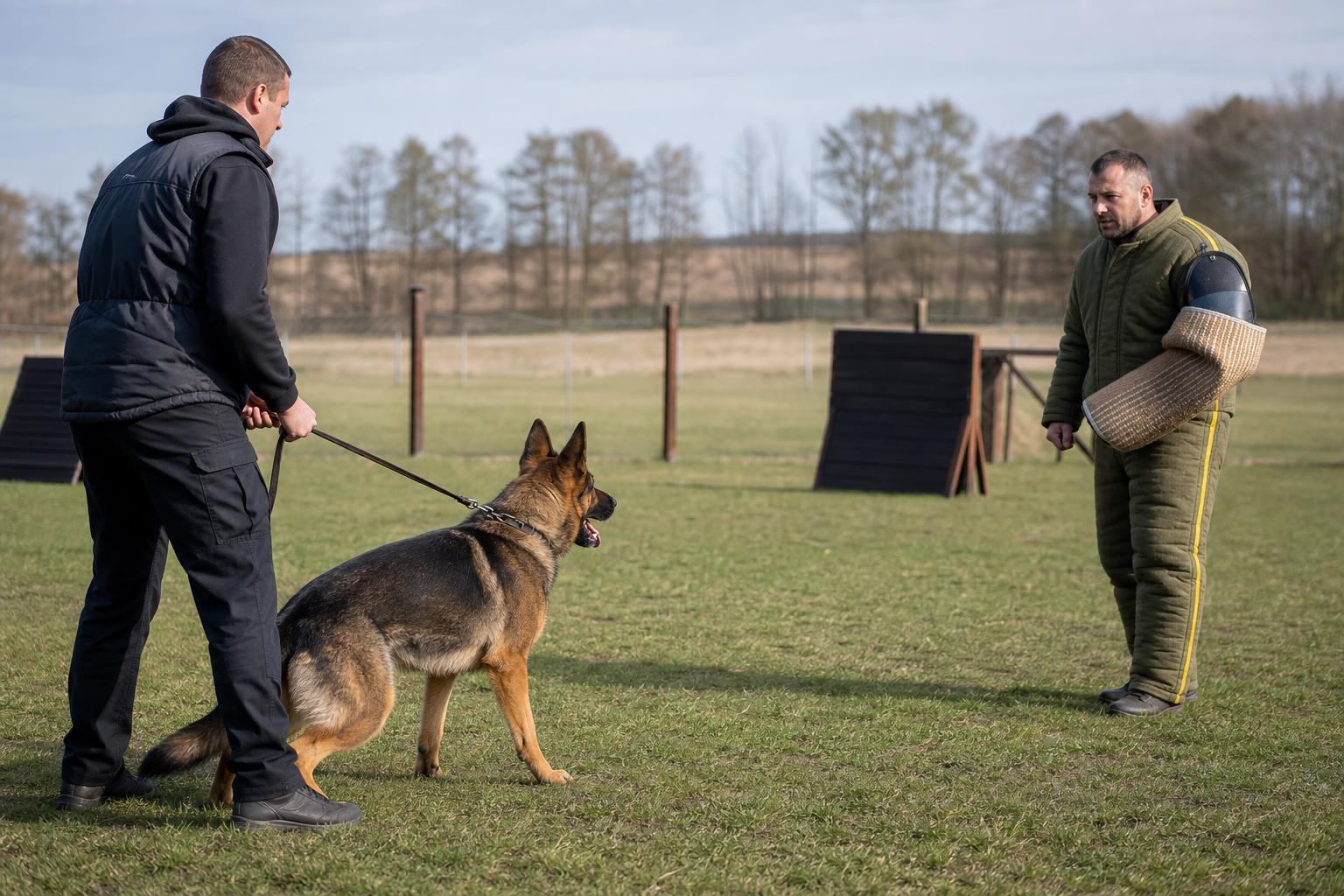
In protection training, most newcomers notice the dog first. They watch the barking, the intensity, the grip, the speed on the send, and they assume the dog is carrying the whole performance. Anyone who has spent real time on a training field knows better. A solid protection dog is not built by genetics alone, and he is not made by flashy equipment. More often than not, the decoy is the piece that separates chaos from progress.
A good decoy is not just a body in a sleeve or a man hidden behind a blind. He is a teacher, a pressure source, a moving picture the dog must learn to read, and sometimes the mirror that reveals exactly what is inside that dog. The best decoys can bring a young dog up carefully, test a seasoned dog honestly, and show a handler what is really there without forcing the issue. When people talk about protection training, they often focus on obedience, drives, and bite work. All of that matters. But the role of decoys in protection training sits right at the heart of the whole process.
What a Decoy Really Does
At the simplest level, the decoy presents the picture the dog engages. But that plain description does not do the job justice. The decoy controls movement, pressure, distance, posture, eye contact, retreat, agitation, and reward. Every one of those details can change a dog’s response in a split second.
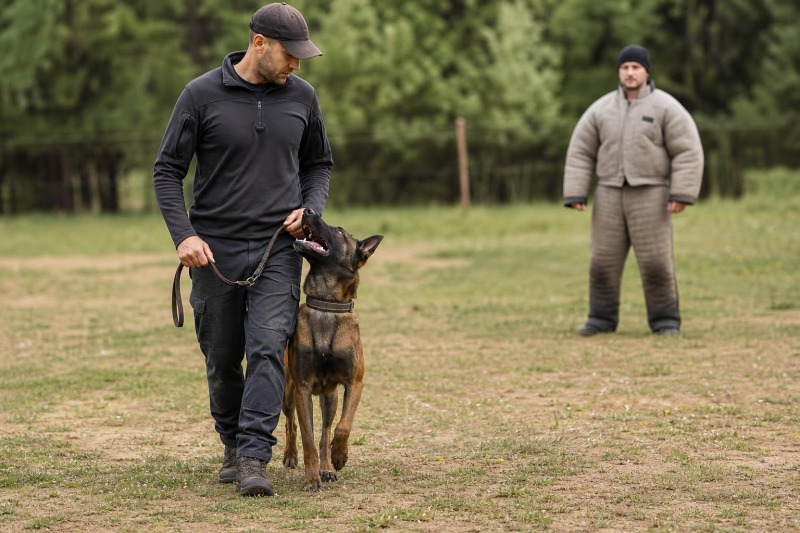
With a young or green dog, the decoy helps awaken confidence and direct instinct into clean, understandable work. He may move in a way that invites pursuit, keep his shoulders open, and offer a clear target so the dog can win. With a more advanced dog, the decoy can add pressure, challenge commitment, and test whether the animal stays clear-headed when the picture gets ugly. That is why an experienced decoy is so valuable. He is not there to overpower the dog or show off his toughness. He is there to create the right lesson at the right moment.
Timing is everything. A decoy who applies pressure too early can make a promising dog defensive and unsure. One who lets a dog rehearse dirty entries, weak grips, or frantic conflict can bake bad habits into the foundation.
Building Confidence Without Creating False Strength
Confidence is one of the first things people mention in protection dogs, and for good reason. A dog that is uncertain under pressure will eventually show cracks. The decoy plays a major role in building confidence, but there is a difference between developing real confidence and manufacturing false bravado.
Real confidence comes from clean experiences, clear wins, and gradual exposure to challenge. The decoy teaches the dog that commitment matters, that pressure can be met, and that the fight has rules the dog can understand. That process starts with reading the dog honestly. A hard, prey-driven young dog may need room to push forward and channel intensity into a full grip. A more cautious dog may need a quieter picture, less frontal pressure, and a target delivered with precision so he can step into the work and discover success.
A lesser decoy might have mistaken the noise for strength and piled pressure onto him. The helper working that dog saw the truth immediately. He gave the dog movement he could chase, made the sleeve easy to find, and rewarded every honest commitment. Within a handful of sessions, the barking meant something. The dog was no longer acting big. He was becoming big in the right way.
Reading Nerve, Drive, and Threshold
One of the clearest signs of a seasoned decoy is his ability to read threshold. Every dog has a point where pressure helps and a point where it starts to hurt learning. The decoy who understands nerve and drive can walk that line. He knows when to advance, when to slip the sleeve, when to stand still, and when to make the dog carry the responsibility.
This is where the role of decoys in protection training becomes more than physical. It becomes psychological. The decoy is shaping emotional responses. He is teaching the dog what conflict feels like and how to move through it without falling apart.
Developing Clean Targeting and Full Grips
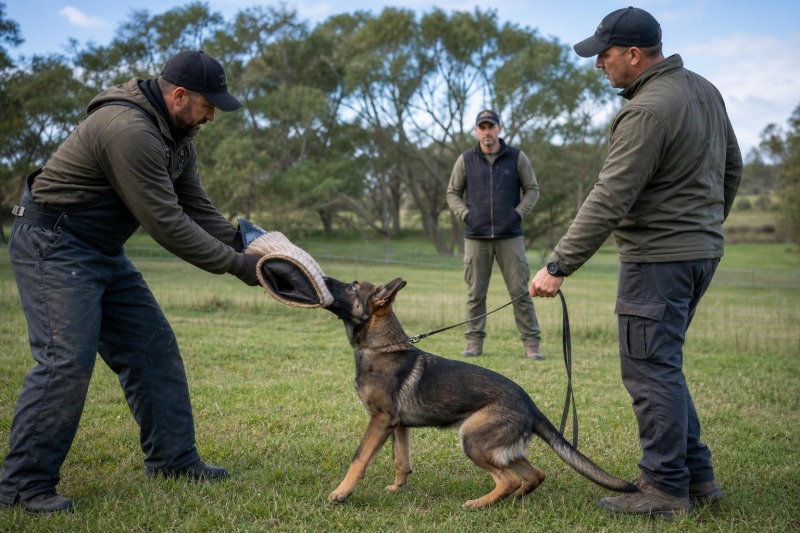
Protection work is not just about biting. It is about biting correctly, with commitment, calmness, and purpose. Targeting and grip quality are heavily influenced by decoy technique. The way the decoy carries the sleeve, the angle of presentation, his footwork, and even his body tension all affect what the dog learns.
A sloppy decoy can create shallow grips, hectic entries, equipment fixation, and dogs that bite whatever is easiest to grab. That kind of work may look exciting to an untrained eye, but it creates problems down the road. A proper decoy helps the dog come in clean, take the target fully, and settle into the grip with confidence. He rewards correctness and does not pay for frantic, careless effort.
Good targeting matters for safety, sport performance, and practical reliability. Whether the dog is training for personal protection, police-style scenarios, or club work, he needs to understand where the fight is and how to engage without confusion. The decoy teaches that through consistency. Over time, the dog learns to strike decisively instead of snatching, chewing, or bouncing off pressure.
Teaching Control Alongside Intensity
One of the biggest misunderstandings among dog owners is the belief that protection training is only about building aggression. In responsible hands, it is about control first and always. The decoy is essential here because he does not just trigger action. He also helps teach the dog when action must stop, when guarding begins, and when obedience still governs the whole exercise.
A well-worked dog learns that the decoy is not random prey. He is part of a structured exercise. The dog must out when told, re-engage cleanly when required, guard without drifting into unnecessary biting, and stay responsive to the handler even in a high state of arousal. The decoy supports that structure by being fair and consistent. He knows when to freeze, when to reanimate, and when to let the handler’s command take center stage.
The result is a dog with usable power instead of reckless energy. That distinction matters. Anybody can make a dog excited. It takes a thoughtful training team, with a capable decoy in the middle of it, to produce a dog that can switch from drive to clarity and back again without coming apart.
Pressure Testing the Finished Dog
As the dog matures, the decoy’s job shifts from teaching basic pictures to testing stability and truth. Can the dog handle a threatening approach? Will he commit on a man who does not move like a training helper? Can he stay in the fight when the decoy crowds him, drives him, or presents a less familiar scenario? These are not games for ego. They are necessary questions.
A finished protection dog should not be measured only by his loudest field performance. He should be measured by his reliability under stress. A skilled decoy can test that reliability while keeping the work safe and productive. He exposes holes without wrecking the dog. He applies enough realism to reveal the truth while still preserving training value.
Safety, Ethics, and the Handler’s Responsibility
Protection training carries responsibility, and that responsibility does not rest on the decoy alone. Handlers and dog owners need to understand that not every dog is suited for this work, and not every club or trainer uses decoys with the experience required to do it well. If the helper lacks timing, athletic ability, dog sense, or discipline, the dog pays the price.
Safe decoy work protects everyone involved. It protects the dog’s body by presenting equipment properly and avoiding needless collisions. It protects the dog’s mind by preventing avoidable confusion and unfair pressure. It protects the handler by keeping progress honest instead of selling fantasy. And it protects the public by supporting training that values obedience, stability, and clear standards.
If you are a dog owner exploring working dog training, watch the decoy as closely as you watch the dog. Notice whether the helper reads the dog or forces a script. Notice whether he rewards honest effort, keeps the dog successful, and builds challenges in layers. The best decoys are usually not the loudest men on the field. They are the ones whose dogs improve session after session.
Why Decoys Matter More Than Most People Realize
The role of decoys in protection training is both practical and profound. They build confidence, shape grips, develop targeting, test nerve, support control, and reveal weaknesses before those weaknesses become dangerous habits. A decoy can help turn raw potential into a dependable working partner, or he can muddy a dog so badly that months of training are spent undoing preventable mistakes.
That is why experienced trainers value good decoys so highly. They understand that the dog is learning from every movement, every posture change, every ounce of pressure, and every release of pressure. The decoy is not a prop. He is an active part of the dog’s education.
For owners interested in working dogs, that lesson is worth remembering. Behind every balanced protection dog is a training team that understood how to build power without losing control. Somewhere in that team, if the work was done right, stood a capable decoy who knew exactly when to challenge, when to reward, and when to let the dog grow into the job.