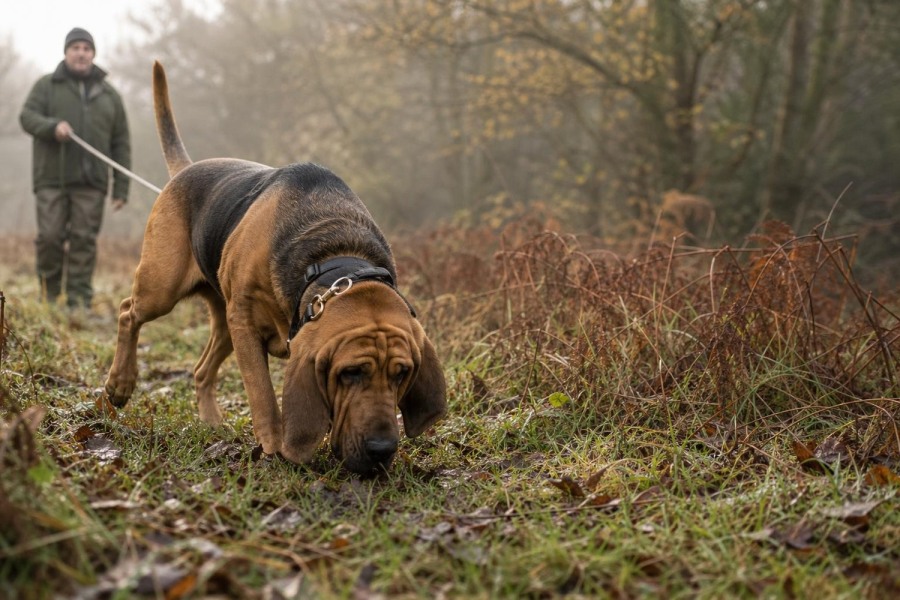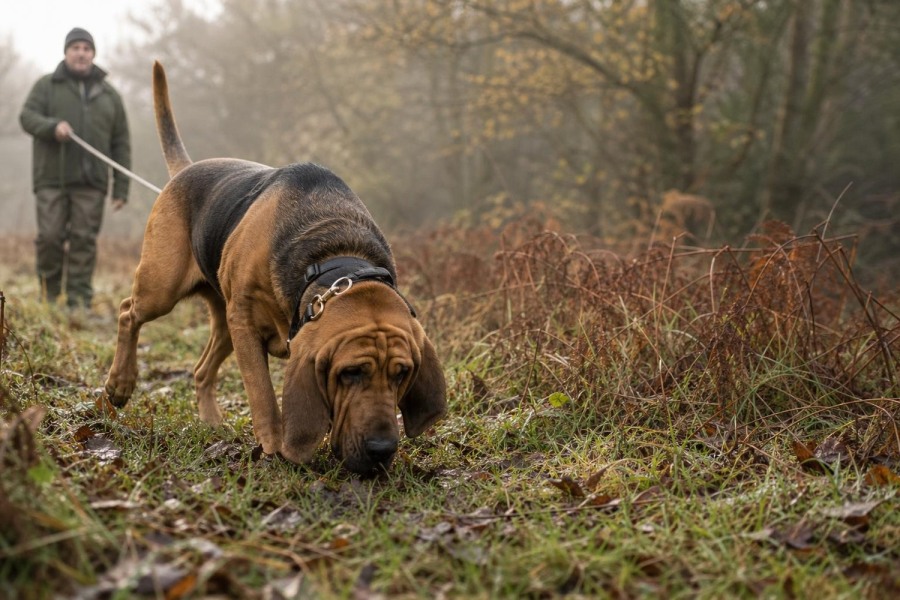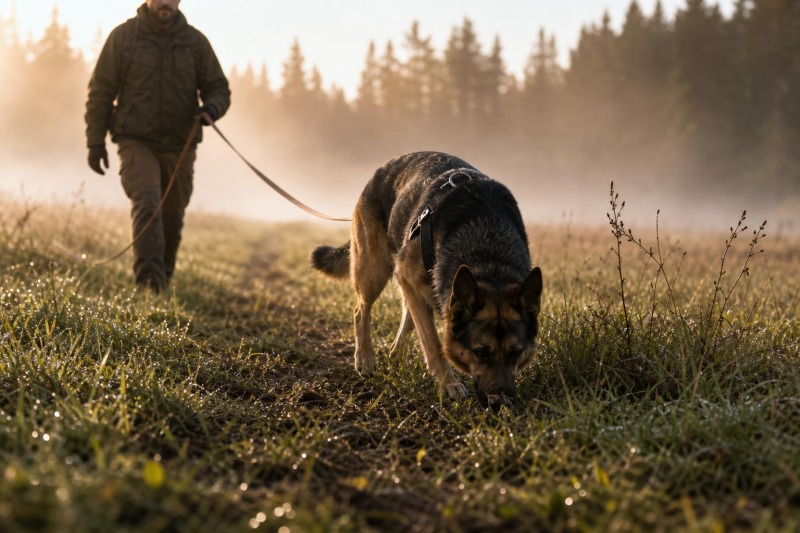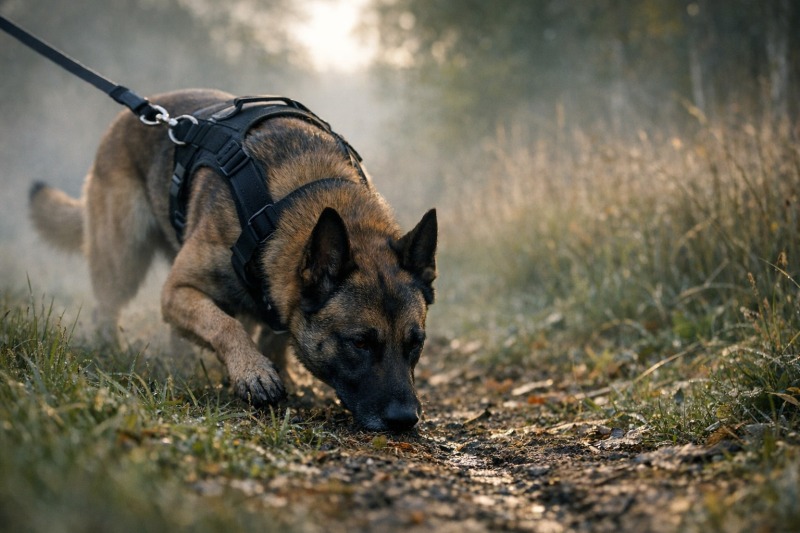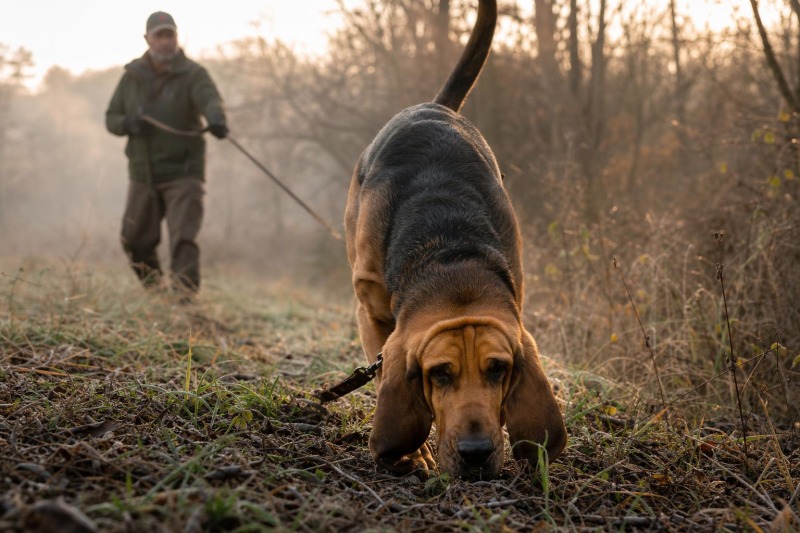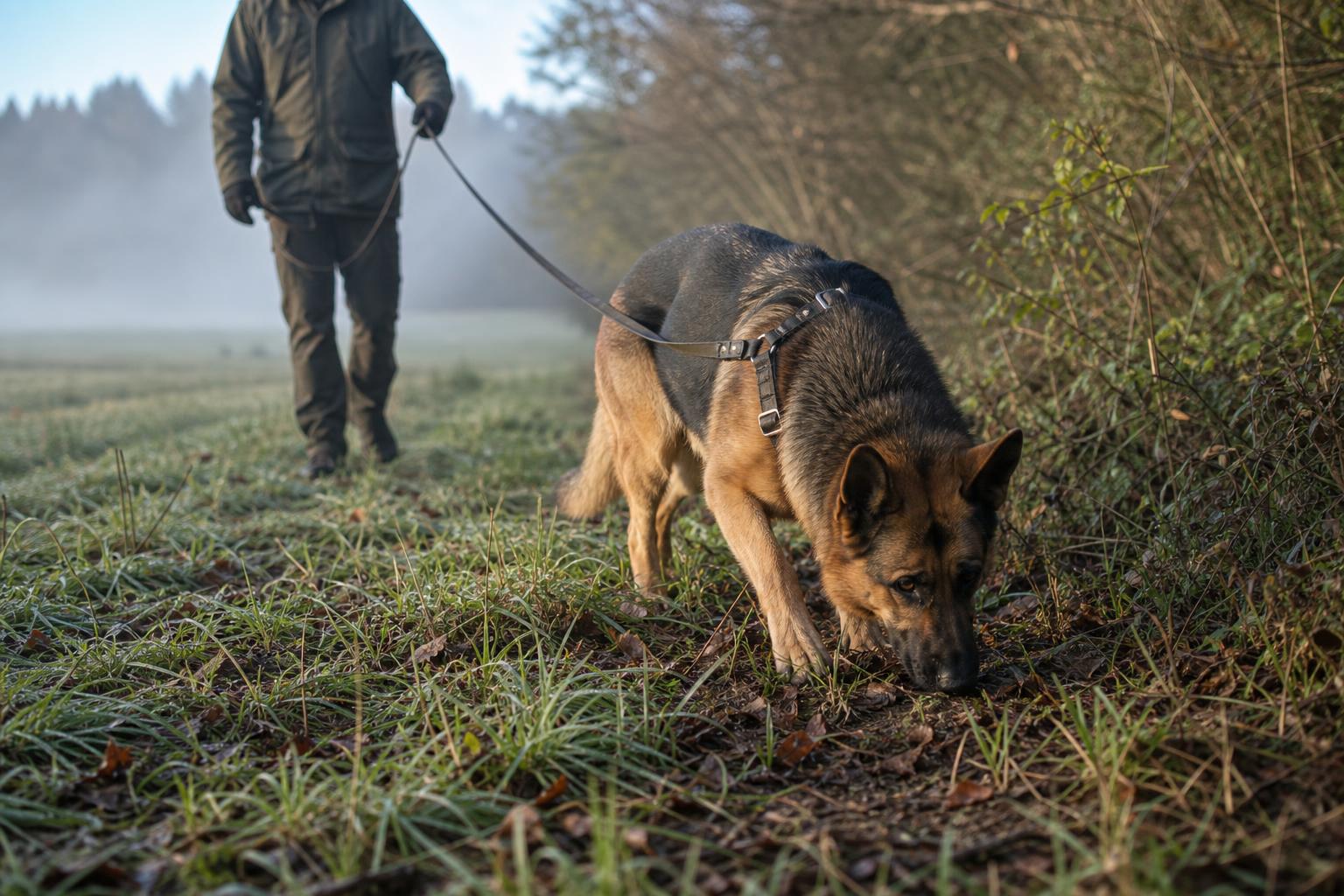
Scent discrimination asks a dog to distinguish the target trail from other available odors. That requires a clear training objective and carefully arranged exercises. Handlers need to evaluate the dog’s decisions without supplying the answer through their own movements.
For dog owners interested in working dogs, scent discrimination is one of the most fascinating pieces of the puzzle because it explains why one dog can confidently follow the correct track while another drifts, guesses, or gets pulled off by fresher contamination. It is not just a matter of a dog having a good nose. Plenty of dogs have a powerful nose. The real difference is in how the dog identifies, values, and commits to the specific odor picture it has been trained to follow.
What Scent Discrimination Really Means
At its simplest, scent discrimination is a dog’s ability to detect and choose one particular scent from among many. In tracking work, that usually means following the trail of one person or one animal while ignoring other odor laid over, beside, or across it. A dog is not simply smelling “human” or “deer.” It is sorting a complex scent signature made up of skin rafts, bacteria, crushed vegetation, disturbance of ground, body odor, and environmental changes left behind by the tracklayer.
That matters in the field because very few tracks are laid out in perfect conditions. Real tracks age. They drift. They pool in low spots and burn off on hard ground. They cross roads, fence lines, and game trails. A sound tracking dog learns that the job is not to charge forward looking for any available scent, but to stay honest to the scent picture it was given at the start.
That is often the moment a handler learns the hard truth: tracking and scent discrimination are connected, but they are not the same thing. A dog may understand how to track pressure and odor. It takes more maturity and clearer training to understand which odor matters.
The Nose Is Only the Beginning
People like to talk about scent work as if the nose alone solves everything, but the nose is just the tool. The brain does the sorting. A tracking dog takes in a flood of information and learns to recognize a familiar target odor while filtering out distractions. That process depends on genetics, nerve, drive, training exposure, and the dog’s confidence under pressure.
Some dogs naturally show cleaner discrimination than others. They are methodical without being slow, intense without being frantic. They check themselves when odor weakens, and they do not panic when a fresher but irrelevant scent line cuts across the track. Those are the dogs handlers trust on difficult ground.
Ground Scent, Air Scent, and Scent Picture
Another thing experienced handlers learn is that a dog rarely works one kind of odor in isolation. Even so-called ground trackers are reading a larger scent picture. They may key off crushed vegetation and footstep disturbance one minute, then lift into drifting odor in the next. In timber, in damp cover, or along shaded creek bottoms, scent may hang beautifully. In open fields under heat, it may break apart and force the dog to puzzle out the line piece by piece.
Scent discrimination develops when the dog understands that all of those changing odor conditions still belong to the same source. In other words, the track may smell different from one patch of ground to the next, but the dog learns the identity within the change.
What Affects Scent Discrimination in Tracking Dogs
Track age is a big one. Fresh tracks often carry stronger scent, but they can also create more temptation when multiple fresh trails exist in the same area. Older tracks require patience and a dog that has learned not to abandon the assignment just because a newer scent line seems easier. Weather also matters more than most beginners expect. Moisture tends to help odor hold, while heat, dry wind, and direct sun can scatter or lift it. A track that is straightforward at daylight may become a lesson in humility by late morning.
Terrain changes everything too. Bare dirt, leaf litter, pasture, gravel, crop stubble, swamp edge, and road crossings all present different scent behavior. Dogs that only train on one kind of ground often struggle when asked to discriminate in unfamiliar footing. Then there is contamination. Other people, other dogs, livestock, wild game, and vehicle traffic all leave scent in the working area. The best tracking dogs are not those that never notice contamination. They notice it and reject it.
The handler plays a larger role here than many care to admit. Poor line handling, crowding the dog at the start, talking too much, or telegraphing uncertainty can muddy the work. A dog that feels pressure from the lead may begin casting wider, speeding up, or second-guessing itself. Clean scent discrimination grows best under calm, consistent handling.
Start Simple, Then Add Honest Problems
Good training builds understanding in layers. Early on, the dog needs success on tracks where the target odor is clear and the reward for staying on it is immediate. Once the dog understands the game, the handler begins adding the sort of problems that create real discrimination: cross-tracks, turns in cover changes, aged starts, articles carrying the target odor, and situations where the wrong choice offers no payoff.
This is where patience separates serious handlers from people just putting miles on a dog. If you add confusion too quickly, some dogs begin guessing. If you never add it at all, the dog looks polished until reality shows up. The best progression asks the dog honest questions and gives it room to solve them.
Let the Dog Work, but Hold the Standard
One of the hardest lessons in tracking is learning when to help and when to keep quiet. Dogs improve discrimination by working through scent problems, not by being steered around every hard spot. Still, standards matter. If a dog consistently switches to a fresher cross-track and gets rewarded by forward movement, you are training the wrong lesson. The dog needs to learn that commitment to the original odor is what unlocks success.
In practical terms, that often means going back to known tracks, controlling the setup, and carefully reading behavior at the moment of decision. A discriminating dog usually changes in subtle ways before leaving the correct line. Head carriage shifts. Rhythm changes. The pull on the lead becomes uncertain or too eager. Those little signals are worth more than a hundred theories.
Reading the Dog in the Field
A seasoned tracking dog tells the truth if you know how to watch. When the scent is right, the dog often moves with purpose that feels smooth and connected. When the odor is thin, the dog may slow, feather, and check. When contamination is heavy, you may see a brief pull to one side followed by a deliberate correction back to the true line. That correction is scent discrimination in action.
That was not luck. That was a dog that knew the scent it had been asked to own.
Those moments build handler trust, and trust is no small matter in tracking work. A nervous handler can talk a dog out of being right. A thoughtful one learns to recognize the difference between a dog solving a problem and a dog making a mistake.
Why Scent Discrimination Matters Beyond Competition
In the real world, scent discrimination has practical value well beyond sport tracking. It matters in wounded game recovery, search work, trailing, and any task where accuracy matters more than speed. A dog that chases the hottest available scent may look busy, but busy is not the same as right. When the job is to locate a specific animal, a specific person, or a precise path of travel, discrimination is what keeps the work honest.
For the everyday working-dog owner, understanding this concept also improves training expectations. It reminds you that mistakes are not always stubbornness or lack of drive. Sometimes the dog is working through a difficult scent puzzle in changing conditions. Sometimes the setup was unfair. And sometimes the dog needs more repetition on the kind of contamination it will face in real conditions.
Scent discrimination in tracking dogs is part instinct, part training, and part relationship between dog and handler. You cannot fake it for long. A truly dependable tracking dog is built through careful exposure, steady standards, and enough field time to turn raw ability into judgment. The dog learns that the right trail is the only trail that matters, even when the world offers easier options.
That is what makes a finished tracking dog such a pleasure to follow. You are watching an animal use ancient gifts with practiced discipline, sorting order out of a mess of scent most of us cannot begin to imagine. And when that dog works a hard line cleanly through distraction and confusion, you understand why old hands put so much value on a dog that can discriminate, not just smell.