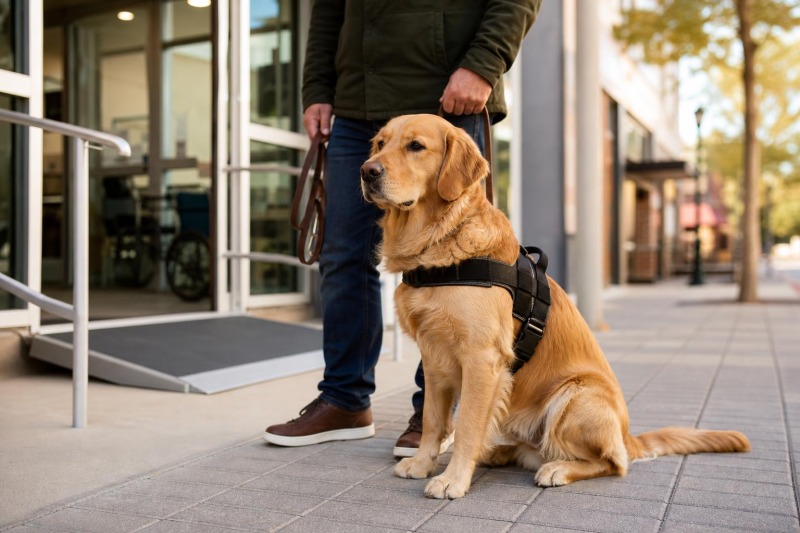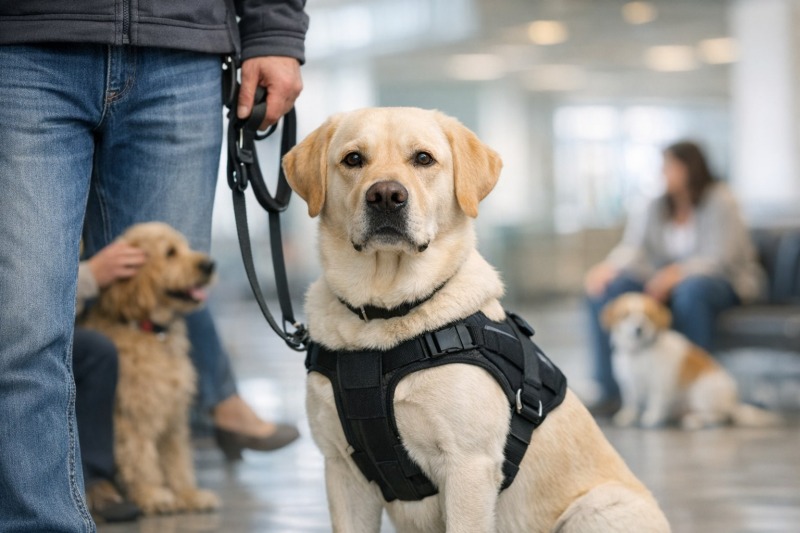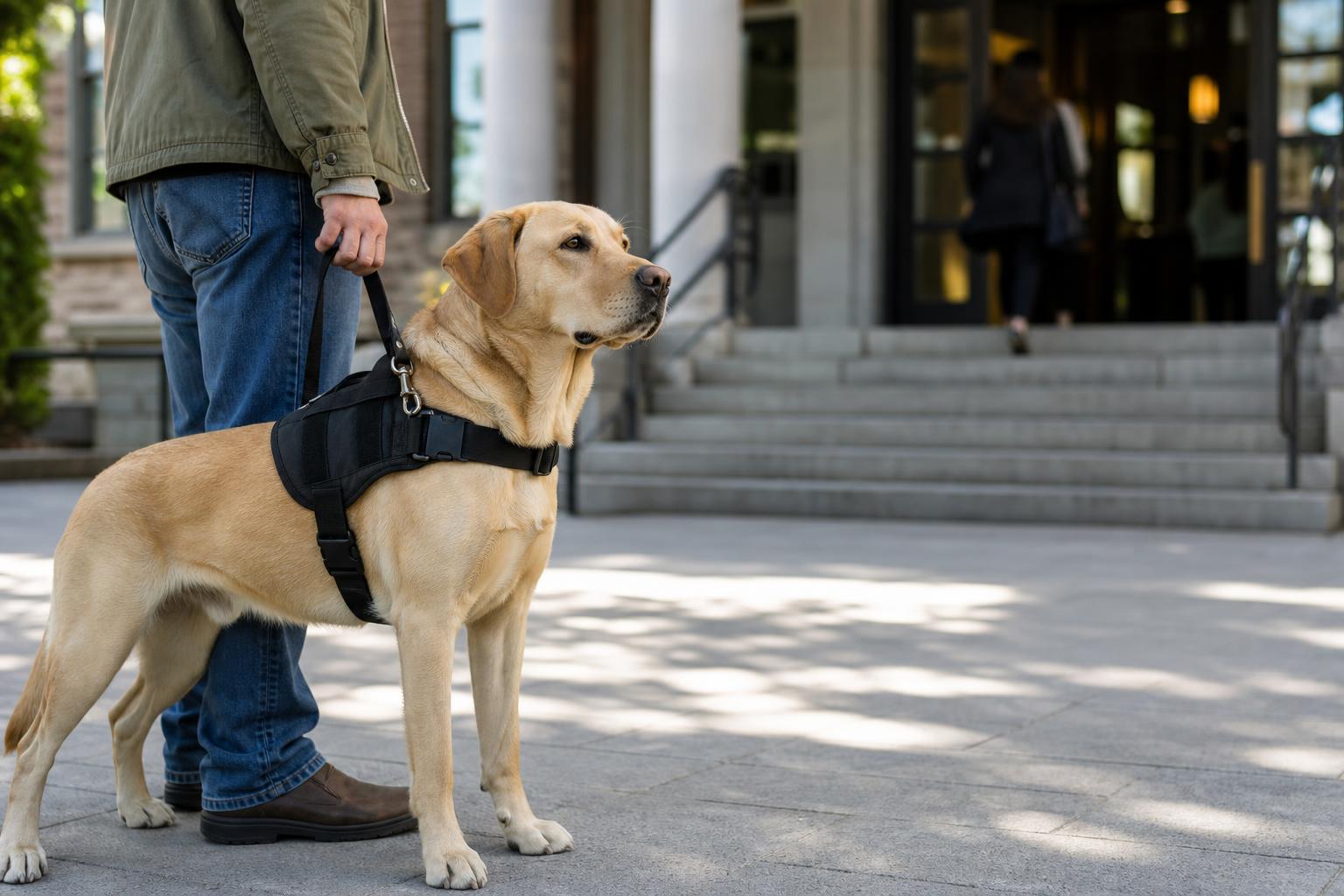
Service-dog access questions depend on the law and the setting involved. The ADA, housing rules, workplace arrangements, and air travel have different frameworks. Owners and businesses need to identify the applicable rules before treating every situation alike.
For dog owners interested in working dogs, this topic matters because the law protects legitimate service dog teams while also setting boundaries. Those protections are real, and they carry weight. At the same time, public access rights are often misunderstood by handlers, businesses, and everyday dog owners who simply want to do the right thing. The best place to start is with the law itself, not rumor, not social media, and not whatever sticker somebody bought online.
What Counts as a Service Dog Under the Law
In the United States, the Americans with Disabilities Act, or ADA, is the central federal law governing service dog public access in most public places. Under the ADA, a service dog is a dog that has been individually trained to do work or perform tasks for a person with a disability. That definition matters. The dog is not protected simply because it is calm, comforting, or well behaved. The dog must be trained to take specific action that helps mitigate the handler’s disability.
A dog guiding a blind handler, alerting a deaf handler, retrieving dropped items, interrupting a psychiatric episode, reminding a handler to take medication, or providing balance support through trained tasks may qualify. By contrast, emotional support animals, therapy dogs, and companion animals do not have the same public access rights under the ADA, no matter how beloved or beneficial they may be at home.
This is where a lot of confusion starts. That is not how the ADA is written. Comfort alone is not enough. The task must be trained, and it must relate directly to the person’s disability.
Why Training Is the Heart of the Matter
Any old hand who has worked a dog knows there is a world of difference between a dog that behaves nicely on a Saturday walk and one that can perform under stress, distractions, noise, and unpredictability. Service dogs need that kind of steadiness. Public access is not built on a vest or an ID card. It is built on lawful purpose and actual training.
The ADA does not require service dogs to be professionally trained, and there is no federal requirement for certification or registration. A handler may train their own dog. Still, the absence of a certification requirement does not lower the standard for behavior. A legitimate service dog must be under control, housebroken, and able to work safely in public.
Where Service Dogs Are Allowed
In broad terms, service dogs are allowed to accompany their handlers in places open to the public. That includes stores, restaurants, hotels, government buildings, public transportation, and many other spaces where the public is normally allowed to go. If the business serves customers, the general rule is that a service dog can enter with its handler.
There are practical exceptions, but they are narrower than many businesses think. A business cannot exclude a service dog just because employees are nervous around dogs, another customer is uncomfortable, or there is a general no-pets policy. Service dogs are not pets under the ADA in this context. They are working animals performing tasks for a person with a disability.
That said, access is not limitless. A service dog can be excluded if it is out of control and the handler does not take effective action to control it, or if the dog is not housebroken. The law protects access, but it does not excuse poor behavior. A barking, lunging, snapping, or wandering dog can lose its right to remain in that setting. The handler may still return without the dog to receive goods or services if that is feasible.
Places With Special Considerations
Some environments raise harder questions. Hospitals, food preparation areas, and sterile medical spaces may have limited restrictions based on genuine safety or sanitation rules, but those restrictions must be based on actual risk, not assumptions. Restaurants, for example, generally must allow service dogs in dining areas even though pets are prohibited. The line usually falls where food is actively prepared in restricted staff-only spaces.
Housing and air travel involve additional legal frameworks beyond the ADA. The Fair Housing Act may apply to assistance animals in housing, and the Air Carrier Access Act governs service dogs on airlines. Dog owners should understand that public access rules in a store are not always identical to rules in an apartment complex or on a plane.
What Businesses Can Legally Ask
One of the most repeated questions in this whole subject is what a business is allowed to ask when it is not obvious that a dog is a service dog. Under the ADA, staff may ask only two questions. They may ask whether the dog is required because of a disability, and they may ask what work or task the dog has been trained to perform.
They may not demand medical documentation. They may not require a special identification card, certification papers, or proof of training. They also may not ask the handler to disclose the nature of the disability. That line is important, and businesses that cross it can land themselves in trouble.
At the same time, handlers should not bristle at lawful questions asked respectfully. A store owner trying to separate a legitimate service dog from a pet in a cheap vest is not necessarily acting in bad faith. They may be trying to follow the law while protecting customers and staff. Clear, honest answers usually settle things quickly.
Handler Responsibilities in Public
Rights and responsibilities ride in the same truck. A handler with a service dog has broad legal access, but they also have the responsibility to keep the dog under control through leash, harness, tether, or voice control when appropriate. The dog should not block aisles, disturb merchandise, beg for food, approach other customers, or create hazards.
You can see it in the eyes, in the way it settles, in how it ignores commotion and waits for direction. Service dog teams do not need theatrics. They need consistency. That is why fake service dog claims do real harm. They create suspicion around legitimate teams and make public access harder for people who truly rely on these dogs every day.
Handlers are also generally responsible for damage caused by their dogs if a business would normally charge any customer for similar damage. Public access does not erase basic accountability.
Common Misconceptions About Service Dog Laws
A big one is the belief that every service dog must wear a vest. Not true. Many do, because it helps signal the dog is working, but the ADA does not require it. Another myth is that businesses must allow service dogs to sit in shopping carts, on restaurant seats, or to eat from the table. They do not. Reasonable access does not mean ignoring hygiene or safety norms.
Another misunderstanding is that breed alone can be used to deny access. Under federal law, that is not the standard. If the dog meets the legal definition of a service dog and is under control, breed stereotypes do not override ADA protections. Individual behavior matters far more than label or appearance.
One more thing worth saying plainly: online registries selling certificates and laminated cards do not create legal status. They are often marketed to confused owners looking for an easy answer, but they do not replace the legal requirements of disability-related need and trained task work.
Why This Matters to the Working Dog Community
Anybody who respects a well-trained dog should care about this subject. Working dogs earn trust through performance, not costume. Service dogs represent one of the most demanding forms of canine work because the dog must function with precision in ordinary life, day after day, often in places full of distractions and stress. When the public understands the law, legitimate teams move through the world with less friction. When the law is twisted or faked, everyone pays for it, especially disabled handlers who depend on their dogs to live with independence and dignity.
For dog owners exploring the broader world of working dogs, service dog laws offer a useful reminder that purpose matters. A dog’s job defines the standards it must meet. Public access rights are powerful protections, but they are tied to training, behavior, and lawful use. That is the straight answer, and it holds up whether you are talking around a tailgate, inside a feed store, or at the front door of a busy restaurant.
If you remember nothing else, remember this: service dog laws are designed to protect people with disabilities and the dogs trained to assist them. The ADA gives real public access rights, but those rights are not based on emotion, internet paperwork, or a patch on a harness. They are based on disability-related need, trained tasks, and responsible behavior in public.
Dog owners who care about working dogs ought to respect that standard. It honors the handlers who rely on these animals, the dogs doing the work, and the businesses trying to serve the public fairly. Clear rules and honest dogs make for fewer arguments and better outcomes. That is as true in town as it is in the field.