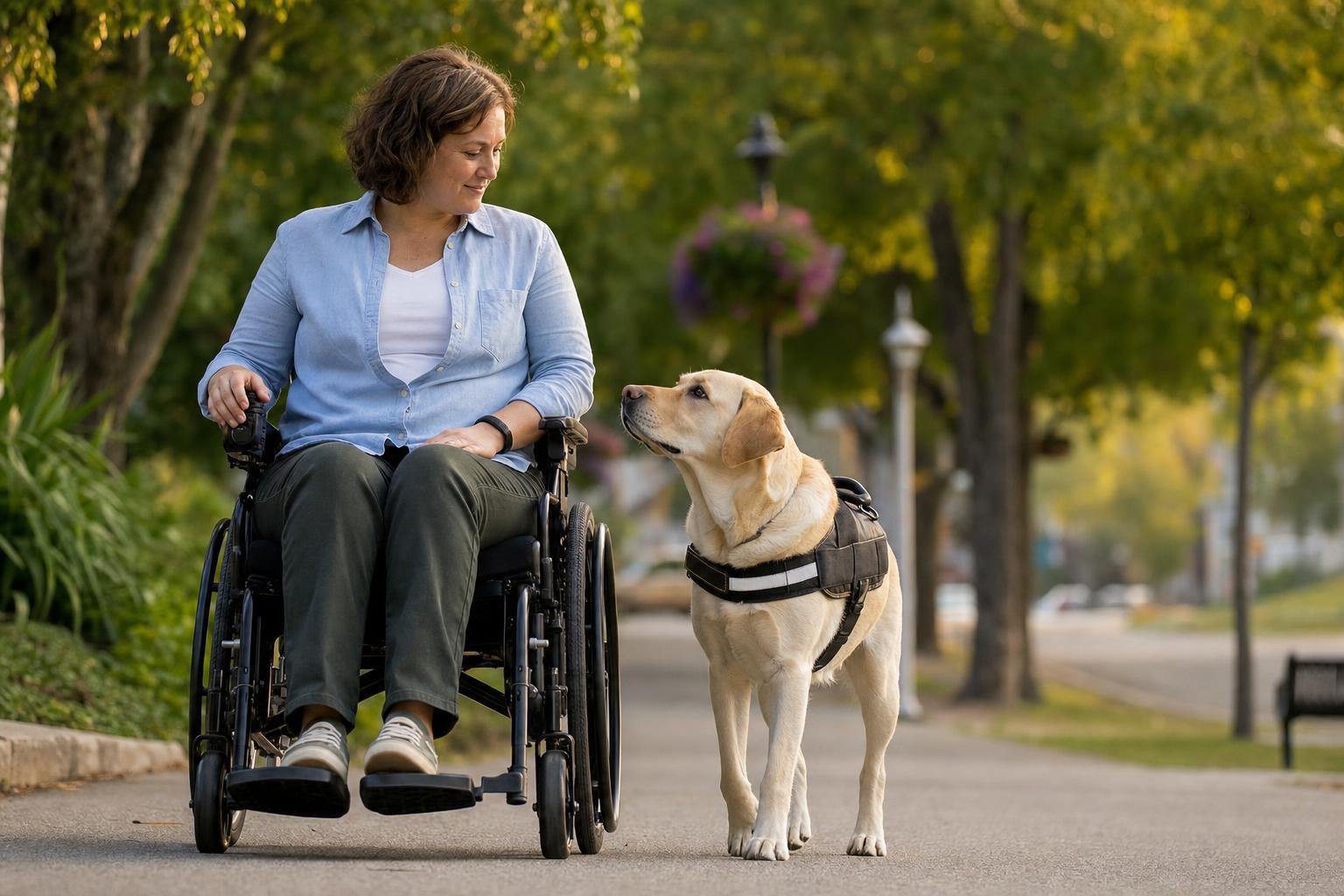
Service dogs perform trained tasks that assist a person with a disability. The work is shaped around that person’s needs and daily environment. A useful partnership requires suitable temperament, reliable task training, and continuing care for the dog.
For many dog owners interested in working dogs, service dogs represent one of the highest callings in the canine world. These dogs are not simply pets with good manners. They are trained to perform specific tasks that directly help a person manage a disability. That distinction matters. The work may involve guiding a handler through crowded spaces, alerting to sounds, retrieving dropped items, interrupting destructive behaviors, bracing during balance transitions when appropriate, or responding to medical events. Behind each task is something larger than obedience. It is freedom. It is dignity. It is the ability to move through daily life with greater safety and confidence.
What Makes a Service Dog Different
Folks often lump all helpful dogs into the same category, but there is an important difference between a service dog, an emotional support animal, and a therapy dog. A service dog is individually trained to perform work or tasks for a person with a disability. That training is what sets the dog apart. These are working dogs in the truest sense, expected to remain composed in public, attentive under pressure, and reliable when the handler needs them most.
That kind of steadiness does not happen by accident. It comes from careful breeding, sound temperament, patient instruction, and repeated exposure to the world. In a bird dog, we admire a level head when guns go off and birds rise. In a service dog, we admire much the same quality, though the setting is different. Elevators, shopping carts, sirens, restaurant floors, hospital corridors, and uneven sidewalks all become part of the dog’s working environment. The best service dogs carry themselves with a confidence that settles everyone around them.
The Daily Impact of a Service Dog
What service dogs do in practical terms is impressive, but what they mean on a human level is even greater. A person living with a disability may face a hundred small barriers in a single day, many of them invisible to strangers. A service dog can reduce those barriers one task at a time. Picking up keys may not sound dramatic until you imagine dropping them with limited mobility and no easy way to recover them. Alerting to an alarm may seem simple until you consider how vulnerable a deaf or hard-of-hearing person can be without that warning. Nudging, interrupting, retrieving medication, opening a cabinet, guiding around obstacles, creating space in a crowd, or signaling an oncoming medical episode can each make the difference between strain and stability.
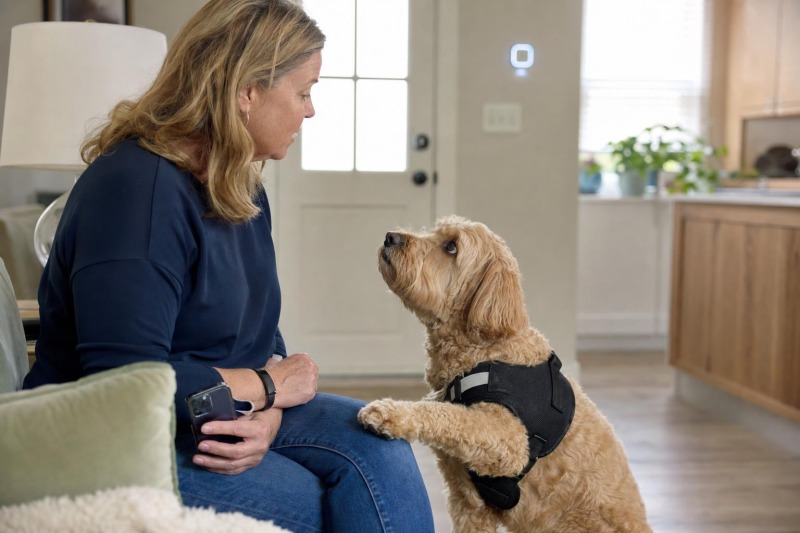
They often learn to anticipate patterns without becoming pushy. They notice shifts in body language, changes in breathing, and subtle movements that many people would overlook. Good handlers and good dogs build a rhythm between them that looks almost effortless from the outside. But there is nothing casual about it. That smooth teamwork is earned through repetition, trust, and many hours of living and working together.
Independence That Goes Beyond Convenience
One of the strongest benefits a service dog provides is independence. That word gets used a lot, but in this case it deserves its weight. Independence may mean being able to shop alone, ride public transportation with less fear, sleep more soundly, or navigate a workplace with greater assurance. It may mean fewer moments of panic, fewer calls for help, and more control over everyday routines. For handlers, that can be deeply personal. A service dog does not erase a disability, but it can help a person move through life with more options and less uncertainty.
There is also the quiet comfort of companionship, though that should never be confused with the dog’s primary role. Working dogs often bring emotional steadiness simply by being reliable. Anyone who has spent dawn in a blind with a seasoned dog at heel knows how reassuring that presence can be. Service dogs offer a similar kind of grounded assurance, except the stakes are often woven into every hour of the day.
How Service Dogs Are Trained
Training a service dog calls for far more than teaching sit, stay, and come. The process starts with temperament. Not every smart dog is suited for this work. A proper service dog needs focus, resilience, low reactivity, environmental stability, and a willingness to work closely with people. Drive matters, but it must be the right kind of drive: eager enough to engage, steady enough to think, and balanced enough to settle when nothing is required.
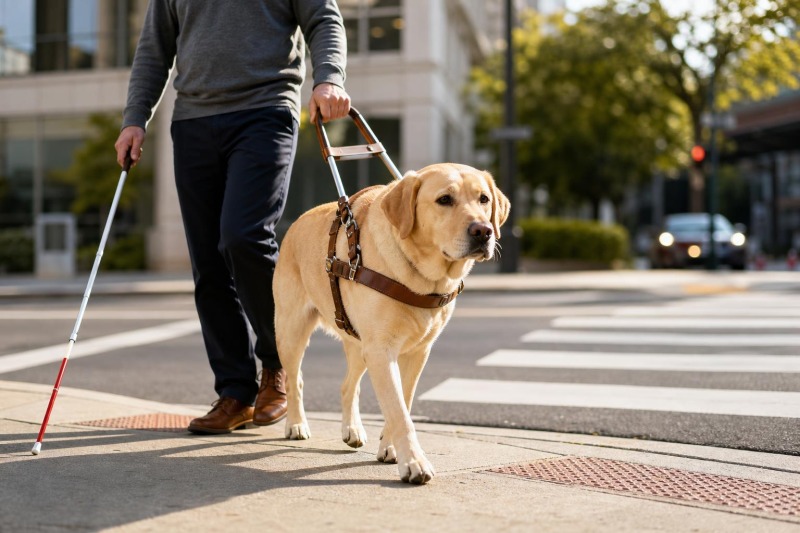
From there, foundational obedience is built and tested under distraction. Then comes public access work, task training, and handler-specific shaping. The dog must learn not only what to do, but when and why to do it. In some cases, a service dog may learn to retrieve a phone, tug open a door, press an automatic button, or alert to changes associated with diabetes or seizure activity. In others, the dog may guide a handler around hazards or respond to psychiatric disabilities by interrupting escalating behaviors and creating a path to safety.
A lesson field folks know well applies here too: proofing matters. A command that works in the yard but falls apart in a crowd is not finished. Service dogs must perform in real-world conditions, often when the handler is stressed, tired, or medically vulnerable. Reliability under pressure is the mark of a true working dog.
The Handler-Dog Bond
No two teams are exactly alike. Even a highly trained dog must learn the handler’s pace, habits, and needs. Likewise, the handler must learn how to read the dog’s signals, maintain training, and support the dog’s welfare. The partnership grows over time, much the way a skilled hunting dog becomes more attuned to a familiar gunner with every season. There is a kind of shorthand that develops. A slight shift of weight, a touch at the knee, a pause at a curb, a change in the dog’s expression—these small moments become part of daily communication.
That bond is built on mutual trust. The handler trusts the dog to perform critical tasks. The dog trusts the handler for guidance, care, and clarity. When that relationship is strong, the team moves with a confidence that is hard not to respect.
Breeds, Traits, and the Working Dog Mindset
People often ask whether one breed makes the best service dog. The honest answer is that suitability depends on the individual dog and the tasks required. Labrador Retrievers and Golden Retrievers are common for good reason. They tend to be biddable, people-oriented, and adaptable. Standard Poodles also excel in many roles, especially when coat considerations matter. Other breeds and mixed breeds can succeed as well, provided they have the temperament, health, and trainability needed for serious work.
Still, breed alone never tells the whole story. A sound service dog needs nerves you can count on and a head clear enough to work through distraction. In the hunting world, we value dogs that can switch from intensity to patience in a heartbeat. That same balance serves service dogs well. They must be ready when needed and invisible when not.
Respecting the Dog Behind the Vest
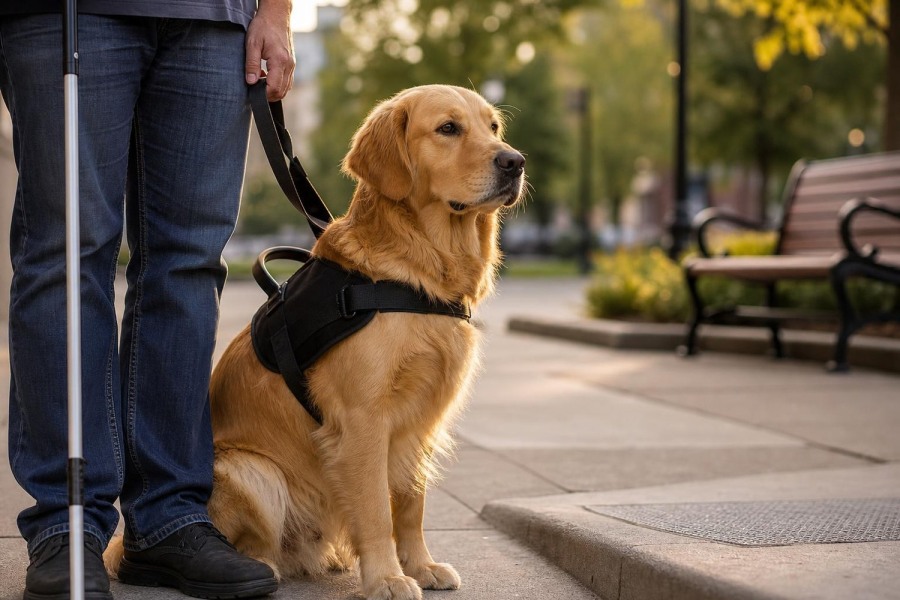
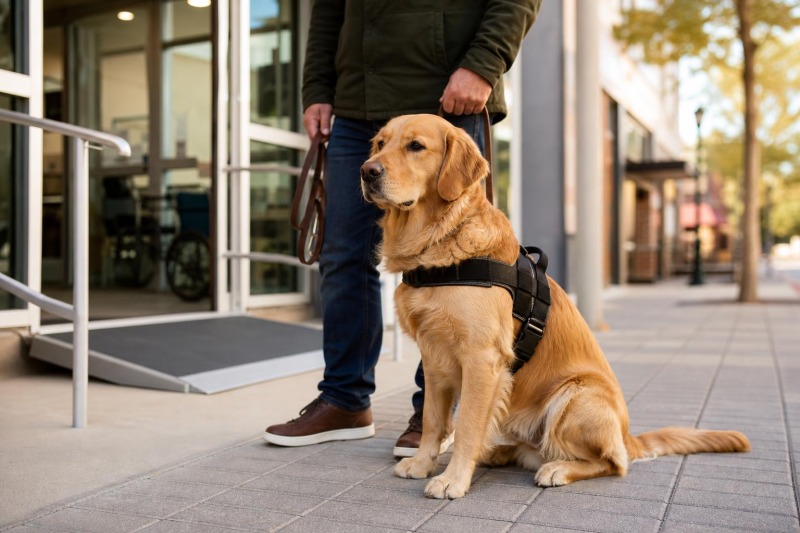
One thing the public often forgets is that a service dog is working. The dog may look friendly, and many of them certainly are, but attention from strangers can interfere with the job. Petting, talking to, calling, or distracting a service dog without permission is poor manners at best and dangerous at worst. These dogs are not ornaments and not public property. They are active partners helping a person navigate life.
Respect should extend beyond the working moment too. Service dogs need rest, exercise, play, veterinary care, and downtime just like any other dog. Sound bodies and clear minds do not maintain themselves.
Why Service Dogs Matter in the Working Dog World
For readers of Working Dog Central, service dogs deserve admiration not out of sentimentality but because they embody what purposeful dogs can be. They show us the extraordinary reach of canine intelligence and heart. They remind us that the working bond between dog and human is not limited to sport, protection, herding, or the hunt. It can also be a lifeline carried quietly through ordinary places.
There is something deeply humbling about a dog that helps a person stand, move, hear, recover, or remain steady in a world that can turn difficult without warning. It is not flashy work most of the time. There may be no applause, no rosette, no tailgate story told over coffee at daylight. But it is honest work, vital work, and often heroic in ways that pass unnoticed by everyone except the person holding the lead.
Service dogs are a shining example of why working dogs matter. They bring skill, discipline, and devotion into the places where people need them most. And if you have spent your life admiring dogs that earn their keep with brains and heart, you cannot help but tip your cap to them.