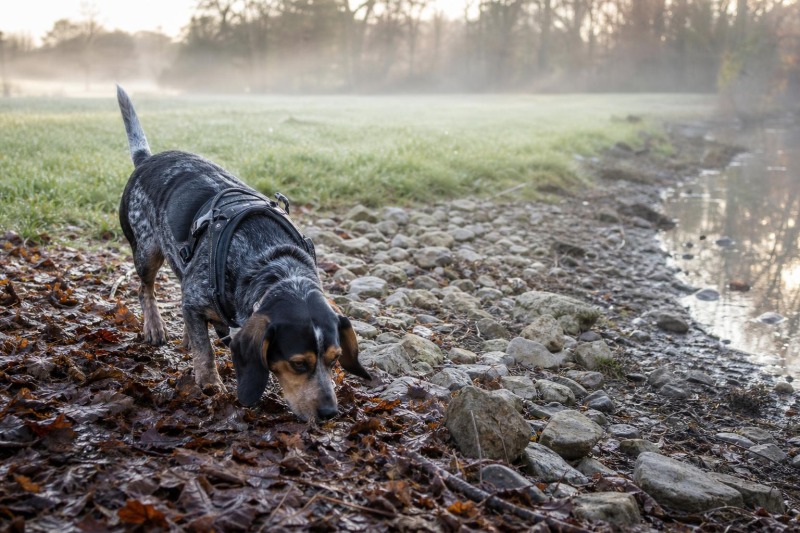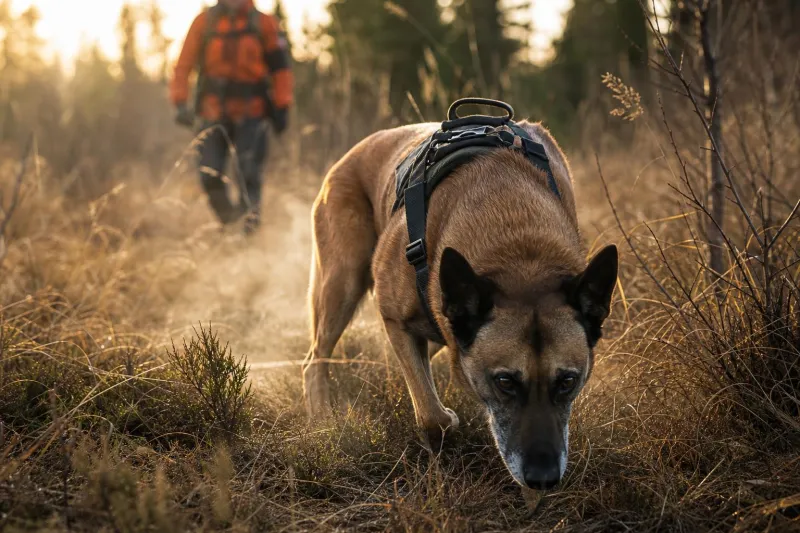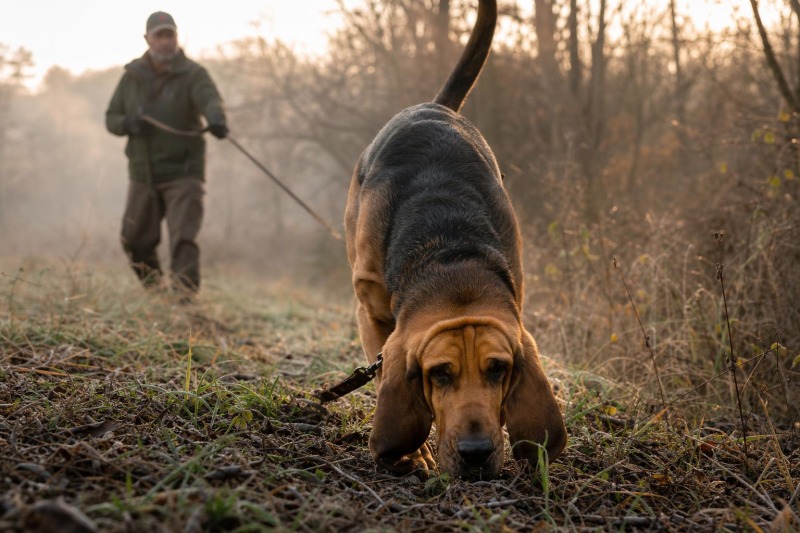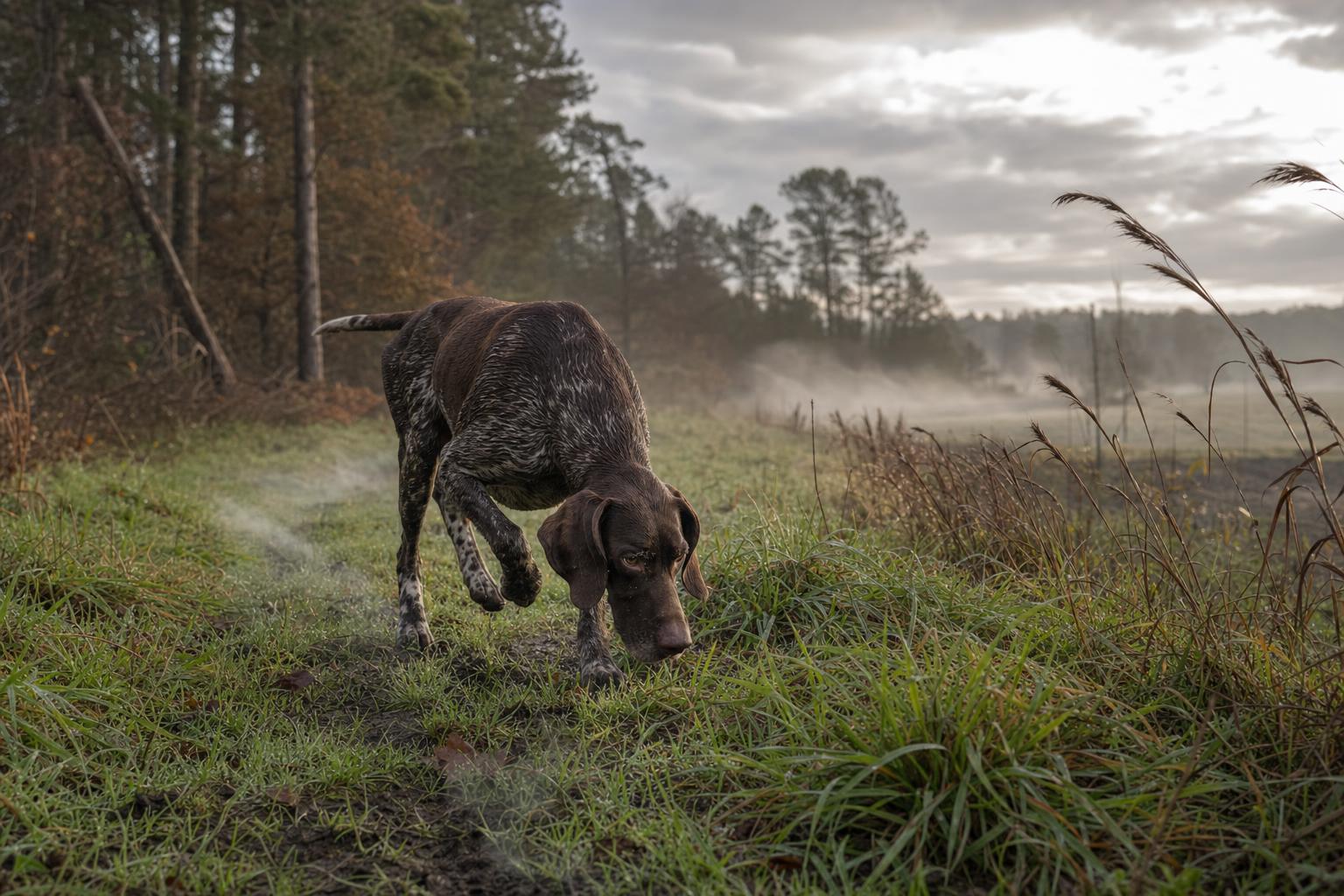
Weather affects how scent is carried and retained along a trail. Wind, moisture, temperature, and recent conditions interact with the surface itself. A handler needs to read the dog in that setting instead of treating a difficult track as proof of poor effort.
That is the nature of scent trails. The dog follows what conditions allow it to smell, not what we assume should be there.
For dog owners interested in working dogs, this matters whether your dog tracks game, finds wounded animals, trains in mantrailing, or does practical scent drills at home. The better you read the weather, the better you can read your dog.
How a Scent Trail Forms in the First Place
A scent trail is made up of tiny odor particles left by the animal, person, or object moving across an area. Some of that odor comes from disturbed ground and crushed vegetation. Some comes from skin cells, body oils, sweat, hair, blood, interdigital scent, and breath. Once it is laid down, that odor starts changing right away. The ground absorbs part of it. Plants hold part of it. Air movement carries part of it off. Moisture may trap it for a time or wash it into low places. Sunlight and heat speed up breakdown. In simple terms, every track is moving and aging from the moment it is made.
That is why handlers who treat every trail the same usually end up confused. A three-hour-old track on a cool, humid morning may smell stronger than a one-hour-old track laid in dry wind under bright afternoon sun. Age matters, but weather often matters more.
Cool Air Usually Helps Hold Scent Lower
In cooler conditions, scent tends to remain lower and more stable. The ground is not throwing heat back into the air, and odor particles do not rise and disperse as quickly. That often gives the dog a cleaner picture. Early morning can be excellent for tracking, especially when the surface still holds overnight moisture.
This is one reason many handlers notice their dogs working with more confidence at first light. The trail is often tighter, the turns are easier to account for, and the dog does not have to sort through as much scent drift.
Heat Lifts and Spreads Odor
Hot weather changes everything. As the sun warms the ground, scent tends to lift, spread, and break apart. On bare dirt, gravel roads, short grass, and open fields, the heat can make a trail feel scattered to the dog. Instead of finding scent concentrated in a narrow path, the dog may cast wider, check more often, or overshoot corners.
Many people mistake this for poor obedience or weak drive. Often it is just physics. The dog is still working, but the scent picture has widened and thinned. In hot conditions, experienced dogs often slow themselves down. Young dogs, on the other hand, may rush and lose the line repeatedly.
Humidity: The Quiet Friend of a Tracking Dog
Humidity generally helps scenting conditions. Moist air supports odor and keeps the environment from drying out too fast. When there is enough moisture in the air, scent tends to linger better on vegetation and near the ground. Dogs can often follow with less effort because the track has more body to it.
In those conditions, a dog can settle into honest work and you can watch the nose tell the truth. Every step looks deliberate because the odor is available where it ought to be.
Low humidity creates the opposite problem. Dry air lets scent fade faster, especially over sun-baked or dusty ground. The track may still be there, but it is weaker and more fragile. A dog with good nose and patience can still work it, but the handler needs to stop expecting a smooth, head-down performance.
Light Wind Can Carry Useful Scent
A gentle wind is not always the enemy. It can carry scent into the dog’s path and help the dog locate travel direction or recover a line after a loss. In open country, a smart dog may work slightly off the footsteps and use drifting odor to move efficiently. That does not mean the dog is wrong. It means the dog is solving the problem the way the field presents it.
Strong or Shifting Wind Complicates the Trail
Hard wind, especially gusting or changing wind, can tear a trail apart. Scent blows off the line, pools in depressions, gathers along fence rows, and skips over exposed ground. In hilly country or cutovers, swirling wind can create false concentrations that make a dog swing, stall, or backtrack briefly while it sorts out the strongest source.
This is where handlers get into trouble by overhandling. When the wind is difficult, the dog may need room to puzzle through contamination and drift. If you keep correcting every cast, you can talk the dog out of the right answer.
Rain, Dew, and Ground Moisture
Moisture on the ground often improves scenting, at least up to a point. Dew can make a fresh morning track smell rich and easy to hold. Damp soil and wet vegetation trap odor and give the dog a fuller picture. Many fine tracking sessions happen after a night of light moisture and under cloud cover the next morning.
Rain is more complicated. A light rain can freshen scent conditions, settle dust, and keep odor close to the surface. A heavy rain can flatten the scent picture, spread it into surrounding ground cover, or wash portions of a trail downhill. It may also reduce the importance of footstep disturbance and leave the dog relying more on residual body odor and vegetative contact scent.
After a rain, low spots, ditch edges, shaded cover, and thicker vegetation may hold scent better than exposed ground. If you know that, your dog’s behavior will make more sense to you. What looks like wandering is often the dog checking where the odor collected.
Frost, Snow, and Cold Ground
Frost can be tricky. A light frost in still air may preserve scent for a while, but once the sun hits and the surface begins to thaw, conditions can change fast. That mid-morning thaw often creates a confusing transition where scent lifts and redistributes. Dogs may start strong and then suddenly become less certain as the ground changes under them.
Snow has its own rules. Fresh snow can show a track clearly to our eyes, but visible sign does not always equal easy scent. Powdery, dry snow may hold less odor than many people expect, while damp packing snow can hold it well. Wind across snowfields can also move scent far from the actual line. A seasoned dog may track the odor cone rather than the print itself, which can surprise handlers who are staring at the tracks instead of the dog.
Sun, Shade, and Terrain Matter More Than Most People Think
One side of a field may track well while the other side falls apart, simply because the sun is hitting differently. Shade keeps ground cooler and often preserves scent longer. Thick cover, creek bottoms, logging roads with tree canopy, and the downwind side of brush lines can all hold scent better than open slopes or hard bare surfaces.
Terrain also shapes where odor settles. Scent often pools in low areas and catches along edges, corners, and transitions. A dog may drift downhill, hook into cover, or work the shaded side of a path because that is where the scent has collected. A handler who understands that will see intelligence where others see inconsistency.
Reading Your Dog in Changing Conditions
A dog tells you what the weather has done to the trail if you are humble enough to watch. When scent is strong, the dog usually moves with purpose and rhythm. When the line is thin or scattered, you may see more head lifts, wider casting, shorter checks, and a change in speed. None of that automatically means failure. It often means the dog is working honestly through a harder scent picture.
Some fine dogs run hot on a good track and look flashy. The same dogs may appear methodical and almost doubtful in dry wind or heat, yet still solve the problem. What matters is whether the dog can adapt and whether the handler gives it the freedom to do so.
Training for Real Weather Instead of Perfect Days
If you only train in ideal conditions, you will not know what kind of dog you have when the weather turns rough. Working dogs need tracks in cool damp grass, yes, but they also need hot afternoons, crosswinds, leaf litter, frosty mornings, and the messy period after rain. That is how they learn resilience, and that is how you learn trust.
Start with reasonable expectations. On difficult weather days, shorten the track, simplify the terrain, or reduce contamination. Let the dog succeed while still facing the condition you want to teach. Over time, build complexity. The goal is not to trick the dog. The goal is to let the dog learn how scent behaves in the real world.
They knew when conditions favored speed, when they favored patience, and when a dog needed extra room to sort things out. That kind of judgment does not come from books alone. It comes from standing in wet grass before sunrise, feeling the wind on your cheek, watching your dog hit an invisible line, and realizing the field is always talking if you know how to listen.
Weather effects on scent trails are not a small detail. They are the whole game. Once you understand that, your dog’s work becomes easier to interpret, your training becomes more honest, and your respect for a good nose grows even deeper.