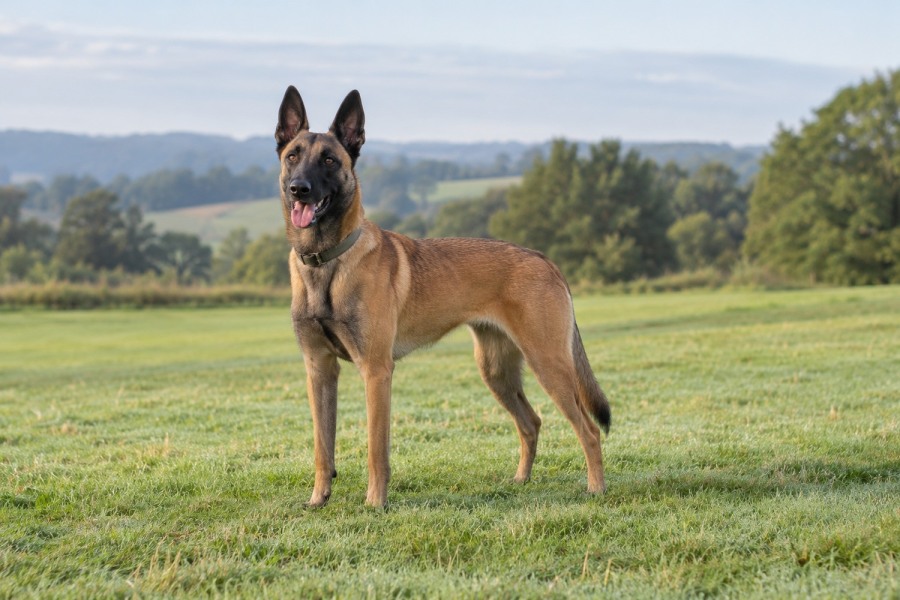
A good protection dog is one of the finest animals a person can work beside. When training is done right, you get a dog that is clear-headed, obedient, confident under pressure, and safe to live with. When training is done wrong, you get confusion, conflict, and sometimes a dangerous animal that reacts from insecurity rather than control. They come from people rushing, guessing, and asking for too much before the foundation is in place.
Folks often get drawn to protection training because they admire power. They want the bark, the grip, the intensity, the picture of a dog standing tall and ready. That part is easy to romanticize. What is harder to appreciate, especially for newer owners, is how much quiet work sits underneath that picture. The strongest protection dogs are usually the ones that know how to settle, how to listen, and how to handle pressure without coming apart. If you skip that groundwork, all the flashy pieces start to wobble.
Starting Protection Work Before the Dog Has a Real Foundation
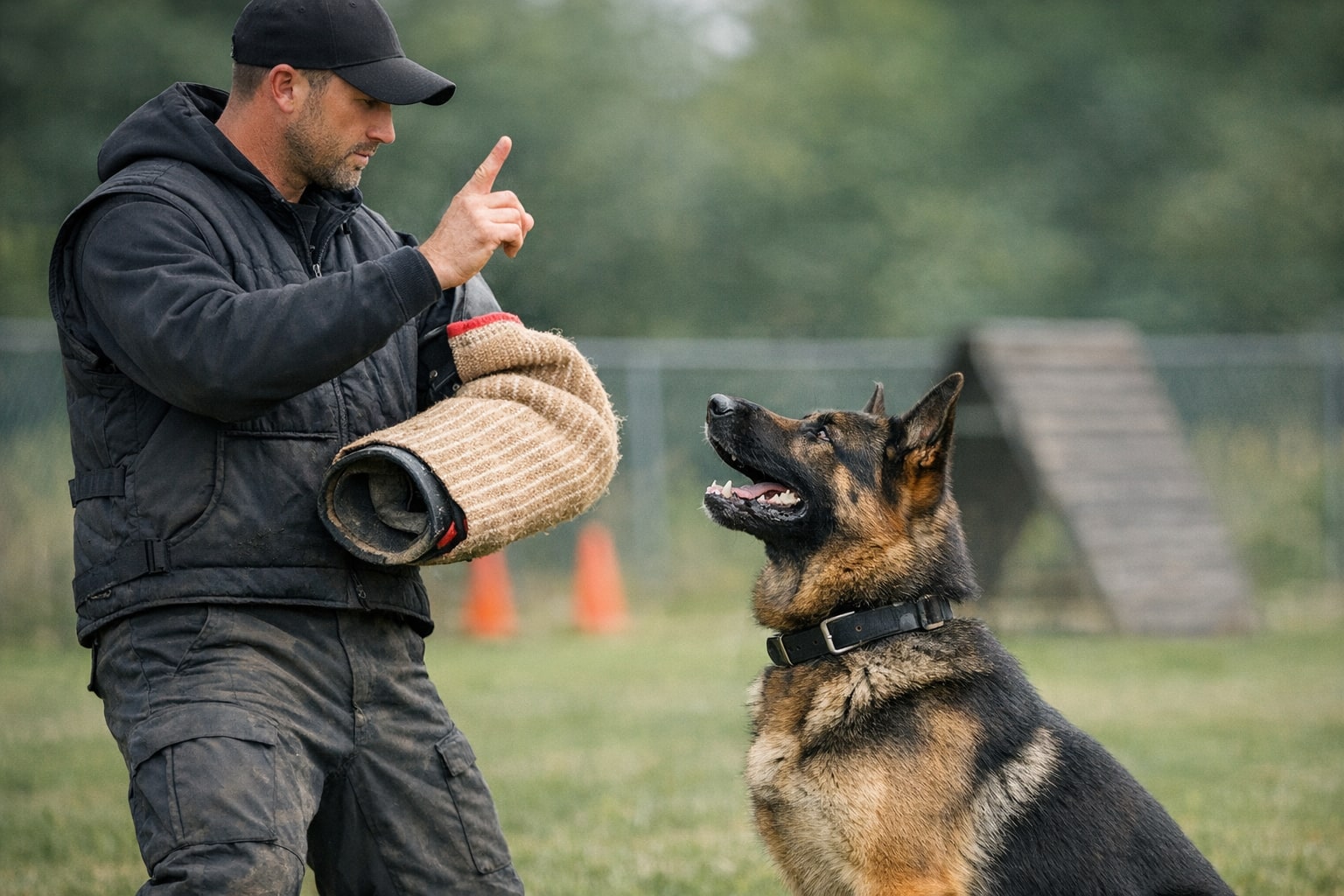
Owners get excited and begin bite development or defensive pressure long before the dog truly understands obedience, engagement, and environmental stability. A dog may lunge hard at a sleeve and look impressive, but if that same dog cannot heel with focus, out cleanly, hold a down under distraction, or recover calmly after stimulation, the training is upside down.
Protection is not where you build a dog’s entire character. It is where you reveal what is already there and then shape it with care. Before serious protection work begins, the dog should understand markers, leash pressure, reward timing, basic positional obedience, and how to think while aroused. That last part matters more than many realize. High drive alone is not enough. A protection dog must be able to move from action back to control without losing its mind.
At first, it looked promising. The dog barked hard, hit the equipment with enthusiasm, and drew attention on the training field. But over time the cracks showed. Outs got sloppy. Obedience around agitation fell apart. The dog began anticipating conflict and carrying that tension everywhere. What looked like progress was just unmanaged drive.
What a Better Approach Looks Like
Build the dog from the ground up. Make obedience part of daily life, not just something you drag out before a protection session. Teach neutrality. Teach the dog to switch on and off. Let confidence grow through clarity. A dog that understands the game and trusts the handler will carry that stability into protection work far better than a dog trained on chaos and excitement alone.
Confusing Protection with Aggression
There is a hard truth here that some people do not want to hear: a protection dog is not supposed to be an angry dog. Real protection work is built on control, nerve, and discernment. Owners who try to make a dog more “protective” by encouraging random aggression are planting trouble. Teasing the dog at the fence, rewarding suspicious behavior toward harmless guests, or celebrating every bark at a stranger may feel like building toughness, but often it is just feeding insecurity.
They were steady until given reason to engage. They did not need to posture all day to prove what they were. If your dog cannot distinguish between normal life and legitimate threat, that is not protection. That is instability wrapped in drive.
A dog that lives in constant suspicion starts making decisions on its own, and that is exactly what you do not want. The handler must remain the center of the picture. The dog may have strong instincts, but those instincts should be guided, not inflamed.
Using Too Much Pressure, Too Soon
Pressure is part of dog training. Anyone who says otherwise has not spent enough time with serious working dogs. But pressure has to be applied with timing, fairness, and purpose. Too many handlers correct harshly before the dog fully understands the task. Others stack environmental stress, decoy pressure, obedience pressure, and handler emotion all in the same session, then act surprised when the dog avoids, fights the handler, or falls apart.
Protection dogs need confidence. Confidence does not come from being overwhelmed. It comes from being challenged in a way the dog can work through successfully. There is a big difference between testing a dog and drowning it.
Good pedigree, solid prey drive, plenty of intensity. The owner, eager to make him “real,” started adding defensive pressure before the dog was mature enough to process it. The dog began showing conflict in the grip, then handler sensitivity, then avoidance in places where he had once been bold. The owner thought the answer was more correction. It usually is not. Most times the dog is telling you the lesson has outrun the understanding.
Reading the Dog Matters
Handlers need to learn the difference between stress, avoidance, challenge, and engagement. A tucked tail is obvious. A hectic bark, scattered eyes, shallow grip, or frantic movement are often subtler signs that things are not as clean as they should be. Good training listens to those details. Bad training bulldozes over them.
Ignoring the Out, Recall, and Neutrality
Everybody likes to talk about the bite. Fewer people get excited about the out. That is a mistake with serious consequences. A protection dog that will engage but will not release cleanly is not finished, no matter how powerful the rest of the work may look. The same goes for recall under arousal and the ability to return to neutrality after an engagement.
Control behaviors are not side dishes in protection training. They are the meat of it. The out proves the dog is still mentally connected to the handler. The recall proves the dog can leave conflict and come back under command. Neutrality proves the dog is stable enough to live in the world without carrying unnecessary pressure from one moment to the next.
If a dog only performs well when moving toward conflict, you do not have enough control. Build release behaviors early. Reinforce them often. Make them part of the dog’s understanding from the first stages of bite development, not a piece you try to force in later after bad habits have hardened.
Training Without a Skilled Decoy or Qualified Guidance
Protection work is not something to improvise in the backyard with a cheap sleeve and a brave buddy. A poor decoy can create problems that take months to unwind. Bad presentation, inconsistent pressure, sloppy movement, unfair stick work, weak escapes, and poor timing all teach the dog the wrong lesson. The dog may still bite, but what it learns emotionally and tactically may be a mess.
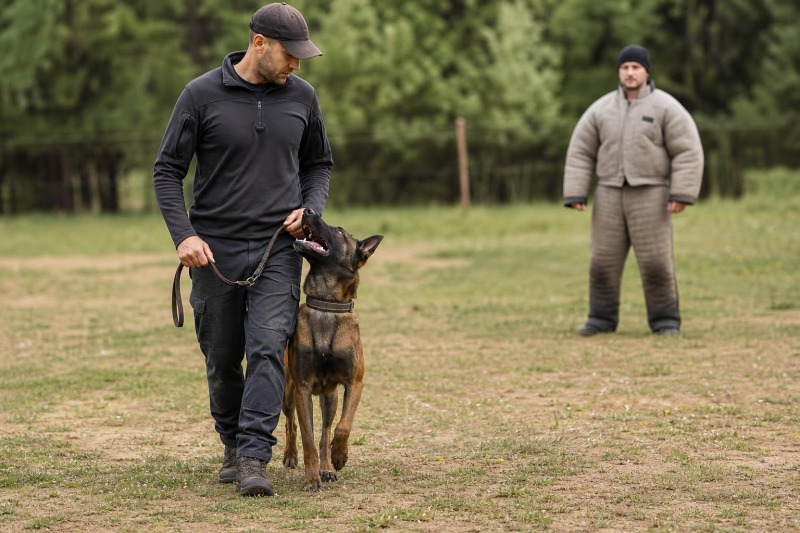
A skilled helper or decoy knows how to bring the right picture to the dog. He reads confidence, adjusts pressure, rewards commitment, and develops the dog according to age, temperament, and stage of training. That kind of experience matters. It protects the dog as much as it advances the work.
The same is true of handler coaching. A protection dog is not just learning a task. The handler is learning timing, posture, leash handling, command delivery, and how not to poison the work with nerves or ego. Good guidance shortens the road and prevents expensive mistakes.
Letting Drive Replace Clarity
Drive is a gift, but it can fool people. A fast, intense dog often looks more advanced than it really is. Because of that, owners begin rewarding speed and power while overlooking confusion. The dog starts anticipating commands, launching without clear cues, vocalizing from frustration, and rehearsing sloppy entries into work. In time, the whole picture gets loud but not clean.
Clarity holds up under stress. Clarity keeps the dog honest when the environment changes. Clarity gives you something to rely on when the stakes are higher than a training field.
If your sessions are getting faster but not better, slow them down. Ask whether the dog understands each phase. Watch transitions closely. Protection work should have rhythm, not just intensity.
Neglecting Daily Life and Household Manners
One of the strangest mistakes people make with protection dogs is treating training like a separate world, as if the dog can be chaotic at home but precise on the field. The two are tied together more than many admit. A dog that drags through doors, ignores place commands, blows off known obedience, and stays constantly keyed up in the house is already showing you where the weak seams are.
Protection dogs live with people. They ride in vehicles, greet familiar guests, rest in kennels or homes, and move through ordinary days. Household control is not beneath working-dog training. It is part of it. The dog should understand boundaries in calm moments if you expect obedience in high-pressure moments.
Failing to Match the Training to the Dog in Front of You
Not every strong dog is suited for the same kind of protection work, and not every training method fits every dog. Some dogs need more confidence building. Some need more structure. Some mature slowly. Some have drive to spare but weaker nerves than the owner wants to admit. Trouble starts when people train the dog they wish they had instead of the dog standing on the end of the leash.
That is where honesty becomes one of the most important tools in the whole process. A dog can be excellent and still not be the right candidate for advanced personal protection. There is no shame in that. The shame is pushing a dog beyond its mental makeup and then blaming the animal when the work gets ugly.
Good handlers stay observant. They adapt. They bring out what is truly in the dog rather than trying to force a picture that was never there.
A well-trained protection dog is not built on intimidation, shortcuts, or ego. It is built on patience, structure, timing, and respect for the animal. Avoiding mistakes in protection dog training has less to do with secret techniques and more to do with discipline from the handler. Slow down when needed. Build the foundation thoroughly. Value obedience as much as engagement. Keep the dog clear in the head and honest in the work.
They are the ones brought along with purpose. Protection dogs are no different. If you train with that in mind, you stand a far better chance of ending up with the kind of partner people admire for the right reasons.