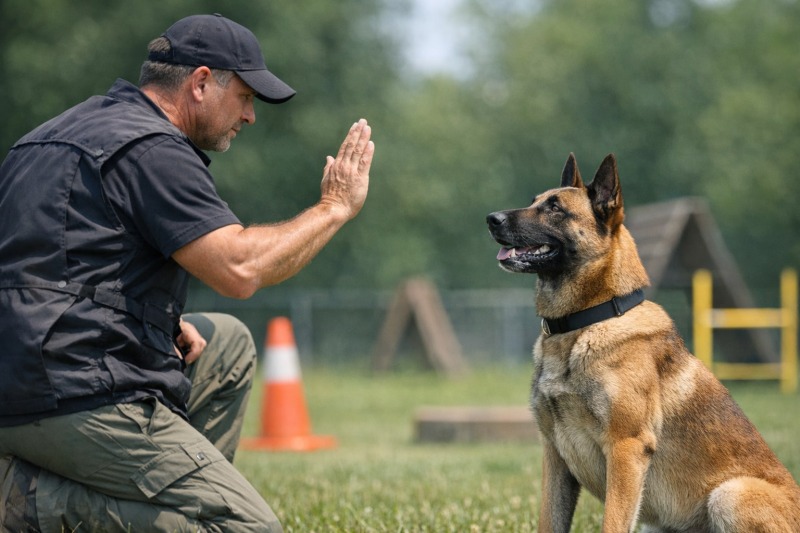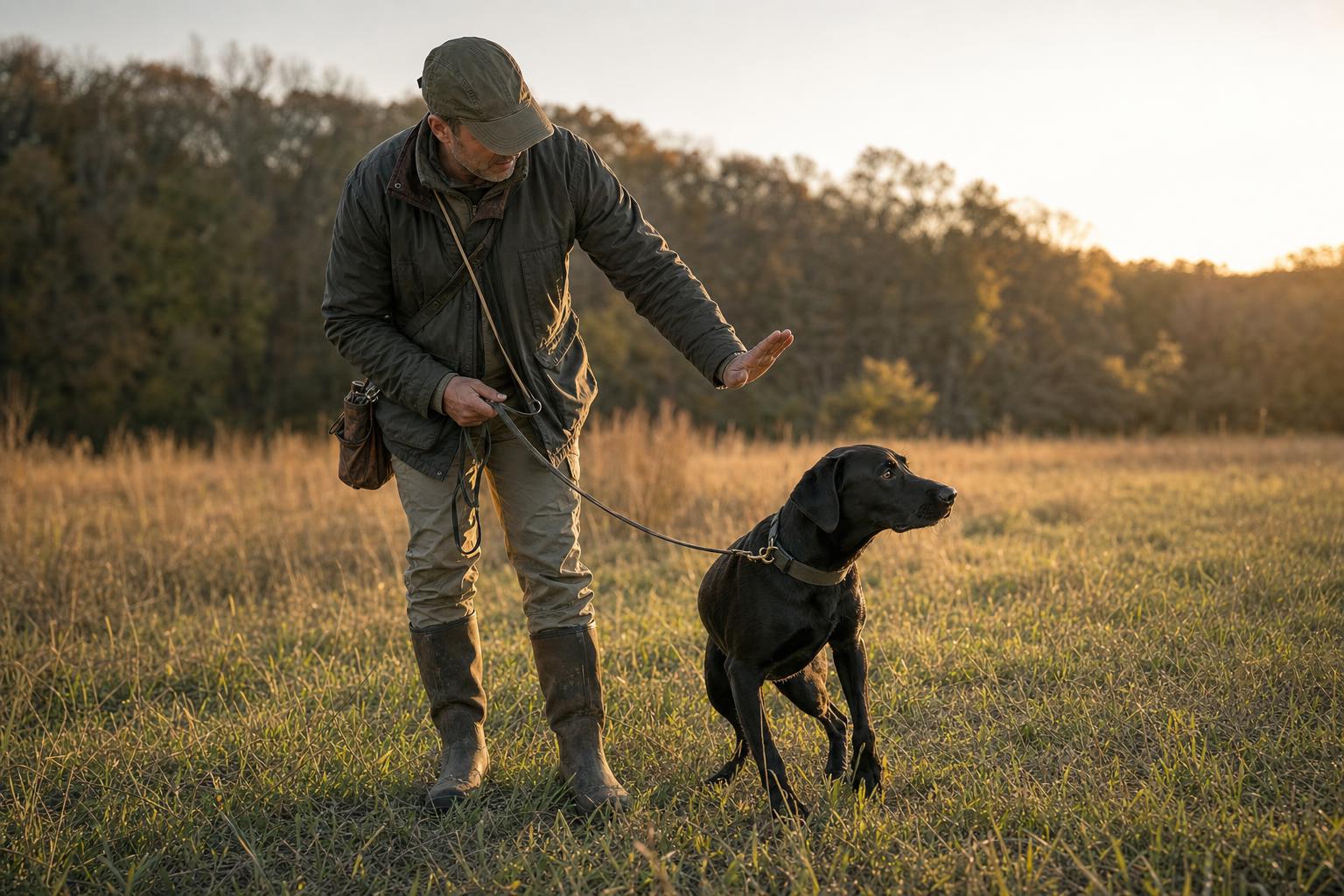
A promising working dog can be set back faster by poor training than by bad weather, rough cover, or a long day in the field. Most training mistakes are not made out of laziness or neglect. They come from enthusiasm, impatience, and the mistaken belief that more pressure or more repetition will solve every problem. It will not.
Whether you run retrievers, flushing dogs, pointing dogs, or all-purpose farm and hunting companions, the same truth holds up year after year: a dog learns best when the handler is consistent, fair, and honest about what the dog actually understands. Good training is not about looking impressive in the yard. It is about building habits that hold together when birds flush wild, guns go off, scent drifts, and excitement rises. If you want a dependable working dog, these are the training mistakes to avoid.
Expecting Too Much, Too Soon
One of the biggest mistakes owners make is asking a young dog for finished-dog behavior before the foundation is in place. A pup may show boldness, natural retrieve, bird drive, or strong prey focus early, and that can tempt a handler into rushing the process. The trouble starts when natural ability gets mistaken for maturity. A dog that chases hard at six months is not necessarily ready for full steadiness. A pup that comes flying back with a bumper in the backyard may not be prepared for disciplined retrieves in heavy cover or cold water.
The dog was still learning one lesson when the handler stacked on three more. Confusion followed, then correction, and before long the dog started training with caution instead of confidence. That is a hard thing to repair.
Progress matters, but sequence matters more. Teach one concept clearly, then proof it, then build on it. If your dog does not understand a command under calm conditions, it will not suddenly understand it under pressure. Slow training often produces the fastest long-term progress.
Why Foundation Work Gets Overlooked
Foundation drills are not flashy. They do not draw much attention from friends at the club, and they rarely make a handler feel like major progress is happening. But obedience, recall, place work, steadiness, and clean delivery are the beams that hold up everything else. Skip them, and the whole structure starts leaning the first time excitement enters the picture.
A working dog needs a base it can return to. Without that, field problems multiply. What looks like stubbornness is often a weak foundation being exposed.
Being Inconsistent With Commands and Standards
Dogs do not speak our language, but they are sharp readers of patterns. If “here” means come now on Monday, come eventually on Tuesday, and maybe ignore me if a bird is moving on Wednesday, the dog is not the one being unclear. Inconsistent commands, shifting standards, and mixed signals create unreliable performance.
This problem shows up in subtle ways. One family member lets the dog break from the crate or doorway while another insists on waiting. The handler tolerates creeping during training days but gets angry when the dog breaks on a hunt. A rough retrieve is accepted in the yard, then criticized when the bird is real. To the dog, the rules are changing with the wind.
Consistency is what turns commands into habits. If a behavior matters, it has to matter every time. That does not mean being harsh. It means being steady. Dogs settle when they know where the lines are.
Correcting a Dog for What It Has Not Been Properly Taught
This is one of the costliest mistakes in dog training. Correction has a place, but only after the dog clearly understands the task. Too many handlers confuse disobedience with confusion. Those are not the same thing. If the dog has not been fairly taught, correction is not instruction. It is noise, and sometimes intimidation.
The dog hesitated, not from defiance, but because the previous sessions had been muddy and inconsistent. The handler saw hesitation and came down hard. In two minutes the dog’s attitude changed. Head lowered, pace shortened, tail quiet. The lesson was over, and not in the way the handler intended. The dog learned caution, not clarity.
Before correcting, ask a hard question: does the dog truly know what is being asked here, in this setting, with this level of distraction? If the answer is not a clear yes, then back up and teach. Fair pressure can sharpen a trained dog. Unfair pressure can dull a gifted one.
Pressure Without Timing Creates Problems
Timing is everything. Late corrections confuse. Constant corrections numb a dog out. Emotional corrections poison the session. A good working dog trainer learns to act with precision, then move on. The goal is communication, not punishment.
Dogs remember the overall feeling of a session. If every outing becomes tense, many dogs begin anticipating conflict. That anticipation leaks into performance. You see slower responses, avoidance, sticky movement, vocalization, or refusal. The handler may call it attitude. In truth, the dog may simply be bracing for another unclear correction.
Overtraining and Drilling Past the Point of Progress
There is a temptation to keep going when a session starts well. The dog is sharp, the retrieves are clean, and the obedience looks crisp, so the handler adds one more rep, then another, then one more for good measure. Many training days go wrong right there. The dog gets mentally tired, enthusiasm slips, and mistakes appear. Then those mistakes become the final memory of the session.
Working dogs thrive on purpose, but they can burn out under too much repetition. Repeating the same drill until the dog fades does not build reliability. It often builds boredom or stress. A short, effective session with clear success is worth more than a marathon of unnecessary reps.
End while the dog still has want-to. Save some edge for tomorrow. They knew when to quit for the day.
Ignoring the Dog in Front of You
No training program, no matter how respected, can replace the need to read your own dog. Some dogs need more repetition. Some need less. Some carry pressure heavily. Others need firmer boundaries. A hard-driving dog and a softer, highly biddable dog should not be handled the same way simply because they are the same age or breed.
This mistake usually starts with comparison. Somebody sees another dog running advanced work and assumes theirs should be there too. Or they read a training schedule and follow it like a recipe without considering temperament. Good dog men and women pay attention to the individual animal. They adjust pace, tone, and challenge level without losing standards.
A dog will tell you plenty if you watch closely. You can see confidence rising, understanding settling in, or stress creeping across the face and body. If you miss those signs, the dog pays for it later.
Letting Excitement Replace Control
Drive is valuable in a working dog. We all want desire, energy, and heart. But a dog that is all excitement and no control is a problem waiting to happen. Some handlers spend so much time building intensity that they neglect steadiness, patience, and composure. Then hunting season arrives and the dog is physically talented but mentally loose.
Excitement is not the enemy. Unmanaged excitement is. A reliable working dog learns that drive and discipline can exist together. That balance does not appear by accident. It has to be trained, and it has to be reinforced in different environments, not just in the backyard.
If your dog only listens when conditions are quiet and predictable, the training is incomplete. Real work happens around scent, movement, gunfire, birds, water, other dogs, and human noise. Control has to survive all of that.
Skipping Real-World Proofing
One of the most common training mistakes is believing a dog knows something because it performed well in a familiar place. Yard work matters. It is where many lessons begin. But the yard is not the marsh, the field edge, the timber, or the cut corn after a long morning. Dogs do not automatically generalize well. A command understood at home may look brand new in a fresh setting with stronger distractions.
That is why proofing matters. A dog should learn to carry obedience and task work into different terrain, weather, and levels of stimulation. The gap between training and hunting closes when you deliberately bridge it. Too many handlers assume that bridge will build itself.
The field has a way of exposing wishful thinking. Better to find those holes in training than on opening day.
Training Through Frustration
Every handler gets frustrated. That is part of the game. Birds are scarce, progress stalls, and sometimes a dog that knows better makes a mess of an easy setup. The mistake is continuing the session after frustration takes over. Dogs are excellent at reading our tone, body language, and tension. Once a handler gets angry, training usually stops being productive.
That is not weakness. That is discipline. A calm reset saves more training days than stubborn pride ever will.
If you feel yourself getting sharp, shorten the session, go back to something simple, and end clean. Tomorrow is often a better teacher than a bad mood.
What Better Training Looks Like
Good working dog training is plain, repeatable, and honest. It asks whether the dog understands. It builds from simple to complex. It values consistency over drama and timing over force. It keeps sessions purposeful and avoids asking for polished performance before the basics are solid. Most of all, it respects the fact that dogs learn through clarity and repetition, not through our impatience.
They were shaped by steady hands, fair corrections, and lots of small decisions made correctly over time. That kind of training may not always look exciting from the outside, but it shows up when the dog is sent on a difficult retrieve, holds steady through a flush, or hunts all day with the same mind it had at first light.
If you avoid the common training mistakes and commit to patient, consistent work, your dog has a much better chance to become what it was bred and raised to be: a trustworthy working partner. That is what every owner wants, whether in the uplands, the marsh, or anywhere a good dog earns its keep.